

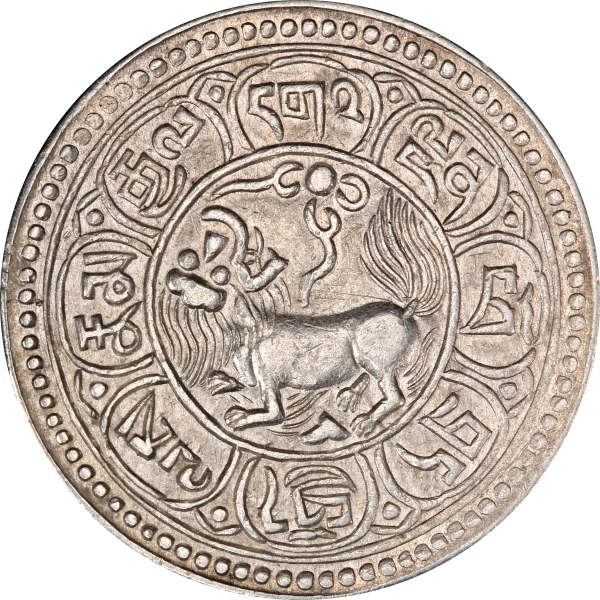
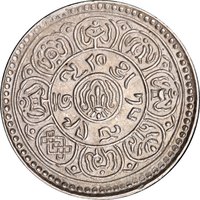
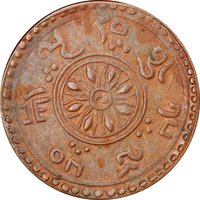
Obverse
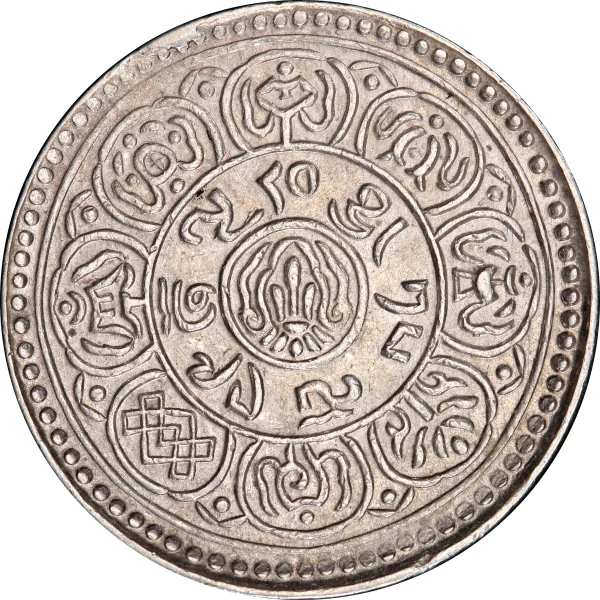
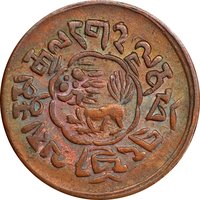
Reverse
Edge
Reeded.
Mintings
| Year | Mint Mark | Mintage | Quality | Collection |
|---|---|---|---|---|
| 1913 | — | — | ||
| 1914 | — | — | ||
| 1915 | — | — | ||
| 1916 | — | — | ||
| 1917 | — | — | ||
| 1918 | — | — | ||
| 1919 | — | — | ||
| 1922 | — | — | ||
| 1924 | — | — | ||
| 1925 | — | — | ||
| 1926 | — | — | ||
| 1927 | — | — |
Historical background
In 1913, Tibet existed in a complex and contested monetary landscape, caught between its historical systems and the pressures of regional powers. Following the collapse of the Qing Dynasty in 1911 and the expulsion of Chinese troops from Lhasa, the 13th Dalai Lama declared Tibetan independence in 1913. This political assertion created an urgent need for a sovereign currency to solidify economic autonomy and fund the state. The primary circulating medium remained the Tibetan tangka silver coin, first minted in the 18th century, but its value and purity were inconsistent, and it competed with a vast array of older Nepalese mohars, Indian rupees, and Chinese silver yuan.
The Tibetan government, under the direction of the Drong-druk (Finance Office), took decisive steps to modernize its currency. In 1913, it initiated the minting of new silver tangka coins at the Dode mint in Lhasa. These coins, bearing the "Gaden Phodrang" design (the lion and snow mountains motif) and the date "15-46-1" (corresponding to 1913 in the Tibetan calendar), were an attempt to standardize the currency and project state authority. However, the financial infrastructure was weak; the government lacked sophisticated minting technology, and the coins' silver content often varied, leading to fluctuations in their acceptance, especially in border trade.
Furthermore, Tibet's economy was not isolated, and foreign currencies remained dominant in commerce. The Indian rupee, backed by the British Raj, was particularly influential in southern and western Tibet due to robust trade routes. This created a de facto monetary duality, where the new tangka circulated internally but international trade was often conducted in rupees. Thus, the currency situation of 1913 reflected Tibet's precarious position: actively forging symbols of independent statehood through its coinage while remaining practically entangled in the economic spheres of British India and a weakened, but still present, China.
The Tibetan government, under the direction of the Drong-druk (Finance Office), took decisive steps to modernize its currency. In 1913, it initiated the minting of new silver tangka coins at the Dode mint in Lhasa. These coins, bearing the "Gaden Phodrang" design (the lion and snow mountains motif) and the date "15-46-1" (corresponding to 1913 in the Tibetan calendar), were an attempt to standardize the currency and project state authority. However, the financial infrastructure was weak; the government lacked sophisticated minting technology, and the coins' silver content often varied, leading to fluctuations in their acceptance, especially in border trade.
Furthermore, Tibet's economy was not isolated, and foreign currencies remained dominant in commerce. The Indian rupee, backed by the British Raj, was particularly influential in southern and western Tibet due to robust trade routes. This created a de facto monetary duality, where the new tangka circulated internally but international trade was often conducted in rupees. Thus, the currency situation of 1913 reflected Tibet's precarious position: actively forging symbols of independent statehood through its coinage while remaining practically entangled in the economic spheres of British India and a weakened, but still present, China.
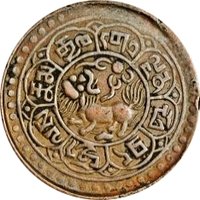
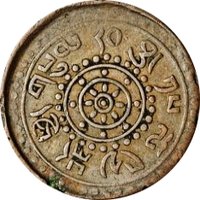
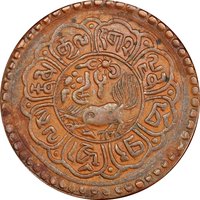
💎 Extremely Rare