

1 Yuan – Kiangnan Province
China
Context
Years: 1899–1905
Country: China 
Issuer: Kiangnan Province
Ruler: Guangxu
Currency:
(1898—1949)
Demonetized: Yes
Total mintage: 55,318,000
Material
References
Y: #Click to copy to clipboard145a.3-17
Numista: #4100
Value
Bullion value: $67.85
Obverse
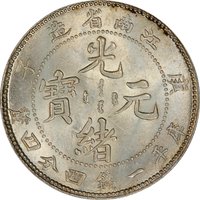
Description:
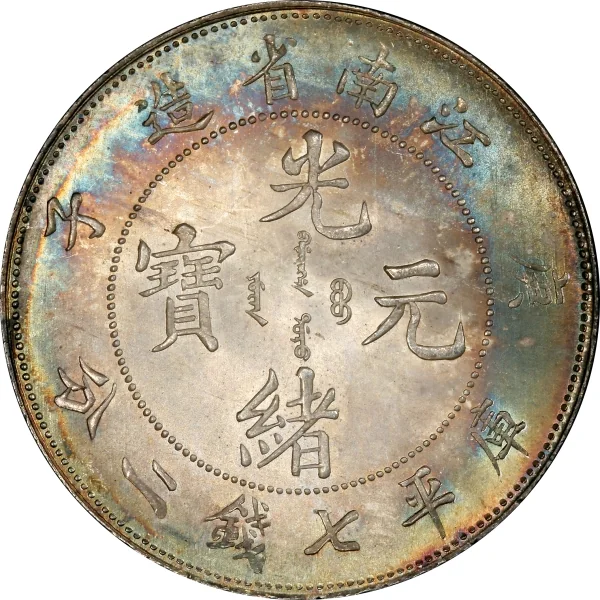
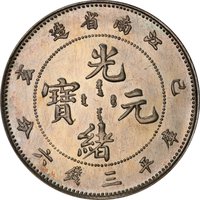
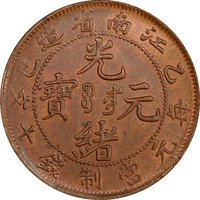
Chinese ideograms read vertically, right to left, with Manchu text in the center, all encircled by more Chinese characters.
Inscription:
造省南江
子庚
光
ᠪᠠᡩᠠᡵᠠᠩᡤᠠ
寶 ᠶᡠᠸᠠᠨ ᠪᠣᠣ 元
ᡩᠣᡵᠣ
緒
分二錢七平库
子庚
光
ᠪᠠᡩᠠᡵᠠᠩᡤᠠ
寶 ᠶᡠᠸᠠᠨ ᠪᠣᠣ 元
ᡩᠣᡵᠣ
緒
分二錢七平库
Translation:
Made in Southern Jiangsu
Zi Geng
Guang
Badaranga
Treasure Yuan
Doro
Xu
2 Fen, 7 Qian, Pingku Standard
Zi Geng
Guang
Badaranga
Treasure Yuan
Doro
Xu
2 Fen, 7 Qian, Pingku Standard
Scripts: Chinese, Mongolian / Manchu
Languages: Manchu, Classical Chinese
Reverse
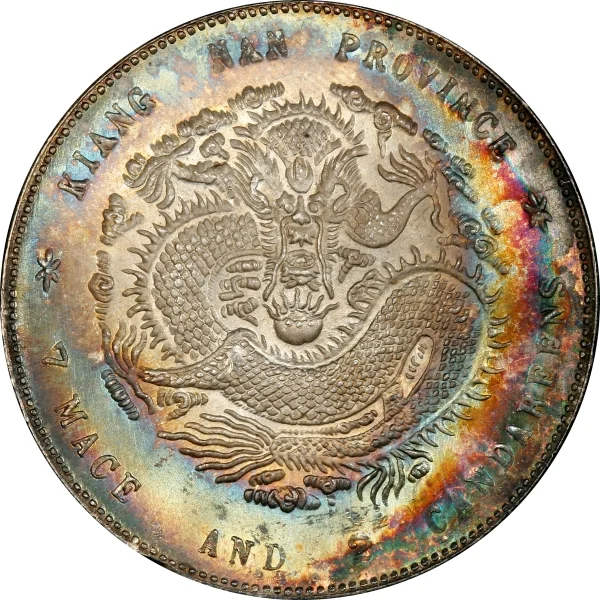
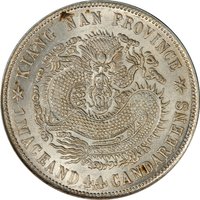
Description:
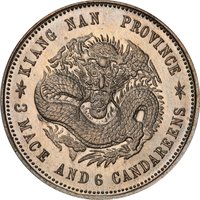
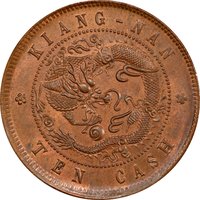
Dragon encircling a pearl, surrounded by English text.
Inscription:
KIANG NAN PROVINCE
7 MACE AND 2 CANDAREENS
7 MACE AND 2 CANDAREENS
Script: Latin
Edge
Reeded.
Categories
| Mythology> Fantastic animal |
Mintings
| Year | Mint Mark | Mintage | Quality | Collection |
|---|---|---|---|---|
| 1899 | — | — | ||
| 1900 | — | 2,531,000 | ||
| 1901 | — | 2,377,000 | ||
| 1902 | — | 3,562,000 | ||
| 1903 | — | 1,489,000 | ||
| 1904 | — | 44,725,000 | ||
| 1905 | — | 634,000 |
Historical background
In 1899, Kiangnan Province (centered on Shanghai and the lower Yangtze Delta) was the epicenter of a complex and multi-layered currency situation, reflecting China’s struggle between imperial tradition and foreign economic dominance. The official currency remained the silver tael, a unit of weight rather than a minted coin, leading to a bewildering variety of local tael standards, such as the Shanghai Tael (Kuping, Caoping), which complicated every transaction. Alongside these were imperial minted silver dollars, like the Mexican Silver Dollar and the new Chinese Imperial Dragon Dollar, which circulated freely, their values fluctuating daily against the taels and each other based on purity and weight.
This chaotic native system was overlaid by the powerful presence of foreign banking and currency. The International Settlement in Shanghai functioned as a financial fortress, where British banks like the Hongkong and Shanghai Banking Corporation (HSBC) issued their own banknotes, fully convertible into silver and widely trusted in trade. These foreign notes, alongside a flood of silver from international trade, created a dual monetary system: a modern, stable currency for foreign trade and the treaty ports, and a fragmented, traditional system for the domestic hinterland. This duality increasingly marginalized the Qing state’s monetary authority in its own richest region.
The situation was further strained by the late 1890s due to a severe nationwide silver drain and depreciation of copper cash, which crippled the peasantry. While Kiangnan, with its trade wealth, was somewhat insulated from the worst effects, the province felt the pressures of the impending monetary crisis. The currency chaos hindered domestic commerce, facilitated foreign control over finance, and exposed the Qing dynasty's inability to impose monetary sovereignty, setting the stage for the monetary reforms that would be attempted in the final decade of the dynasty.
This chaotic native system was overlaid by the powerful presence of foreign banking and currency. The International Settlement in Shanghai functioned as a financial fortress, where British banks like the Hongkong and Shanghai Banking Corporation (HSBC) issued their own banknotes, fully convertible into silver and widely trusted in trade. These foreign notes, alongside a flood of silver from international trade, created a dual monetary system: a modern, stable currency for foreign trade and the treaty ports, and a fragmented, traditional system for the domestic hinterland. This duality increasingly marginalized the Qing state’s monetary authority in its own richest region.
The situation was further strained by the late 1890s due to a severe nationwide silver drain and depreciation of copper cash, which crippled the peasantry. While Kiangnan, with its trade wealth, was somewhat insulated from the worst effects, the province felt the pressures of the impending monetary crisis. The currency chaos hindered domestic commerce, facilitated foreign control over finance, and exposed the Qing dynasty's inability to impose monetary sovereignty, setting the stage for the monetary reforms that would be attempted in the final decade of the dynasty.
⭐ Somewhat Rare