

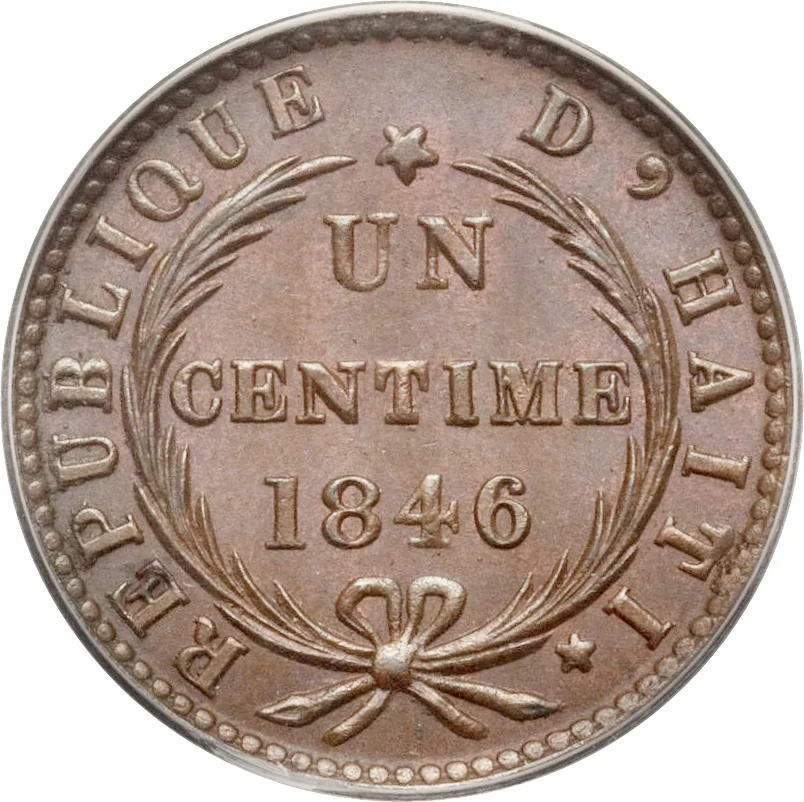
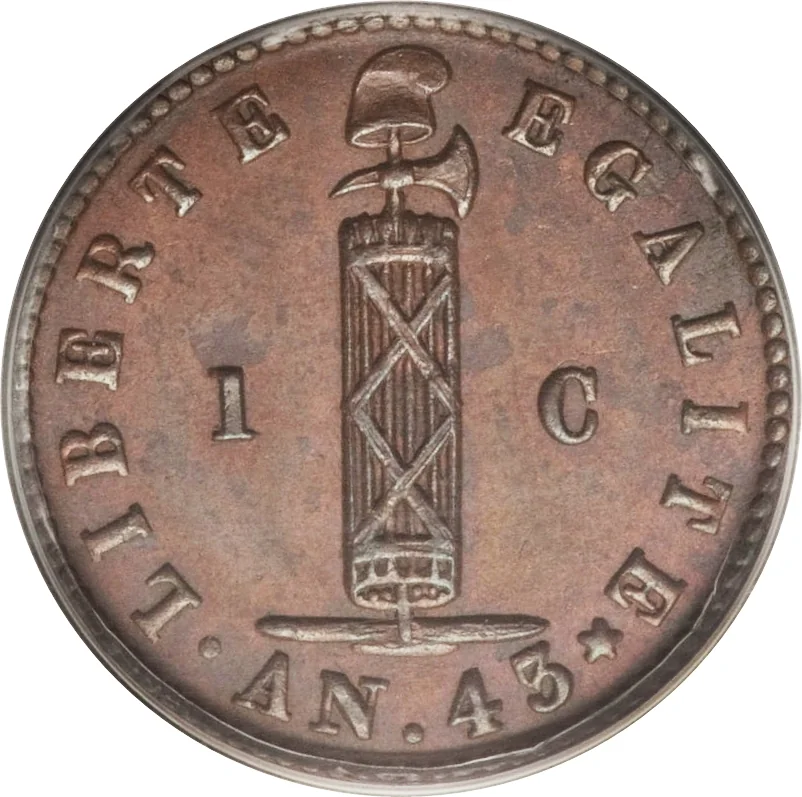
1 centime – Haiti
Add to wishlist
Haiti
Context
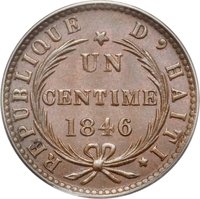
Year: 1846
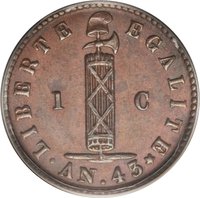
Haitian republican Year:: 43
Issuer: Haiti
Period:
(1859—1957)
Currency:
(1813—1870)
Demonetized: Yes
Material
References
KM: #
Numista: #38030
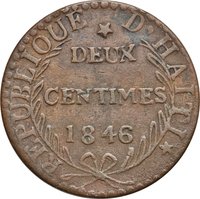
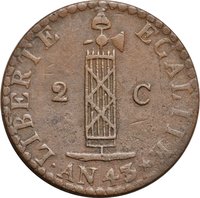
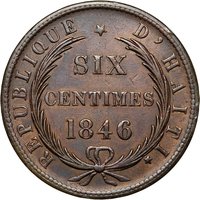
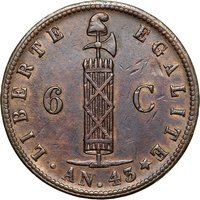
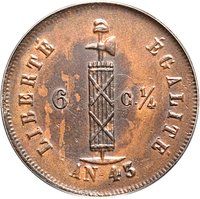
Obverse
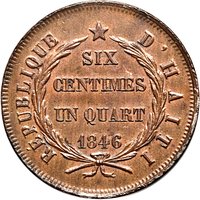
Reverse
Edge
Plain
Categories
| Symbol> Fasces |
| Symbol> Phrygian cap |
Mintings
| Year | Mint Mark | Mintage | Quality | Collection |
|---|---|---|---|---|
| 1846 | — | — |
Historical background
In 1846, Haiti’s currency situation was a direct legacy of its hard-won independence and the crippling economic isolation imposed by France. Following the 1825 French ordinance demanding a massive indemnity of 150 million francs in exchange for diplomatic recognition, Haiti was plunged into a cycle of debt that distorted its entire economy. To make the initial payment, the government under President Jean-Pierre Boyer had taken out high-interest loans from French banks, committing a huge portion of national revenue to debt service. This financial stranglehold severely limited the state's ability to invest in infrastructure and left the treasury perpetually strained.
The currency in circulation was a complex and unstable mix, primarily consisting of Haitian gourdes and a substantial amount of foreign coin, particularly French francs and British pounds. The gourde, theoretically pegged to the French franc, suffered from frequent devaluation and public mistrust. The government's chronic budget deficits, exacerbated by the indemnity payments, often led to the issuance of paper money or the debasement of coinage, which fueled inflation. This instability was a key factor in the political turmoil of the period, contributing to the overthrow of President Philippe Guerrier in April 1846 and the brief presidency of Jean-Baptiste Riché.
Ultimately, the currency crisis of 1846 was not merely a monetary issue but a symptom of Haiti's geopolitical predicament. The indemnity debt, which would not be fully paid off until 1947, acted as a permanent drain on the nation's specie (hard currency) reserves, preventing monetary stability. This financial vulnerability undermined every administration, making sound fiscal policy nearly impossible and leaving the Haitian economy and its currency fragile and susceptible to repeated crises throughout the 19th century.
The currency in circulation was a complex and unstable mix, primarily consisting of Haitian gourdes and a substantial amount of foreign coin, particularly French francs and British pounds. The gourde, theoretically pegged to the French franc, suffered from frequent devaluation and public mistrust. The government's chronic budget deficits, exacerbated by the indemnity payments, often led to the issuance of paper money or the debasement of coinage, which fueled inflation. This instability was a key factor in the political turmoil of the period, contributing to the overthrow of President Philippe Guerrier in April 1846 and the brief presidency of Jean-Baptiste Riché.
Ultimately, the currency crisis of 1846 was not merely a monetary issue but a symptom of Haiti's geopolitical predicament. The indemnity debt, which would not be fully paid off until 1947, acted as a permanent drain on the nation's specie (hard currency) reserves, preventing monetary stability. This financial vulnerability undermined every administration, making sound fiscal policy nearly impossible and leaving the Haitian economy and its currency fragile and susceptible to repeated crises throughout the 19th century.
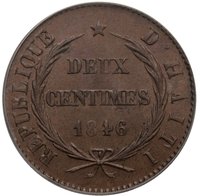
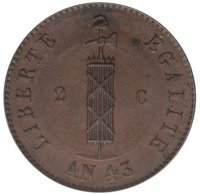
Series: 1846 Haiti circulation coins
🌟 Limited