

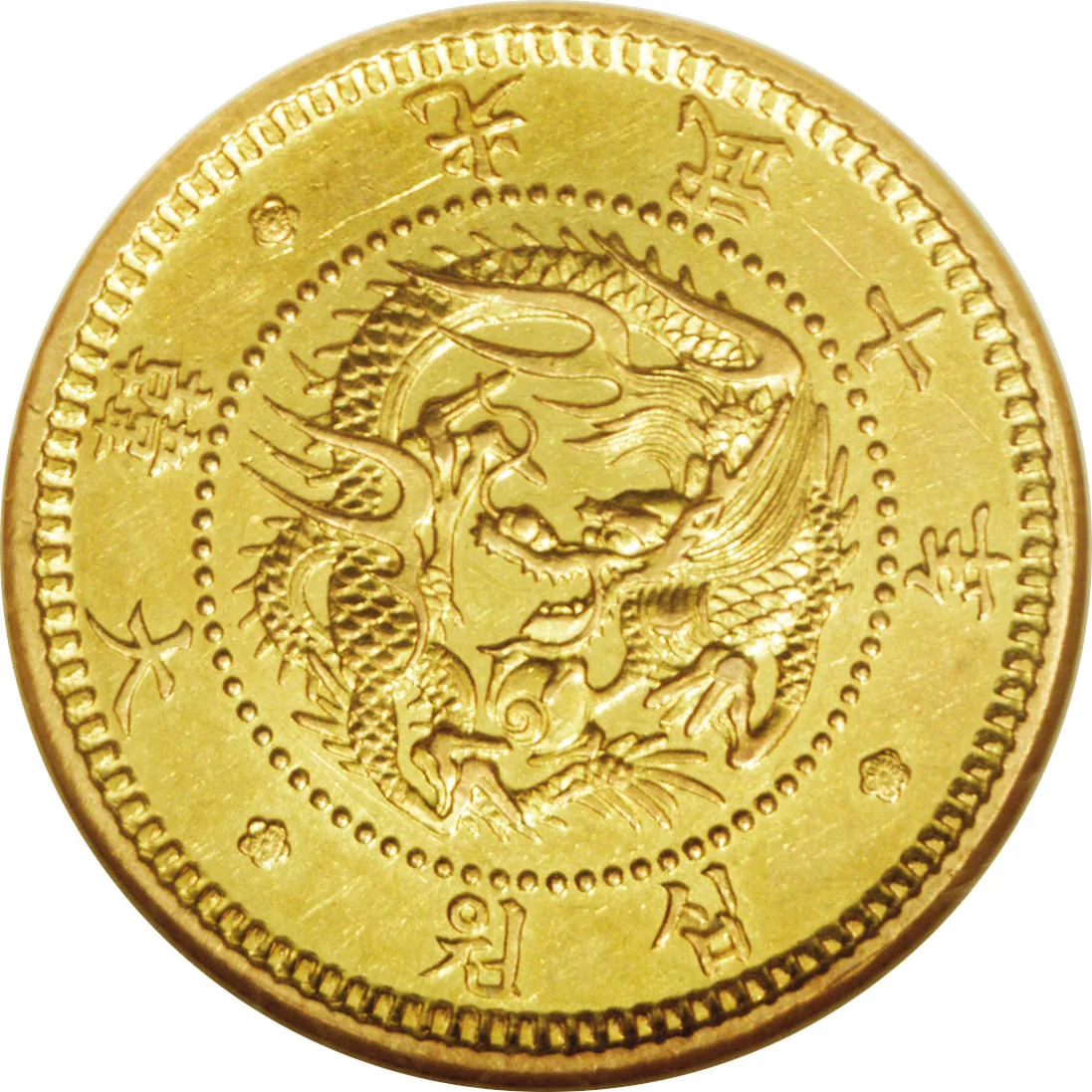
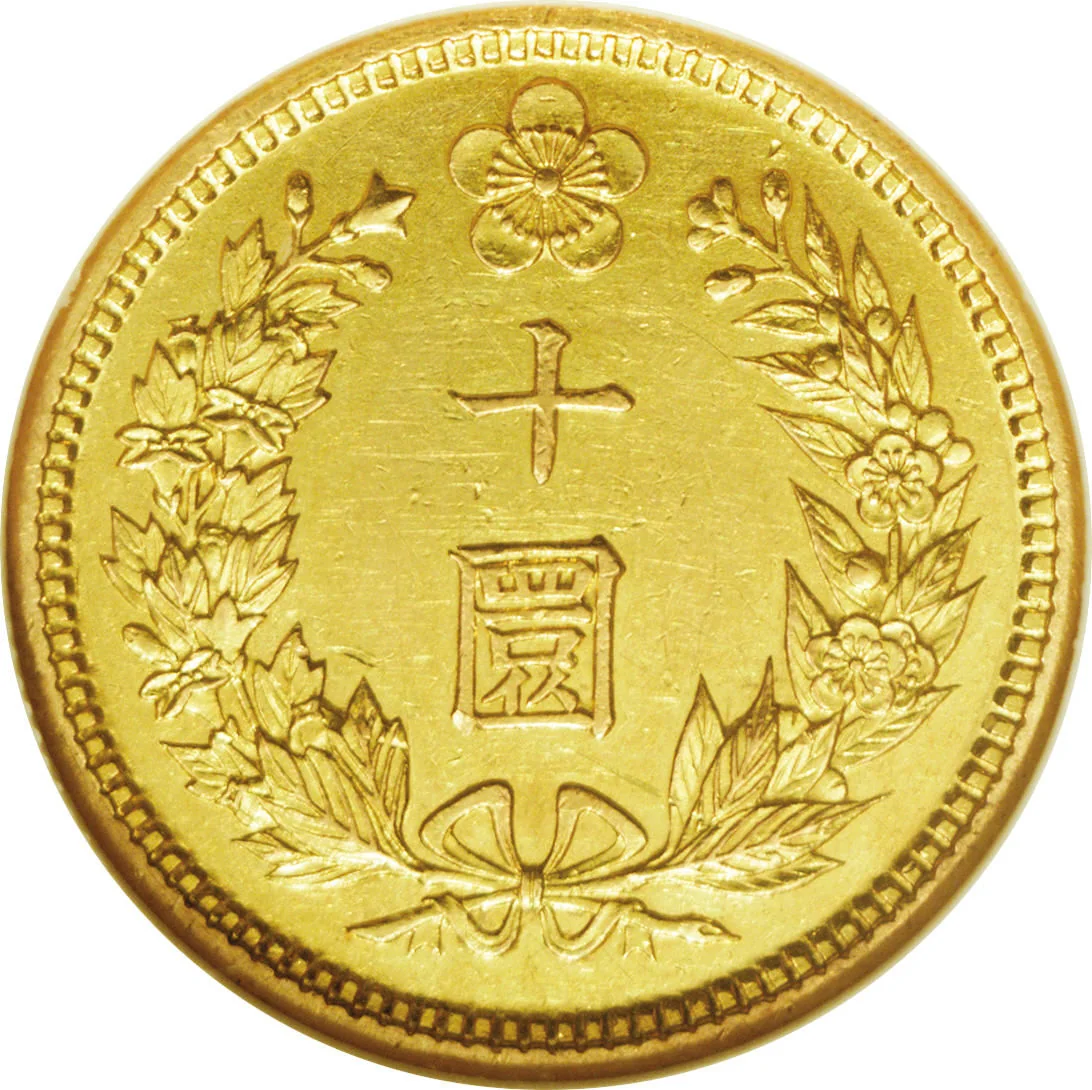
10 won – Korean Empire
Add to wishlist
Context
Year: 1906
Korean - Gwangmu era Year:: 10
Country: Korea
Issuer: Korean Empire
Period:
(1897—1907)
Currency:
(1901—1910)
Demonetized: Yes
Total mintage: 5,000
Material
References
KM: #
Numista: #35120
Value
Bullion value: $1148.72
Obverse
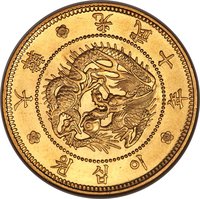
Description:
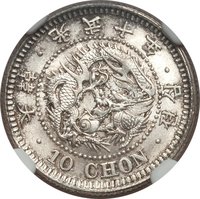
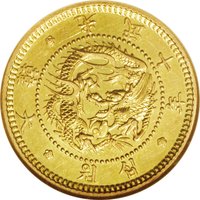
Dragon above, date below, denomination beneath.
Inscription:
• 大韓 • 光武十年 • 십원
Translation:
Taehan; Kwangmu 10th Year; Ten Won
Reverse
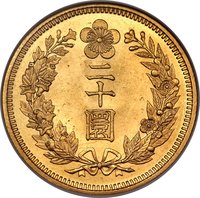
Description:
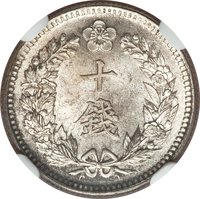
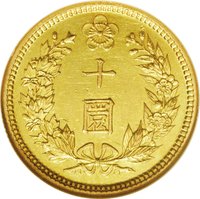
Denomination with wreath and plum flower (Imperial Seal of Korea).
Inscription:
十
圜
圜
Translation:
Ten Coins
Scripts: Chinese (traditional, regular script)
Language: Chinese
Edge
Categories
| Mythology> Fantastic animal |
| Plants> Flower |
| Symbols> Coat of Arms |
| Symbol> Wreath |
Mints
| Name | Mark |
|---|---|
| Japan Mint | — |
Mintings
| Year | Mint Mark | Mintage | Quality | Collection |
|---|---|---|---|---|
| 1906 | — | 5,000 |
Historical background
By 1906, the currency situation within the Korean Empire was one of profound instability and foreign domination, reflecting the peninsula's rapid descent into becoming a Japanese protectorate. Following the Russo-Japanese War (1904-1905) and the imposition of the Japan-Korea Treaty of 1905 (the "Eulsa Treaty"), Korea's financial sovereignty was effectively dismantled. The Japanese government, through the newly established Residency-General, took direct control of Korean finances, including the customs service and treasury. A key institution in this process was the Dai-Ichi Bank (First Bank of Japan), which acted as Korea's central bank and held its state deposits, placing the nation's monetary policy under de facto Japanese control.
The monetary system itself was a chaotic mix of competing currencies. Traditional Korean yang coins, both government-issued and privately minted, circulated alongside Mexican silver dollars, Japanese yen, and Chinese coins. This multiplicity led to severe fluctuations in exchange rates, widespread counterfeiting, and economic confusion. Most critically, the Korean government had historically lacked the centralized authority to issue stable, uniform paper currency. Earlier attempts, like the notes issued by the Gwangmu government, suffered from poor public trust and inadequate reserves, leading to rapid depreciation.
Therefore, in 1906, the Residency-General moved decisively to impose monetary order as a pillar of colonial integration. The "Currency Ordinance" was promulgated, establishing the Korean yen (a currency pegged at par with the Japanese yen) as the sole legal tender and initiating a multi-year process to phase out all other forms of money. This reform was not for Korea's economic benefit but to fully integrate its economy into the Japanese imperial system, facilitating Japanese commercial penetration and the extraction of resources. Thus, the currency situation in 1906 marked the final chapter of Korea's independent monetary history and the beginning of a forcibly unified system designed to serve Japanese imperial interests.
The monetary system itself was a chaotic mix of competing currencies. Traditional Korean yang coins, both government-issued and privately minted, circulated alongside Mexican silver dollars, Japanese yen, and Chinese coins. This multiplicity led to severe fluctuations in exchange rates, widespread counterfeiting, and economic confusion. Most critically, the Korean government had historically lacked the centralized authority to issue stable, uniform paper currency. Earlier attempts, like the notes issued by the Gwangmu government, suffered from poor public trust and inadequate reserves, leading to rapid depreciation.
Therefore, in 1906, the Residency-General moved decisively to impose monetary order as a pillar of colonial integration. The "Currency Ordinance" was promulgated, establishing the Korean yen (a currency pegged at par with the Japanese yen) as the sole legal tender and initiating a multi-year process to phase out all other forms of money. This reform was not for Korea's economic benefit but to fully integrate its economy into the Japanese imperial system, facilitating Japanese commercial penetration and the extraction of resources. Thus, the currency situation in 1906 marked the final chapter of Korea's independent monetary history and the beginning of a forcibly unified system designed to serve Japanese imperial interests.
✨ Legendary