

1 Jiao – Chihli Province
China
Context
Years: 1897–1898
Country: China 
Issuer: Chihli Province
Ruler: Guangxu
Currency:
(1896—1940)
Demonetized: Yes
Total mintage: 762,000
Material
References
Y: #Click to copy to clipboard62.1
Numista: #34874
Value
Bullion value: $6.12
Obverse
Description:
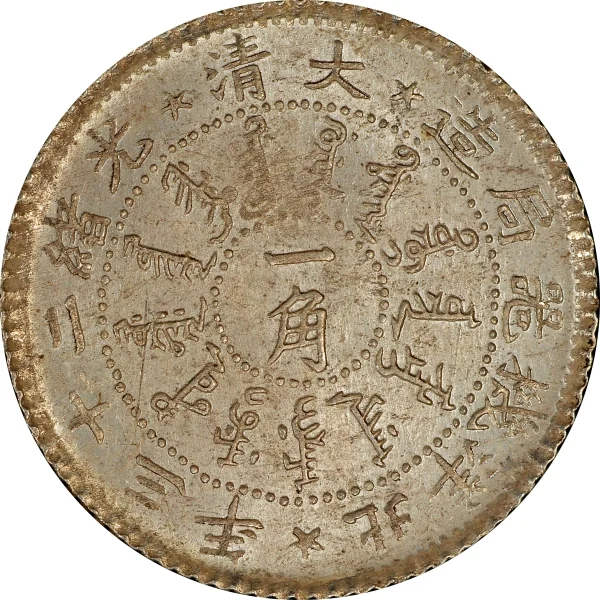
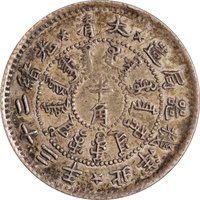
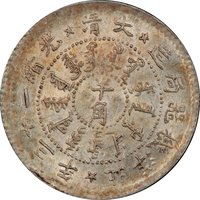
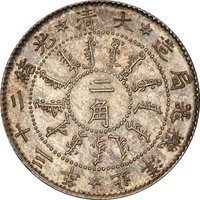
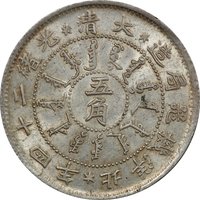
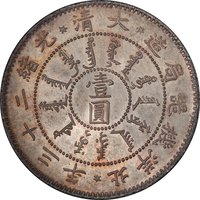
Manchu text encircles two Chinese characters, all within a larger ring of ideograms.
Inscription:
清大
造局器械洋北 - 年三十二绪光
ᡩᠠᡳᠴᡳᠩ ᡤᡠᡵᡠᠨ ᡳ᠋ ᠪᠠᡩᠠᡵᠠᠩᡤᠠ ᡩᠣᡵᠣ ᡳ᠋ ᠣᡵᡳᠨ ᡳᠯᠠᠨᠴᡳ ᠠᠨᡳᠶᠠ ᠠᠮᠠᡵᡤᡳ ᠨᠠᠮᡠ ᡳ᠋ ᡨᡝᡨᡠᠨ ᡧᡠᡵᡩᡝᡵᡝ ᡴᡡᠸᠠᡵᠠᠨ ᠸᡝᡳᡵᡝᡥᡝ
一
角
造局器械洋北 - 年三十二绪光
ᡩᠠᡳᠴᡳᠩ ᡤᡠᡵᡠᠨ ᡳ᠋ ᠪᠠᡩᠠᡵᠠᠩᡤᠠ ᡩᠣᡵᠣ ᡳ᠋ ᠣᡵᡳᠨ ᡳᠯᠠᠨᠴᡳ ᠠᠨᡳᠶᠠ ᠠᠮᠠᡵᡤᡳ ᠨᠠᠮᡠ ᡳ᠋ ᡨᡝᡨᡠᠨ ᡧᡠᡵᡩᡝᡵᡝ ᡴᡡᠸᠠᡵᠠᠨ ᠸᡝᡳᡵᡝᡥᡝ
一
角
Translation:
Clear River
Northern Foreign Machinery Bureau - Guangxu 32nd Year
One
Jiao
Northern Foreign Machinery Bureau - Guangxu 32nd Year
One
Jiao
Scripts: Chinese, Mongolian / Manchu
Reverse
Edge
Reeded.
Categories
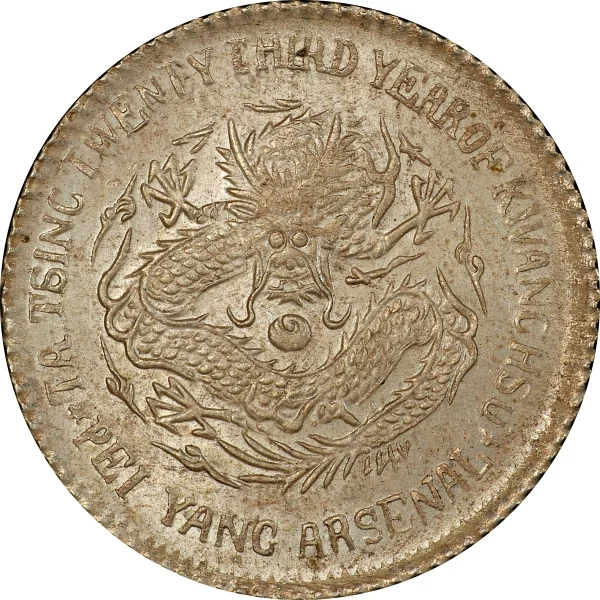
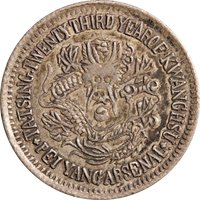
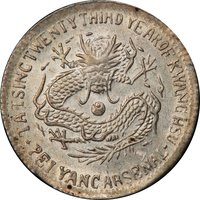
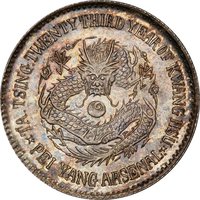
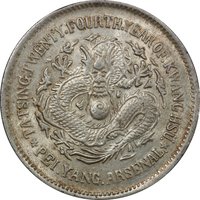
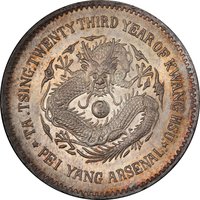
| Mythology> Fantastic animal |
Mintings
| Year | Mint Mark | Mintage | Quality | Collection |
|---|---|---|---|---|
| 1897 | — | 148,000 | ||
| 1898 | — | 614,000 |
Historical background
In 1897, Chihli Province (roughly corresponding to modern-day Hebei, plus Beijing and Tianjin) existed within a complex and deteriorating monetary system, characteristic of the late Qing Dynasty. The province, containing the imperial capital Beijing and the vital port of Tianjin, was at the epicenter of China's financial pressures. The official currency was the silver tael, a unit of weight rather than a coin, leading to countless local variants and rampant inefficiency. Concurrently, strings of bronze cash coins were used for everyday small transactions by the populace. This bimetallic system, with no fixed exchange rate between silver and copper, created severe instability, especially as the value of copper cash depreciated dramatically in the preceding decades, impoverishing peasants and laborers who were paid in cash but often taxed in silver.
The situation was critically exacerbated by the influx of foreign silver dollars, particularly the Mexican "Eagle" dollar, which circulated widely in treaty ports like Tianjin due to their standardized weight and reliability. These foreign coins often traded at a premium over the clumsy sycee (silver ingots), undermining Qing monetary sovereignty. Furthermore, the late 19th century saw a global decline in the price of silver, which, while making Chinese exports cheaper, caused internal economic dislocation and reduced the government's ability to service foreign debts, which were often denominated in gold-backed currencies. This silver depreciation further distorted the already chaotic exchange between silver and copper within Chihli.
Provincial authorities and even merchants attempted to address the chaos by minting their own coins. The Peiyang Mint in Tianjin, established by Li Hongzhang in 1887, produced silver and copper coins in an effort to standardize currency and resist foreign monetary invasion. By 1897, these machine-struck "dragon dollars" and copper coins were in circulation alongside traditional currency, adding another layer rather than achieving unification. Thus, the monetary background in Chihli in 1897 was one of fragmented competition between traditional taels and cash, influential foreign coinage, and nascent provincial mint issues, all set against a backdrop of systemic silver depreciation—a financial disarray that mirrored the Qing's weakening control just three years before the Boxer upheaval would erupt in that very region.
The situation was critically exacerbated by the influx of foreign silver dollars, particularly the Mexican "Eagle" dollar, which circulated widely in treaty ports like Tianjin due to their standardized weight and reliability. These foreign coins often traded at a premium over the clumsy sycee (silver ingots), undermining Qing monetary sovereignty. Furthermore, the late 19th century saw a global decline in the price of silver, which, while making Chinese exports cheaper, caused internal economic dislocation and reduced the government's ability to service foreign debts, which were often denominated in gold-backed currencies. This silver depreciation further distorted the already chaotic exchange between silver and copper within Chihli.
Provincial authorities and even merchants attempted to address the chaos by minting their own coins. The Peiyang Mint in Tianjin, established by Li Hongzhang in 1887, produced silver and copper coins in an effort to standardize currency and resist foreign monetary invasion. By 1897, these machine-struck "dragon dollars" and copper coins were in circulation alongside traditional currency, adding another layer rather than achieving unification. Thus, the monetary background in Chihli in 1897 was one of fragmented competition between traditional taels and cash, influential foreign coinage, and nascent provincial mint issues, all set against a backdrop of systemic silver depreciation—a financial disarray that mirrored the Qing's weakening control just three years before the Boxer upheaval would erupt in that very region.
✨ Legendary