

20 Fen – Chihli Province
China
Context
Years: 1899–1905
Country: China 
Issuer: Chihli Province
Ruler: Guangxu
Currency:
(1896—1940)
Demonetized: Yes
Total mintage: 313,000
Material
References
Y: #Click to copy to clipboard71
Numista: #34871
Value
Bullion value: $12.44
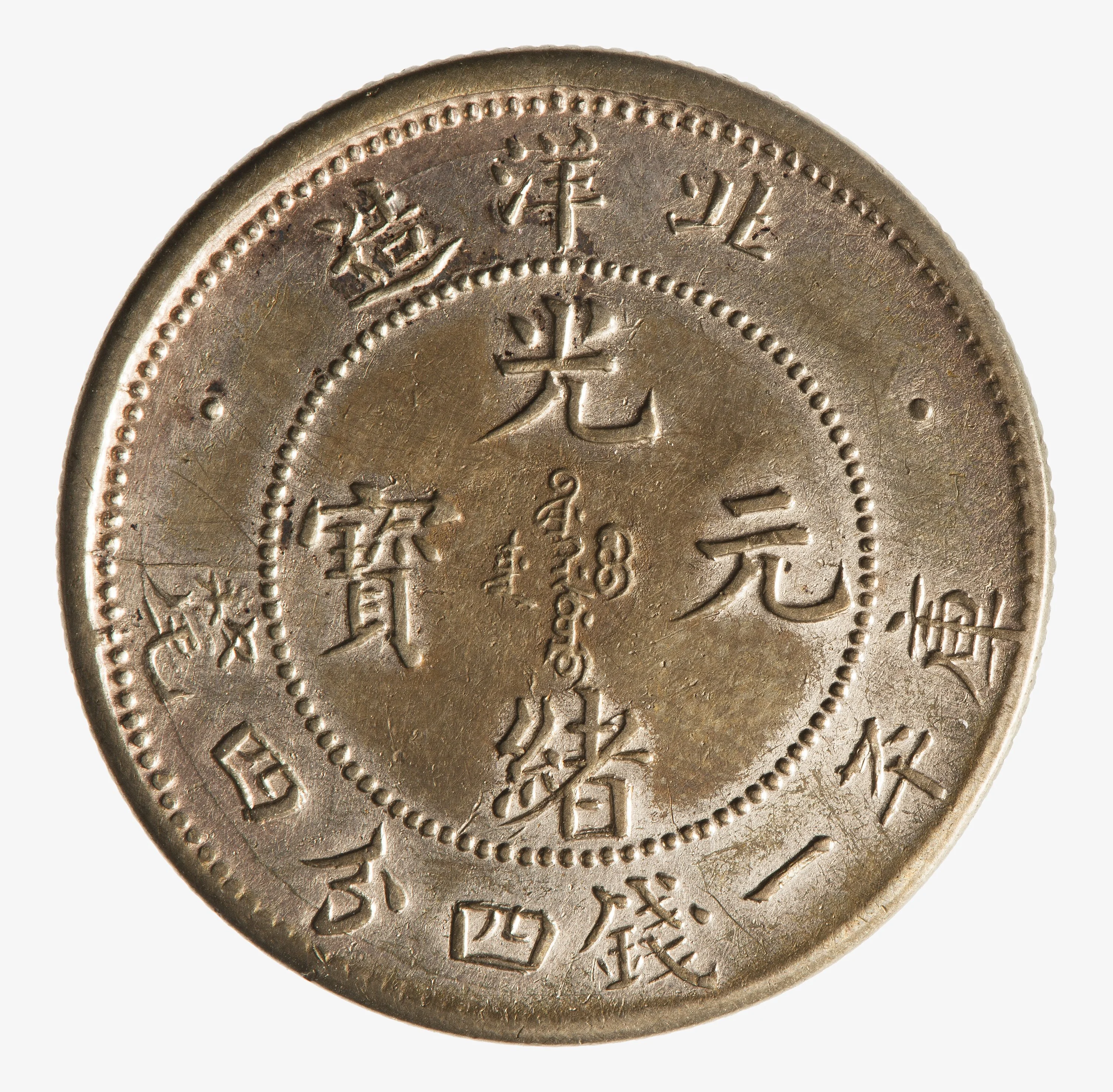
Obverse
Description:
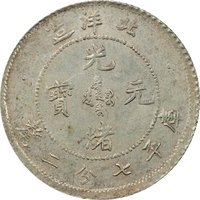
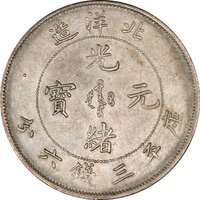
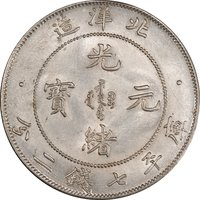
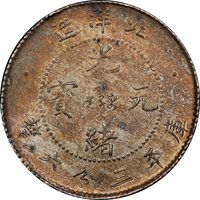
Four Chinese ideograms read vertically, right to left, with Manchu characters in the center, encircled by more ideograms.
Inscription:
造洋北
光
ᠪᠠᡩᠠᡵᠠᠩᡤᠠ
寶 ᠶᡠᠸᠠᠨ ᠪᠣᠣ 元
ᡩᠣᡵᠣ
緒
釐四分四錢一平庫
光
ᠪᠠᡩᠠᡵᠠᠩᡤᠠ
寶 ᠶᡠᠸᠠᠨ ᠪᠣᠣ 元
ᡩᠣᡵᠣ
緒
釐四分四錢一平庫
Translation:
Made for the Northern Ocean
Guangxu [reign era]
Badarangga [Manchu for Guangxu]
Yuan Bao [treasured coin]
One coin, four mace, four candareens, standard treasury [weight]
Guangxu [reign era]
Badarangga [Manchu for Guangxu]
Yuan Bao [treasured coin]
One coin, four mace, four candareens, standard treasury [weight]
Scripts: Chinese, Mongolian / Manchu
Languages: Manchu, Classical Chinese
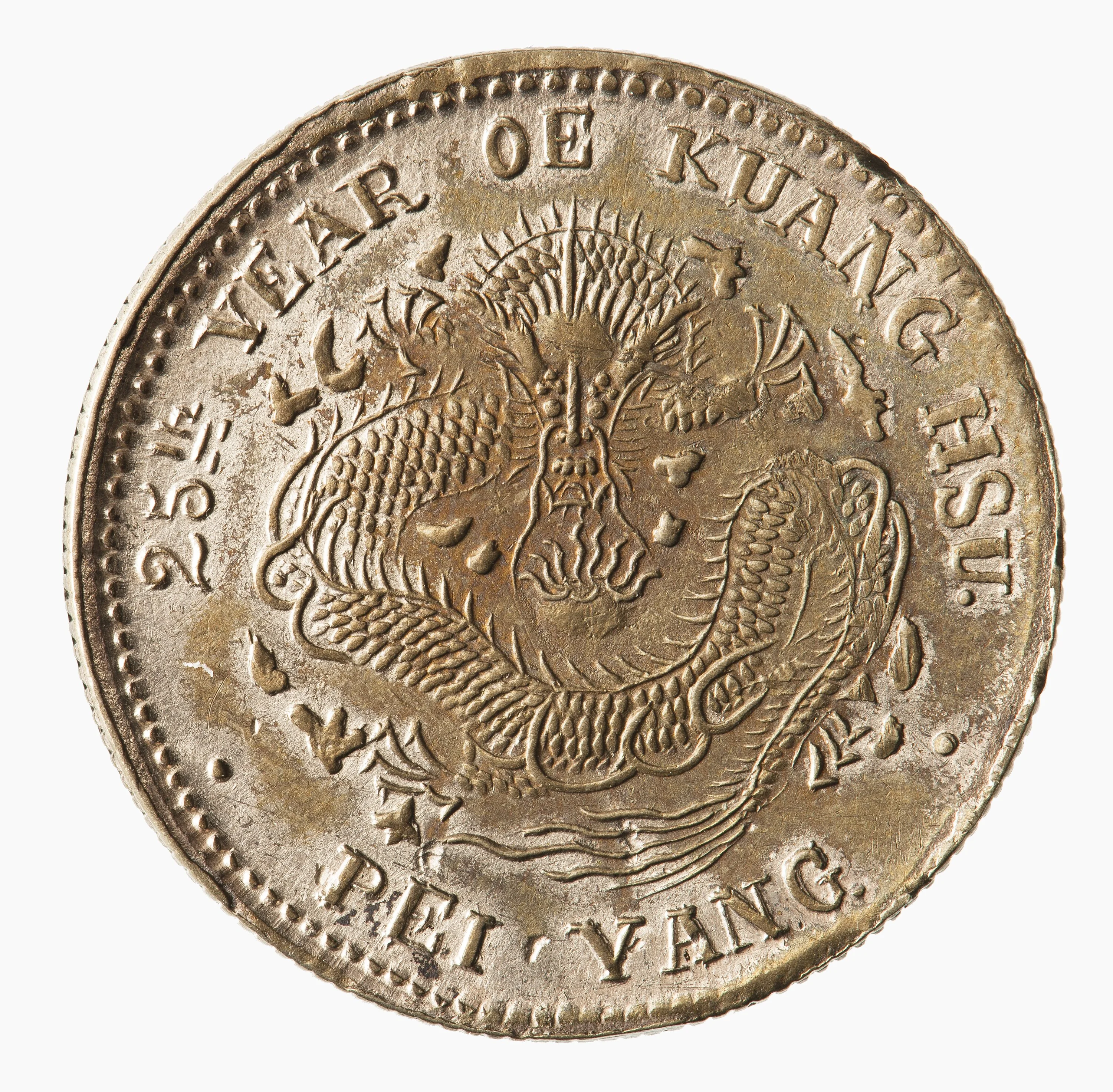
Reverse
Edge
Reeded.
Categories
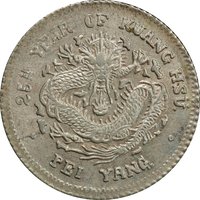
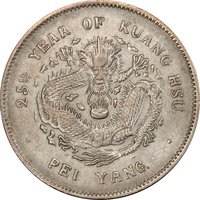
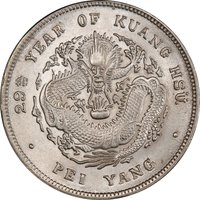
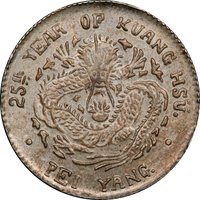
| Mythology> Fantastic animal |
Mintings
| Year | Mint Mark | Mintage | Quality | Collection |
|---|---|---|---|---|
| 1899 | — | 152,000 | ||
| 1900 | — | — | ||
| 1905 | — | 161,000 |
Historical background
In 1899, Chihli Province (roughly modern-day Hebei and Tianjin) was at the epicenter of a severe and complex monetary crisis that reflected the wider collapse of Qing dynasty authority. The province, containing the capital Beijing and the vital treaty port of Tianjin, was saturated with a chaotic mix of currencies. These included imperial silver sycee (measured in taels), Mexican and later Chinese silver dollars, copper cash coins, and, most problematically, a flood of privately issued banknotes (zhuangpiao) from native banks (qianzhuang) and even local shops. The lack of a centralised, trusted currency system created a fragile monetary environment vulnerable to shock.
This fragility was exacerbated by two major factors. First, the aftermath of the First Sino-Japanese War (1894-1895) had imposed massive indemnity payments on China, draining silver from the economy. Second, a sustained fall in the global price of silver triggered a disastrous divergence between silver and copper. As silver's value rose relative to copper, the exchange rate for copper cash—the everyday currency of the common people—plummeted. This effectively crushed peasants and labourers, who were paid in copper but often paid taxes calculated in silver, leading to widespread destitution and social anger.
By 1899, the situation was reaching a boiling point. The provincial authorities, under Governor-General Yulu, attempted to restore order by banning private banknotes and mandating the use of official copper coinage. However, these measures were largely ineffective due to a lack of public trust in official institutions and the sheer scale of the informal monetary system. This economic distress became a primary tinder for the Boxer uprising, which erupted violently in Shandong and Chihli that same year, as peasants and unemployed transport workers directed their fury at both foreign influences and the failing Qing state that could not guarantee economic stability.
This fragility was exacerbated by two major factors. First, the aftermath of the First Sino-Japanese War (1894-1895) had imposed massive indemnity payments on China, draining silver from the economy. Second, a sustained fall in the global price of silver triggered a disastrous divergence between silver and copper. As silver's value rose relative to copper, the exchange rate for copper cash—the everyday currency of the common people—plummeted. This effectively crushed peasants and labourers, who were paid in copper but often paid taxes calculated in silver, leading to widespread destitution and social anger.
By 1899, the situation was reaching a boiling point. The provincial authorities, under Governor-General Yulu, attempted to restore order by banning private banknotes and mandating the use of official copper coinage. However, these measures were largely ineffective due to a lack of public trust in official institutions and the sheer scale of the informal monetary system. This economic distress became a primary tinder for the Boxer uprising, which erupted violently in Shandong and Chihli that same year, as peasants and unemployed transport workers directed their fury at both foreign influences and the failing Qing state that could not guarantee economic stability.
💎 Extremely Rare