

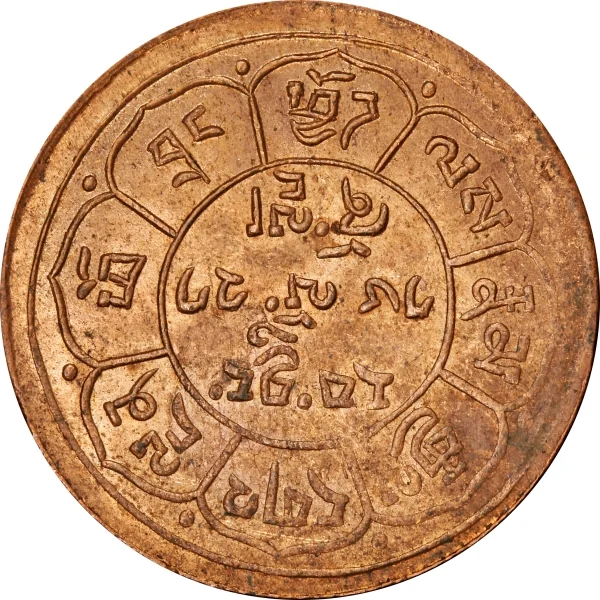
5 Sho – Tibet
China
Context
Year: 1947
Tibetan (16th cycle) Year: 21
Country: China 
Issuer: Tibet
Period:
(1642—1959)
Currency:
(1792—1959)
Demonetized: Yes
Material
References
Y: #Click to copy to clipboard28
Numista: #11485
Obverse
Description:
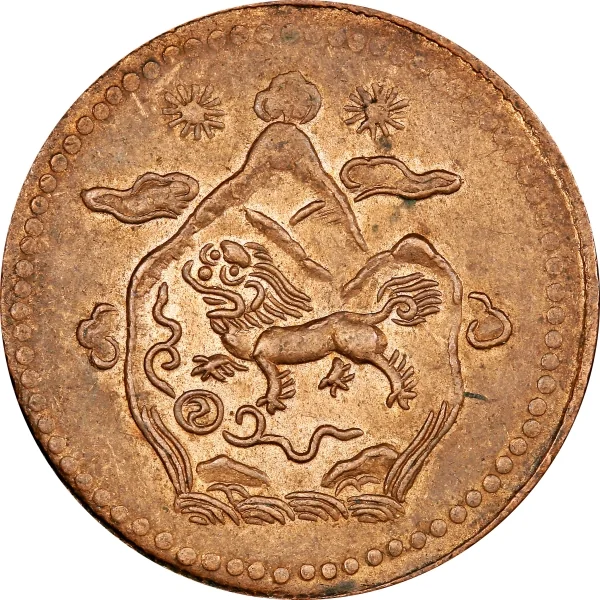
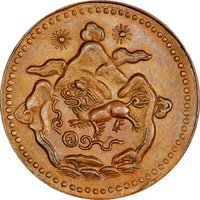
Snow lion facing left before Mount Kailash's twin peaks, two suns behind.
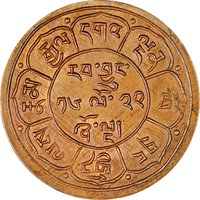
Reverse
Edge
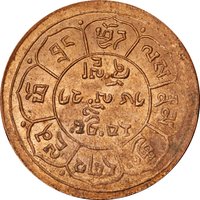
Reeded.
Mintings
| Year | Mint Mark | Mintage | Quality | Collection |
|---|---|---|---|---|
| 1947 | — | — |
Historical background
In 1947, Tibet operated under a complex and fragmented monetary system, reflecting its contested political status. The region circulated a variety of coins, primarily the Tibetan Srang silver coinage minted by the government in Lhasa, alongside traditional Sho and Skor denominations. However, these local currencies competed with significant inflows of foreign silver, most notably British Indian Rupees and Chinese Silver Dollars (Dayang), which were often preferred for larger transactions and trade. This multi-currency environment created instability, as exchange rates fluctuated and the purity of locally minted coins was sometimes questionable.
Economically, Tibet's currency situation was strained by its trade dependencies. As a landlocked region, its major trade routes passed through India and China, necessitating the use of foreign currencies for international commerce. The Tibetan government, led by the Kashag, struggled to assert full monetary sovereignty. While it maintained mints, it lacked a central banking system or paper currency, leaving the economy vulnerable to the ebb and flow of silver stocks and the monetary policies of its powerful neighbors.
Politically, the currency issue was deeply intertwined with Tibet's assertion of de facto independence following the collapse of the Qing Dynasty. The circulation of Chinese dollars represented lingering economic ties and political claims from the Republic of China, while Indian rupees underscored the practical realities of trade and British imperial influence. The year 1947 was particularly pivotal, as the impending independence of India and the resumption of the Chinese Civil War introduced new uncertainties, prompting Lhasa to cautiously consider its future monetary and political alignments in a rapidly changing landscape.
Economically, Tibet's currency situation was strained by its trade dependencies. As a landlocked region, its major trade routes passed through India and China, necessitating the use of foreign currencies for international commerce. The Tibetan government, led by the Kashag, struggled to assert full monetary sovereignty. While it maintained mints, it lacked a central banking system or paper currency, leaving the economy vulnerable to the ebb and flow of silver stocks and the monetary policies of its powerful neighbors.
Politically, the currency issue was deeply intertwined with Tibet's assertion of de facto independence following the collapse of the Qing Dynasty. The circulation of Chinese dollars represented lingering economic ties and political claims from the Republic of China, while Indian rupees underscored the practical realities of trade and British imperial influence. The year 1947 was particularly pivotal, as the impending independence of India and the resumption of the Chinese Civil War introduced new uncertainties, prompting Lhasa to cautiously consider its future monetary and political alignments in a rapidly changing landscape.
🌟 Limited