

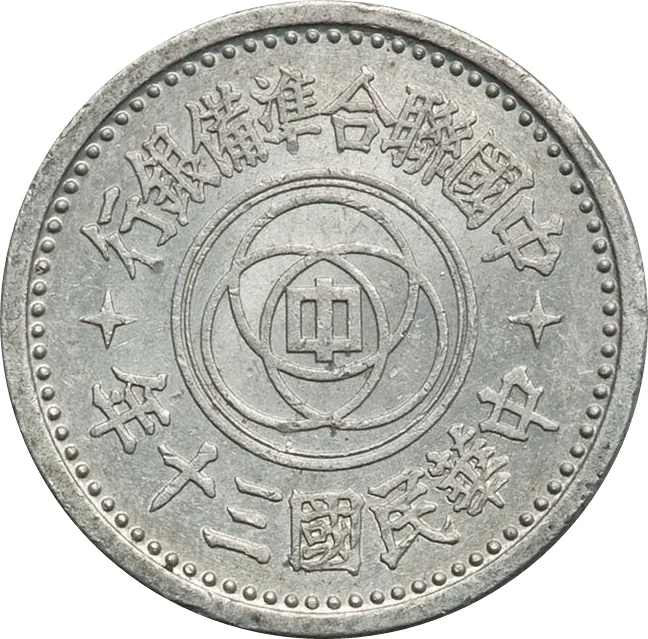

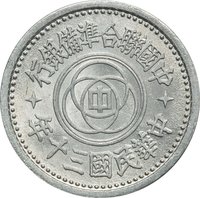
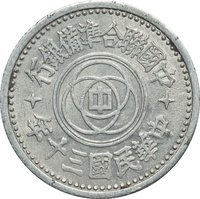
Obverse
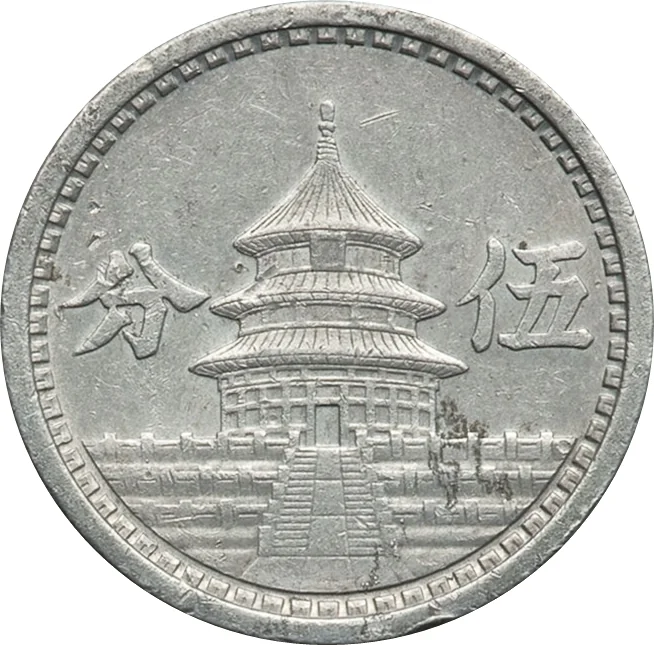
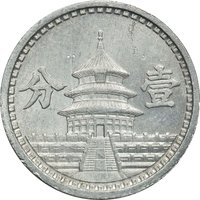
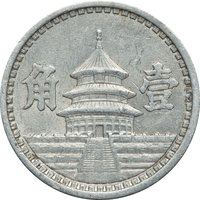
Reverse
Edge
Plain
Categories
| Building> Religious building |
Mintings
| Year | Mint Mark | Mintage | Quality | Collection |
|---|---|---|---|---|
| 1941 | — | — | ||
| 1942 | — | — | ||
| 1943 | — | — |
Historical background
The currency situation of the Provisional Government of the Republic of China (1941) was fundamentally a tool of Japanese occupation and economic warfare. Established in 1937 in Japanese-occupied North China, this puppet regime was, by 1941, under the nominal umbrella of Wang Jingwei's Reorganized National Government in Nanjing. Its primary financial instrument was the Federal Reserve Bank of China (FRB), established in 1938, which issued the "Federal Reserve Bank dollar" (FRB yuan). The Japanese objective was to displace the legitimate Nationalist government's fabi (legal tender) and create a dependent, yen-backed monetary zone to finance their military occupation and extract resources from North China.
The FRB currency faced severe credibility problems and was largely rejected by the public. It operated alongside a complex and unstable multi-currency environment, competing not only with the fabi but also with the Japanese military yen, local banknotes, and, in rural areas, barter. To force its adoption, the Japanese military issued regulations mandating its use for tax payments and all economic transactions, while also setting artificially favorable exchange rates against the fabi. Despite these coercive measures, hyperinflation began to take hold due to the FRB's unrestrained printing of notes to cover the regime's deficits and Japan's war costs, eroding public trust completely.
By 1941, the currency system was a clear indicator of the regime's fragility and the region's economic distress. The FRB notes were becoming increasingly worthless, leading to hoarding of precious metals and commodities. This inflationary crisis, engineered by Japanese fiscal exploitation, severely damaged the North Chinese economy, impoverishing the population and creating a black market for stronger currencies. Thus, the monetary landscape was one of coercive integration, competitive circulation, and accelerating decline, reflecting the broader collapse and exploitation under wartime occupation.
The FRB currency faced severe credibility problems and was largely rejected by the public. It operated alongside a complex and unstable multi-currency environment, competing not only with the fabi but also with the Japanese military yen, local banknotes, and, in rural areas, barter. To force its adoption, the Japanese military issued regulations mandating its use for tax payments and all economic transactions, while also setting artificially favorable exchange rates against the fabi. Despite these coercive measures, hyperinflation began to take hold due to the FRB's unrestrained printing of notes to cover the regime's deficits and Japan's war costs, eroding public trust completely.
By 1941, the currency system was a clear indicator of the regime's fragility and the region's economic distress. The FRB notes were becoming increasingly worthless, leading to hoarding of precious metals and commodities. This inflationary crisis, engineered by Japanese fiscal exploitation, severely damaged the North Chinese economy, impoverishing the population and creating a black market for stronger currencies. Thus, the monetary landscape was one of coercive integration, competitive circulation, and accelerating decline, reflecting the broader collapse and exploitation under wartime occupation.
🌟 Limited