

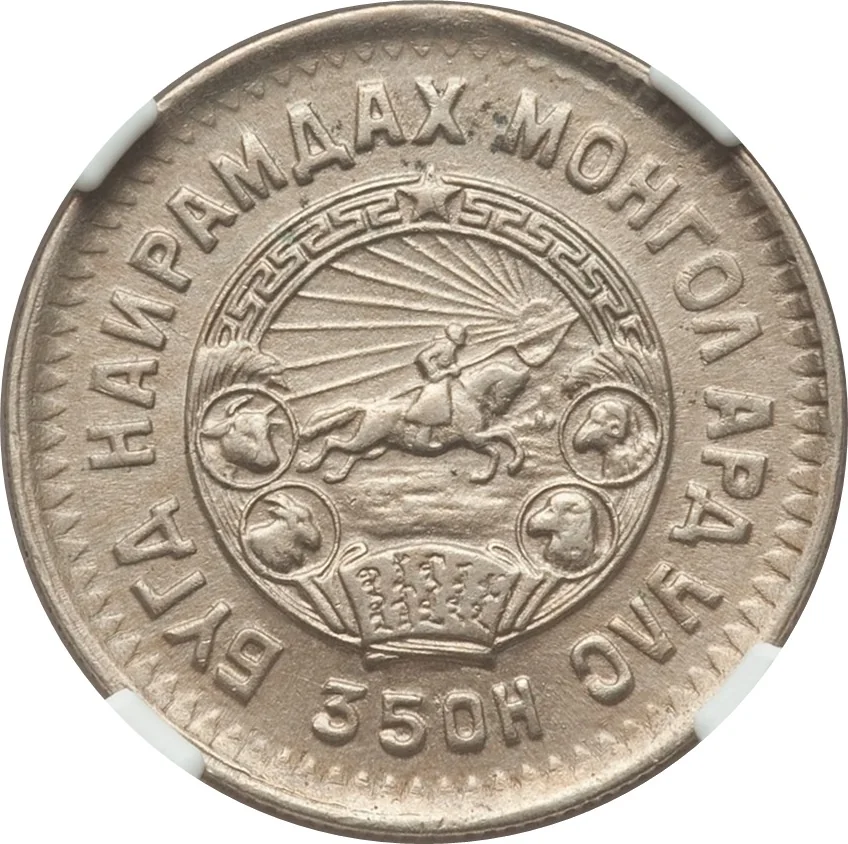
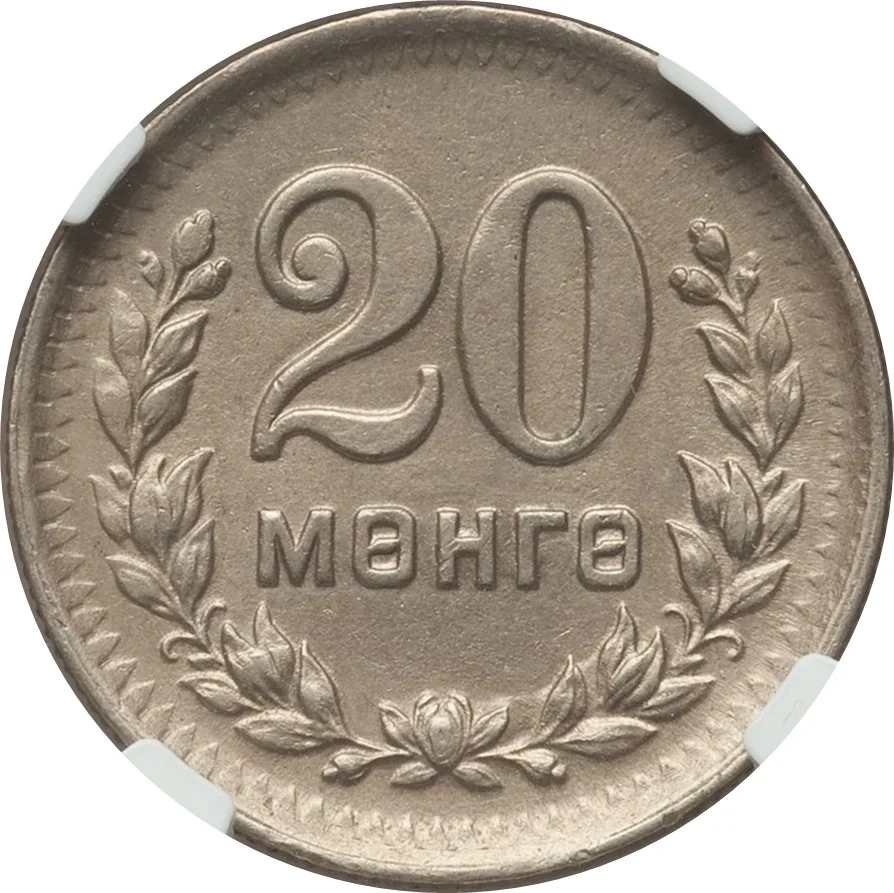
20 möngö – Mongolia
Add to wishlist
Mongolia
Context
Material
Diameter: 22.2 mm
Weight: 3.7 g
Thickness: 1.3 mm
Shape: Round
Composition: Copper-nickel
Technique: Milled
Alignment: Medal alignment
flip
References
KM: #
Numista: #11429
Value
Exchange value: 0.20 MNT
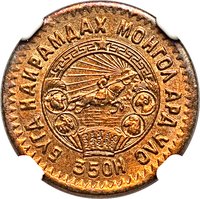
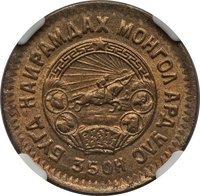
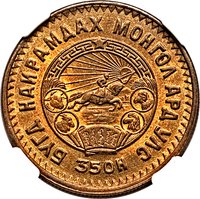
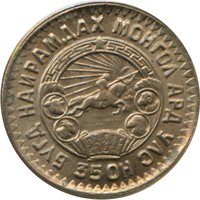
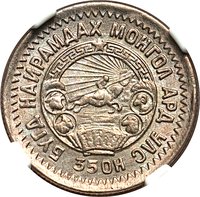
Obverse
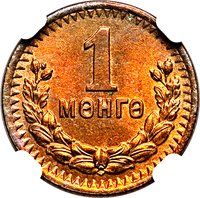
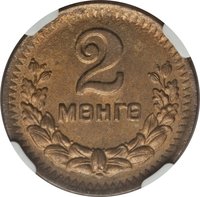
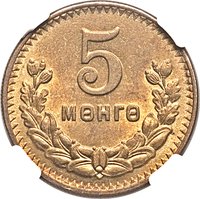
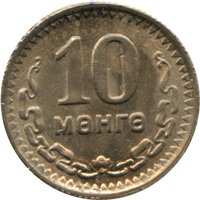
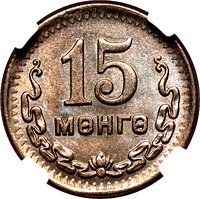
Reverse
Edge
Reeded
Mintings
| Year | Mint Mark | Mintage | Quality | Collection |
|---|---|---|---|---|
| 1945 | — | — |
Historical background
By 1945, Mongolia’s currency situation was characterized by a stable but entirely Soviet-dependent financial system. The national currency, the tögrög (MNT), had been introduced in 1925, replacing previous currencies and ending the earlier circulation of Chinese silver and Tsarist Russian rubles. From its inception, the tögrög was pegged to the Soviet ruble at a fixed 1:1 parity, a policy that remained firmly in place through the war years. This peg was not a market-driven decision but a reflection of Mongolia’s deep integration into the Soviet economic and political sphere as the world’s second communist state.
The economy and currency were heavily managed to support the Soviet war effort against Nazi Germany. Mongolia provided extensive material aid—livestock, raw materials, and financial donations—funded through state-controlled pricing and monetary emission. While this created some inflationary pressures, the fixed exchange rate and centralized planning, including rationing and price controls, prevented hyperinflation. The banking system was a monopoly under the State Bank of Mongolia (Bank of Mongolia), which acted as a direct subsidiary of the Soviet Gosbank, ensuring monetary policy was aligned with Moscow’s directives.
Consequently, Mongolia in 1945 had no independent monetary policy. The tögrög was a non-convertible currency, used almost exclusively within the country’s closed, planned economy. Its value and stability were entirely derivative of the Soviet ruble and the political relationship with the USSR. This arrangement solidified Mongolia’s position within the Soviet bloc, ensuring financial stability in the immediate post-war period but at the cost of economic autonomy, a framework that would define the country’s currency system for the next four decades.
The economy and currency were heavily managed to support the Soviet war effort against Nazi Germany. Mongolia provided extensive material aid—livestock, raw materials, and financial donations—funded through state-controlled pricing and monetary emission. While this created some inflationary pressures, the fixed exchange rate and centralized planning, including rationing and price controls, prevented hyperinflation. The banking system was a monopoly under the State Bank of Mongolia (Bank of Mongolia), which acted as a direct subsidiary of the Soviet Gosbank, ensuring monetary policy was aligned with Moscow’s directives.
Consequently, Mongolia in 1945 had no independent monetary policy. The tögrög was a non-convertible currency, used almost exclusively within the country’s closed, planned economy. Its value and stability were entirely derivative of the Soviet ruble and the political relationship with the USSR. This arrangement solidified Mongolia’s position within the Soviet bloc, ensuring financial stability in the immediate post-war period but at the cost of economic autonomy, a framework that would define the country’s currency system for the next four decades.
Series: 1945 Mongolia circulation coins
🌱 Fairly Common