

Obverse
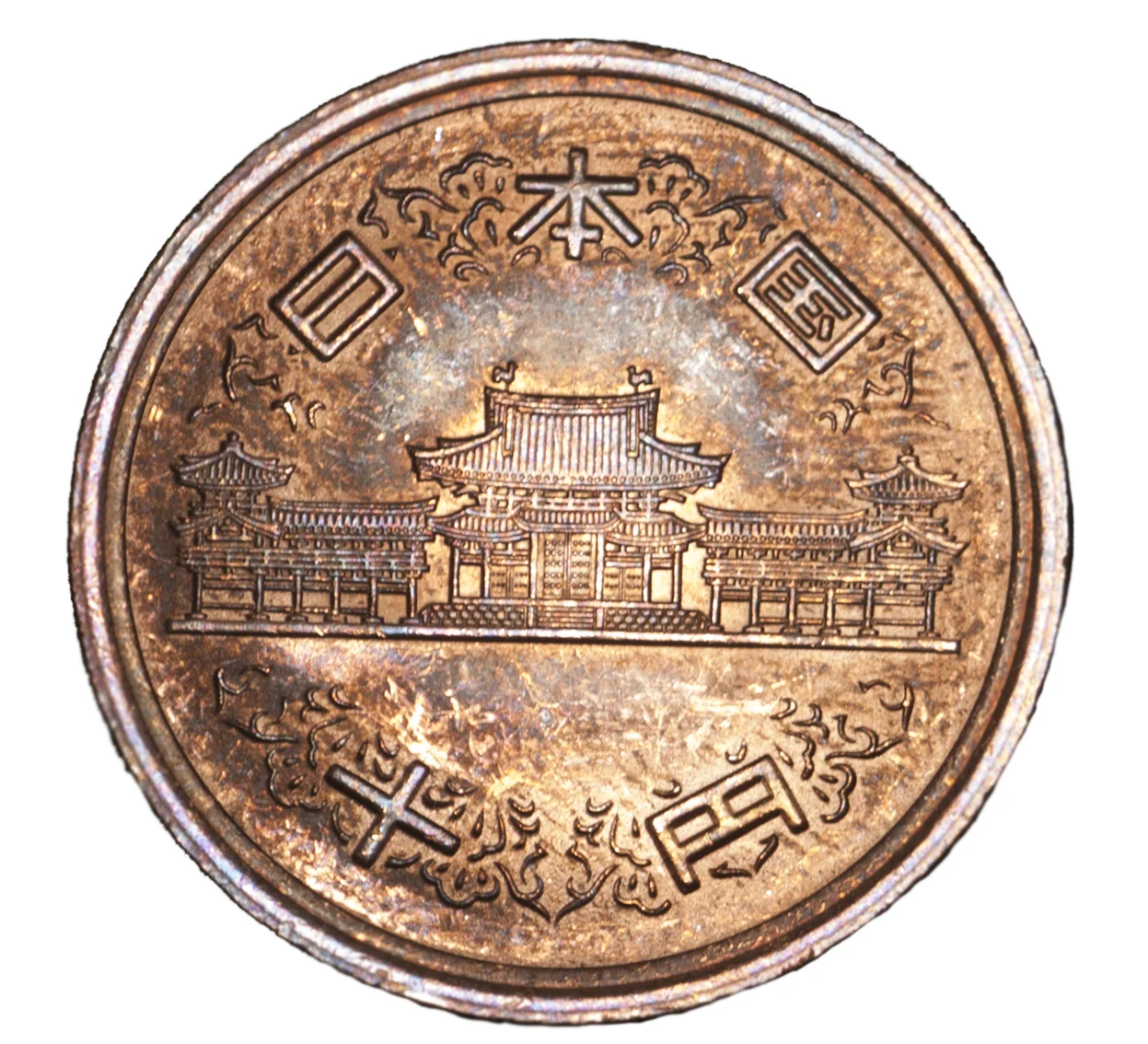
Description:
Japan
Phoenix Hall (Byōdō-in Temple)
Phoenix Hall (Byōdō-in Temple)
Inscription:
日 本 国
十 円
十 円
Translation:
Japan
Ten Yen
Ten Yen
Language: Japanese
Reverse
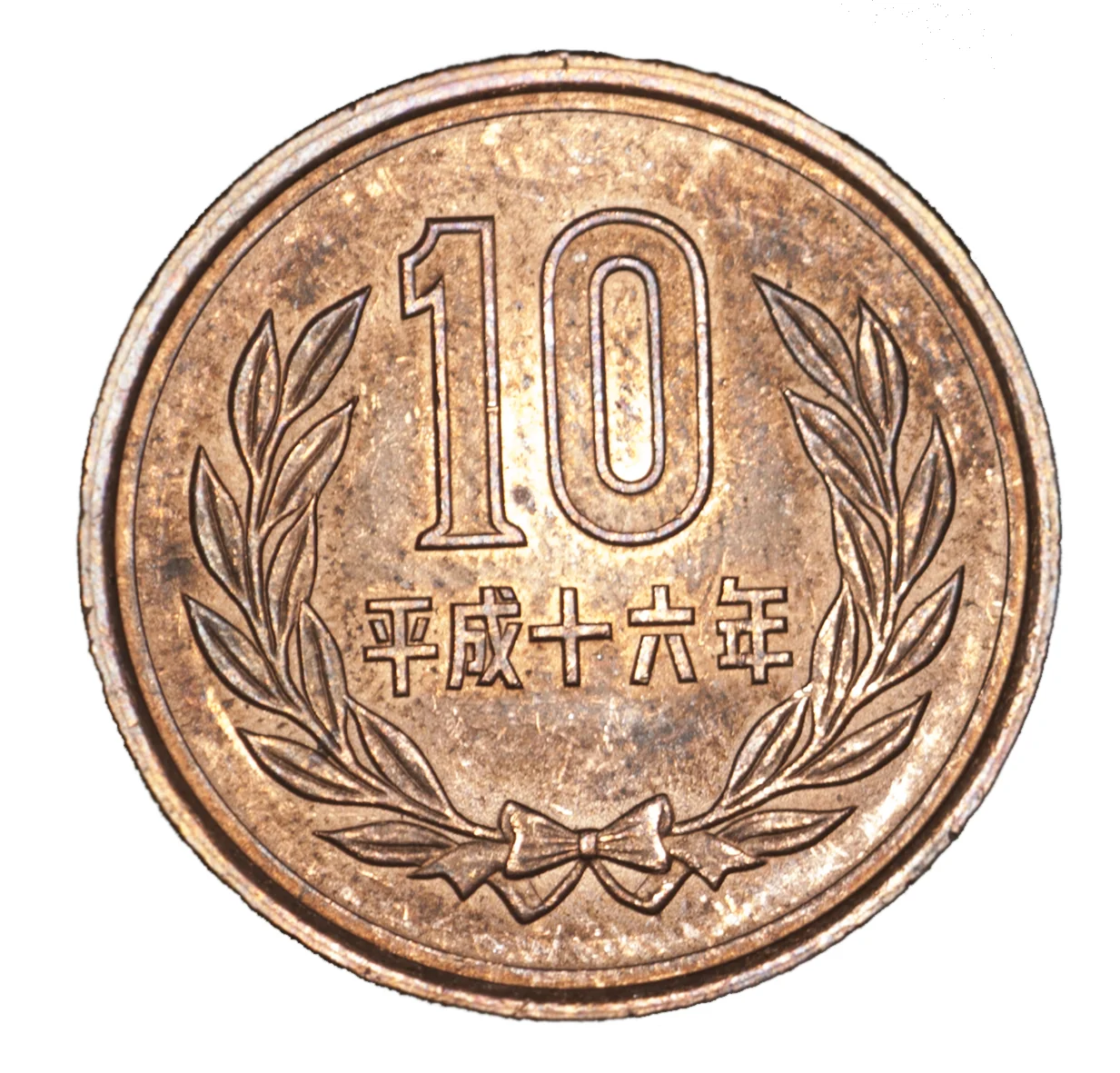
Description:
Value and date encircled
Inscription:
10
平成十六年
平成十六年
Translation:
Heisei 16
Language: Japanese
Edge
Plain
Categories
| Building> Religious building |
| Symbol> Wreath |
Mints
| Name | Mark |
|---|---|
| Japan Mint | — |
Mintings
| Year | Mint Mark | Mintage | Quality | Collection |
|---|---|---|---|---|
| 1989 | — | 666,108,000 | ||
| 1989 | — | 200,000 | Proof | |
| 1990 | — | 754,753,000 | ||
| 1990 | — | 200,000 | Proof | |
| 1991 | — | 631,900,000 | ||
| 1991 | — | 220,000 | Proof | |
| 1992 | — | 537,880,000 | ||
| 1992 | — | 250,000 | Proof | |
| 1993 | — | 248,990,000 | ||
| 1993 | — | 250,000 | Proof | |
| 1994 | — | 190,540,000 | ||
| 1994 | — | 227,000 | Proof | |
| 1995 | — | 248,674,000 | ||
| 1995 | — | 200,000 | Proof | |
| 1996 | — | 189,000 | Proof | |
| 1996 | — | 546,024,000 | ||
| 1997 | — | 212,000 | Proof | |
| 1997 | — | 490,874,000 | ||
| 1998 | — | 410,412,000 | ||
| 1998 | — | 200,000 | Proof | |
| 1999 | — | 358,850,000 | ||
| 1999 | — | 280,000 | Proof | |
| 2000 | — | 314,800,000 | ||
| 2000 | — | 226,000 | Proof | |
| 2001 | — | 238,000 | Proof | |
| 2001 | — | 541,786,000 | ||
| 2002 | — | 455,425,000 | ||
| 2002 | — | 242,000 | Proof | |
| 2003 | — | 551,131,000 | ||
| 2003 | — | 275,000 | Proof | |
| 2004 | — | 592,623,000 | ||
| 2004 | — | 283,000 | Proof | |
| 2005 | — | 503,761,000 | ||
| 2005 | — | 258,000 | Proof | |
| 2006 | — | 440,347,000 | ||
| 2006 | — | 247,000 | Proof | |
| 2007 | — | 201,800 | Proof | |
| 2007 | — | 388,702,200 | ||
| 2008 | — | 168,200 | Proof | |
| 2008 | — | 362,811,000 | ||
| 2009 | — | 338,003,000 | ||
| 2009 | — | 132,000 | Proof | |
| 2010 | — | 329,000,000 | ||
| 2010 | — | 130,187 | Proof | |
| 2011 | — | 108,000 | Proof | |
| 2011 | — | 256,000,000 | ||
| 2012 | — | 240,000,000 | ||
| 2012 | — | 103,000 | Proof | |
| 2013 | — | 100,892,000 | ||
| 2013 | — | 102,000 | Proof | |
| 2014 | — | — | Proof | |
| 2014 | — | 171,013,000 | ||
| 2015 | — | 203,004,000 | ||
| 2015 | — | — | Proof | |
| 2016 | — | 198,064,000 | ||
| 2016 | — | — | Proof | |
| 2017 | — | 124,927,000 | ||
| 2017 | — | — | Proof | |
| 2018 | — | — | Proof | |
| 2018 | — | 178,960,000 | ||
| 2019 | — | 197,594,000 | ||
| 2019 | — | — | Proof |
Historical background
In 1989, Japan stood at the dizzying peak of the "Bubble Economy," a period of rampant speculation and inflated asset prices fueled by decades of export-driven growth, massive trade surpluses, and an accommodative monetary policy from the Bank of Japan (BOJ). The currency situation was defined by the Plaza Accord of 1985, an international agreement designed to depreciate the US dollar. This led to a sharp, rapid appreciation of the yen (endaka), which soared from around 240 yen to the dollar in 1985 to approximately 120 yen by late 1988. To counteract the deflationary pressure of a strong yen on the export sector, the BOJ slashed interest rates to historic lows, unleashing a tidal wave of cheap credit.
This ultra-loose monetary policy, while intended for economic stabilization, became the primary fuel for the asset bubble. Corporations and individuals borrowed enormous sums at near-zero cost, channeling funds not into productive investment but into a speculative frenzy in real estate and stock markets. The Nikkei 225 stock average tripled in four years, and property values in Tokyo became astronomically high. The yen's strength also spurred a wave of overseas acquisitions and investment by Japanese firms, as their currency bought unprecedented foreign assets, from Hollywood studios to Hawaiian resorts, projecting an image of seemingly unstoppable financial power.
However, by late 1989, the situation was becoming untenable. Recognizing the dangerous excesses, the new BOJ Governor, Yasushi Mieno, embarked on a decisive policy shift. In May 1989, the BOJ began aggressively raising the official discount rate, marking the deliberate piercing of the bubble. While the yen remained strong, trading in a range of 140-150 to the dollar that year, the financial landscape was fundamentally shifting. The tightening monetary policy set in motion the chain of events that would lead to the bursting of the bubble in early 1990, ushering in the "Lost Decade" of stagnation and deflation, with the strong yen evolving from a symbol of economic might into a persistent headwind for growth.
This ultra-loose monetary policy, while intended for economic stabilization, became the primary fuel for the asset bubble. Corporations and individuals borrowed enormous sums at near-zero cost, channeling funds not into productive investment but into a speculative frenzy in real estate and stock markets. The Nikkei 225 stock average tripled in four years, and property values in Tokyo became astronomically high. The yen's strength also spurred a wave of overseas acquisitions and investment by Japanese firms, as their currency bought unprecedented foreign assets, from Hollywood studios to Hawaiian resorts, projecting an image of seemingly unstoppable financial power.
However, by late 1989, the situation was becoming untenable. Recognizing the dangerous excesses, the new BOJ Governor, Yasushi Mieno, embarked on a decisive policy shift. In May 1989, the BOJ began aggressively raising the official discount rate, marking the deliberate piercing of the bubble. While the yen remained strong, trading in a range of 140-150 to the dollar that year, the financial landscape was fundamentally shifting. The tightening monetary policy set in motion the chain of events that would lead to the bursting of the bubble in early 1990, ushering in the "Lost Decade" of stagnation and deflation, with the strong yen evolving from a symbol of economic might into a persistent headwind for growth.
Series: 1989 Japan circulation coins
🌱 Very Common