

10 Fen – Anhwei Province
China
Context
Year: 1898
Chinese - Guangxu era Year: 24
Country: China 
Issuer: Anhwei Province
Ruler: Guangxu
Currency:
(1897—1949)
Demonetized: Yes
Material
References
Y: #Click to copy to clipboard42.1-42.3
Numista: #29711
Value
Bullion value: $6.18
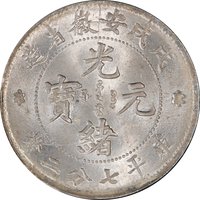
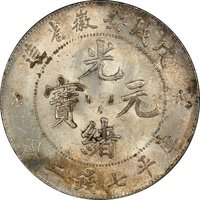
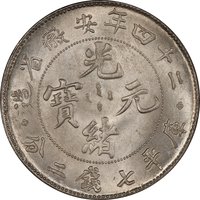
Obverse
Description:
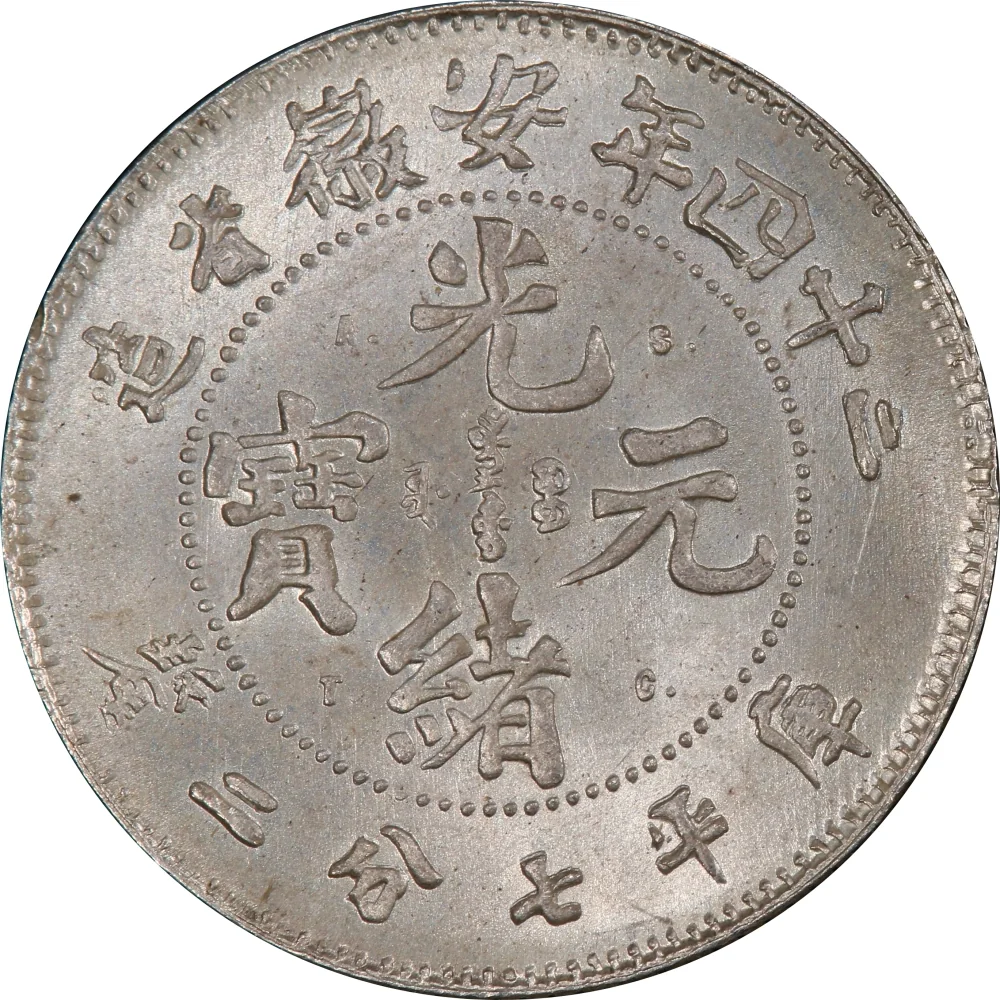
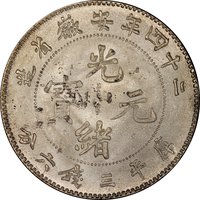
Chinese ideograms top to bottom, right to left, with central Manchu text, all encircled by more Chinese characters.
Inscription:
造省徽安年四十二
光
ᠪᠠᡩᠠᡵᠠᠩᡤᠠ
寶 ᠶᡠᠸᠠᠨ ᠪᠣᠣ 元
ᡩᠣᡵᠣ
緒
釐二分七平庫
光
ᠪᠠᡩᠠᡵᠠᠩᡤᠠ
寶 ᠶᡠᠸᠠᠨ ᠪᠣᠣ 元
ᡩᠣᡵᠣ
緒
釐二分七平庫
Translation:
Made by the Board of Revenue in the 42nd Year of the Guangxu Reign Era
Badarangga
Yuan Bao (Standard Coin)
Doro (Virtuous)
Guangxu
Seven Fen and Two Li (0.72 Tael) - Treasury Standard
Badarangga
Yuan Bao (Standard Coin)
Doro (Virtuous)
Guangxu
Seven Fen and Two Li (0.72 Tael) - Treasury Standard
Scripts: Chinese, Mongolian / Manchu
Languages: Manchu, Classical Chinese
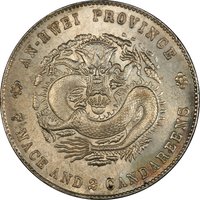
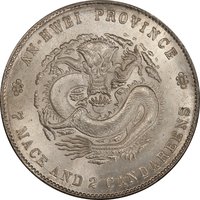
Reverse
Description:
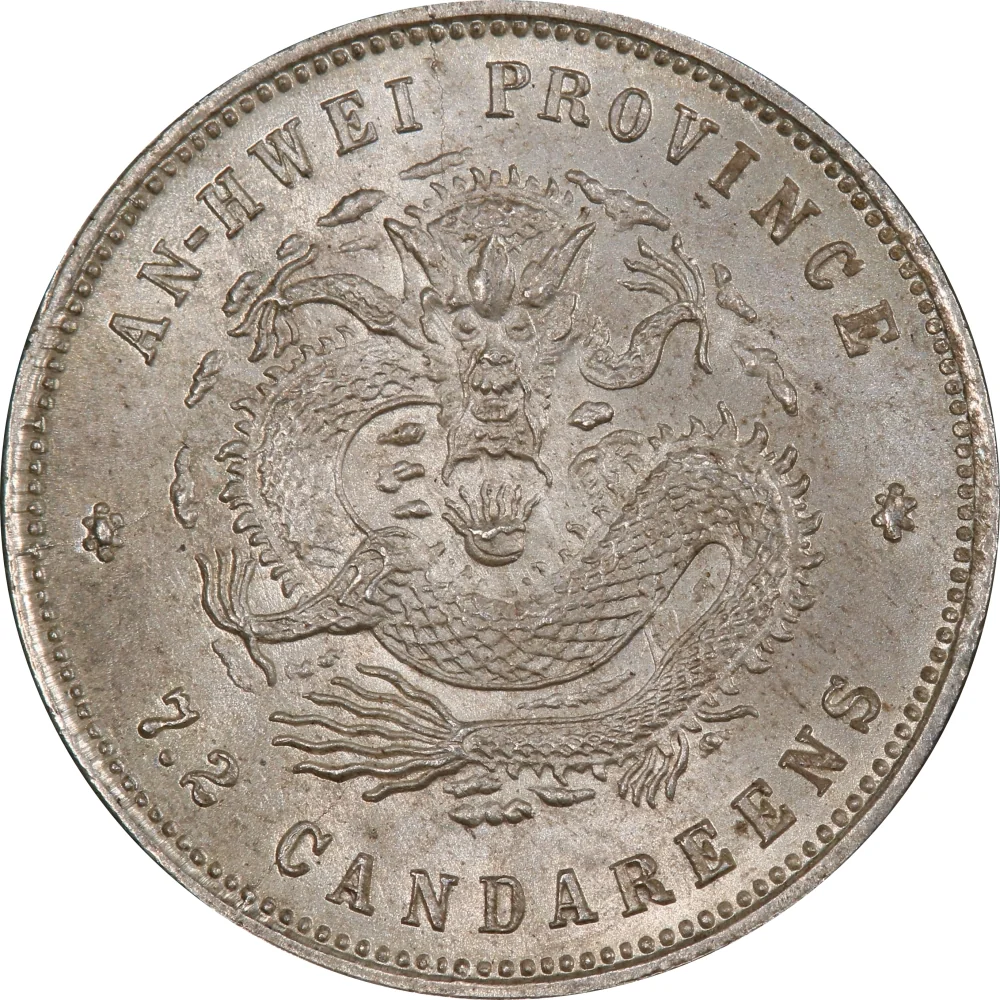
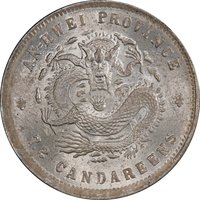
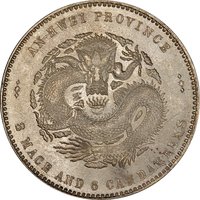
Dragon encircling a pearl, surrounded by English text.
Inscription:
AN-HWEI PROVINCE
7.2 CANDAREENS
7.2 CANDAREENS
Script: Latin
Edge
Reeded.
Categories
| Mythology> Fantastic animal |
Mintings
| Year | Mint Mark | Mintage | Quality | Collection |
|---|---|---|---|---|
| 1898 | — | — |
Historical background
In 1898, the currency situation in Anhwei (Anhui) Province was one of profound complexity and instability, mirroring the wider monetary crisis of the late Qing Dynasty. The province operated under a chaotic multi-currency system with no effective central control. The primary mediums of exchange included silver sycee (measured in taels), copper cash coins (wen), and a growing influx of foreign silver dollars, particularly Mexican "Eagle" dollars. These currencies floated against each other with highly variable exchange rates that differed from town to town, creating a paralyzing environment for trade and taxation. Furthermore, the quality and weight of silver ingots and the metal content of copper coins were inconsistent, leading to widespread counterfeiting and clipping, which eroded public trust.
This monetary disorder was exacerbated by severe internal and external pressures. Domestically, the Qing government's finances were crippled by indemnities from the Sino-Japanese War (1894–95), leading to debasement of copper coinage to raise revenue, which triggered inflation. Internationally, the global shift to the gold standard depressed the value of silver, causing China's silver-based economy to suffer from volatile exchange rates. In Anhwei, a major agricultural and tea-producing region, this meant farmers and merchants faced unpredictable costs and revenues. The province also felt the economic encroachment of foreign spheres of influence, as nearby Shanghai and the Yangtze River, vital for Anhwei's commerce, saw increasing dominance of foreign banknotes and silver dollars.
Local attempts to manage the crisis were largely ineffective. While some provincial authorities and merchant guilds issued their own qianpiao (private cash notes) and silver notes to facilitate transactions, these often lacked sufficient reserves, leading to failures and further loss of confidence. The Qing court's monetary reforms, like the attempted standardization of the silver tael, were slow to implement and largely ineffectual on the ground in 1898. Consequently, the currency chaos in Anhwei stifled economic development, increased social grievances, and contributed to the fertile ground of unrest that would culminate in the Boxer Rebellion and the eventual fall of the dynasty.
This monetary disorder was exacerbated by severe internal and external pressures. Domestically, the Qing government's finances were crippled by indemnities from the Sino-Japanese War (1894–95), leading to debasement of copper coinage to raise revenue, which triggered inflation. Internationally, the global shift to the gold standard depressed the value of silver, causing China's silver-based economy to suffer from volatile exchange rates. In Anhwei, a major agricultural and tea-producing region, this meant farmers and merchants faced unpredictable costs and revenues. The province also felt the economic encroachment of foreign spheres of influence, as nearby Shanghai and the Yangtze River, vital for Anhwei's commerce, saw increasing dominance of foreign banknotes and silver dollars.
Local attempts to manage the crisis were largely ineffective. While some provincial authorities and merchant guilds issued their own qianpiao (private cash notes) and silver notes to facilitate transactions, these often lacked sufficient reserves, leading to failures and further loss of confidence. The Qing court's monetary reforms, like the attempted standardization of the silver tael, were slow to implement and largely ineffectual on the ground in 1898. Consequently, the currency chaos in Anhwei stifled economic development, increased social grievances, and contributed to the fertile ground of unrest that would culminate in the Boxer Rebellion and the eventual fall of the dynasty.
💎 Extremely Rare