

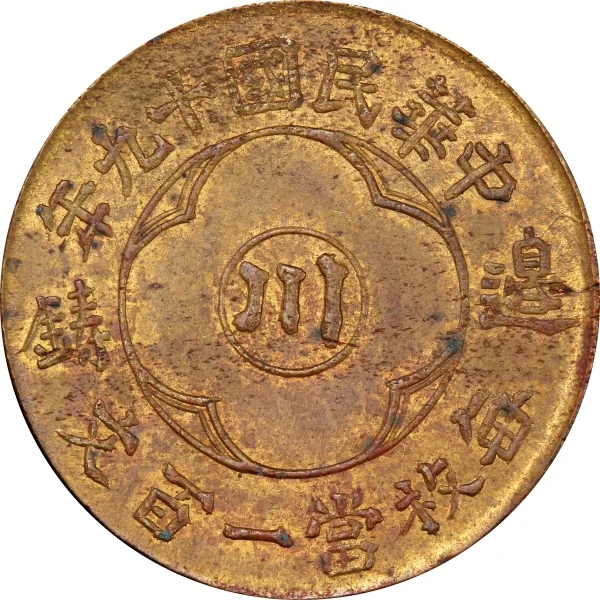
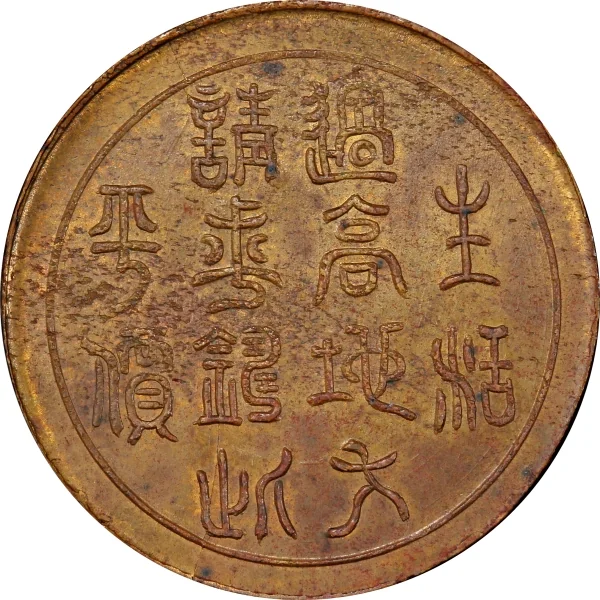
100 Cash – Szechuan Province
China
Context
Year: 1930
Chinese republican Year: 19
Country: China 
Issuer: Szechuan Province
Period:
(1912—1949)
Currency:
(1897—1949)
Demonetized: Yes
Material
References
Y: #Click to copy to clipboard466a
Numista: #297085
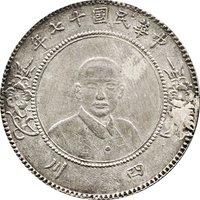
Obverse
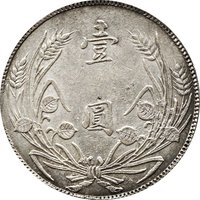
Reverse
Description:
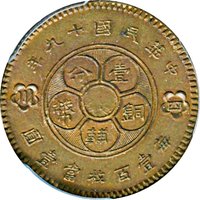
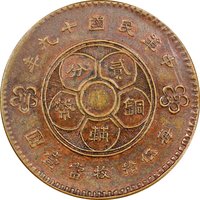
Twelve Seal script characters, read top to bottom, right to left.
Inscription:
請過
平求高鑄
價生地活
此方
平求高鑄
價生地活
此方
Translation:
Pass by this place and cast coins to seek high prices for a prosperous life.
Script: Chinese
Language: Classical Chinese
Edge
Plain
Mintings
| Year | Mint Mark | Mintage | Quality | Collection |
|---|---|---|---|---|
| 1930 | — | — |
Historical background
During the early 20th century, Sichuan Province operated under a fragmented and chaotic monetary system, a legacy of the Warlord Era. Following the collapse of the central Qing dynasty and the weak authority of the Nanjing-based Nationalist government, regional militarists (warlords) seized control of local economies. In Sichuan, this meant that numerous warlords, garrison commanders, and even commercial guilds issued their own paper currency, known as tiebi (local scrip). These notes were rarely backed by sufficient silver reserves, leading to rampant inflation, counterfeiting, and a complete lack of standardization. The value of such currency could plummet as soon as the issuing warlord was defeated or simply moved his troops, making trade and daily commerce highly speculative and unstable.
By 1930, this system had created severe economic distress. The proliferation of worthless scrip eroded public trust, and merchants often resorted to barter or the use of heavy, physical silver sycees for significant transactions. The situation was further complicated by the circulation of older copper cash coins and sporadic attempts by some Chongqing merchants to use Shanghai banknotes. The provincial economy was effectively balkanized, with different currencies dominating different counties and cities, stifling internal trade and integration. This monetary anarchy served the short-term fiscal needs of local militarists, who used currency issuance as a tool for war financing and extraction, but at the cost of long-term provincial stability and development.
The Nationalist government’s efforts to unify the currency under the fabi (legal tender) system, managed by the Central Bank of China, had made little headway in Sichuan by 1930. Real monetary unification would only begin later in the decade, following the Nationalists' political and military consolidation of the province during the Sino-Japanese War. Thus, in 1930, Sichuan remained a stark example of China's broader financial disintegration, where hyper-localized currencies reflected political fragmentation and imposed a heavy burden on the province's population and economy.
By 1930, this system had created severe economic distress. The proliferation of worthless scrip eroded public trust, and merchants often resorted to barter or the use of heavy, physical silver sycees for significant transactions. The situation was further complicated by the circulation of older copper cash coins and sporadic attempts by some Chongqing merchants to use Shanghai banknotes. The provincial economy was effectively balkanized, with different currencies dominating different counties and cities, stifling internal trade and integration. This monetary anarchy served the short-term fiscal needs of local militarists, who used currency issuance as a tool for war financing and extraction, but at the cost of long-term provincial stability and development.
The Nationalist government’s efforts to unify the currency under the fabi (legal tender) system, managed by the Central Bank of China, had made little headway in Sichuan by 1930. Real monetary unification would only begin later in the decade, following the Nationalists' political and military consolidation of the province during the Sino-Japanese War. Thus, in 1930, Sichuan remained a stark example of China's broader financial disintegration, where hyper-localized currencies reflected political fragmentation and imposed a heavy burden on the province's population and economy.

✨ Legendary