

5 cash – Szechuan Province
Add to wishlist
China
Context
Year: 1912
Chinese republican Year:: 1
Country: China
Issuer: Szechuan Province
Period:
(1912—1949)
Currency:
(1897—1949)
Demonetized: Yes
Material
References
Y: #
Numista: #297080
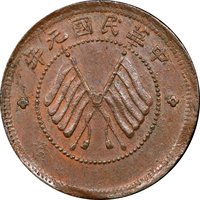
Obverse
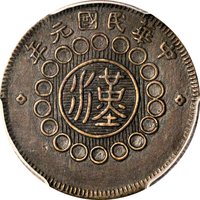
Description:
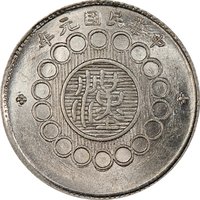
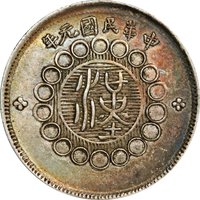
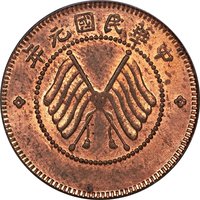
Chinese flags with characters above.
Inscription:
年元國民華中
Translation:
Republic of China Year One
Language: Chinese
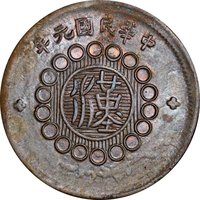
Reverse
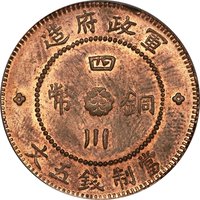
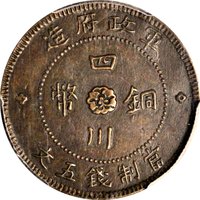
Description:
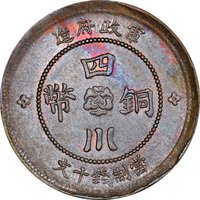
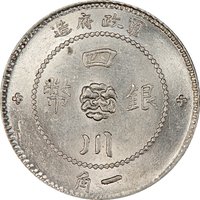
Four Chinese ideograms arranged vertically around a central flower, surrounded by additional characters.
Inscription:
造府政軍
四
幣 銅
川
文五銭制當
四
幣 銅
川
文五銭制當
Translation:
Military Government of Sichuan
Four
Copper Coin
Five Wen Value, Equivalent to System
Four
Copper Coin
Five Wen Value, Equivalent to System
Language: Chinese
Edge
Plain
Mintings
| Year | Mint Mark | Mintage | Quality | Collection |
|---|---|---|---|---|
| 1912 | — | — |
Historical background
In 1912, Szechuan (Sichuan) Province found itself in a state of profound monetary chaos following the collapse of the Qing Dynasty and the declaration of the Republic of China. The provincial economy was saturated with a bewildering variety of currencies, a legacy of the late imperial period. These included imperial silver sycee (ingots) of inconsistent weight and purity, copper "cash" coins, and, most problematically, a flood of privately issued paper notes from local banks, merchant guilds, and even pawnshops. The lack of a centralized monetary authority meant these notes were of highly questionable value and security, leading to frequent bank runs and severe depreciation.
This fragmented system was thrown into further disarray by the political upheavals of 1911-1912. The province had been a flashpoint for the Railway Protection Movement, and its subsequent declaration of independence from the Qing government disrupted what little financial order existed. To fund military expenditures, the new Szechuan military government, under Governor-General Yin Chang-heng, authorized the massive issuance of "Military Gold Certificates" (Junyong Jinpiao). These notes were not backed by specie reserves but by a future promise of redemption, and their rapid over-issue led to immediate and drastic inflation, severely eroding public trust in paper currency.
Consequently, by the end of 1912, Szechuan's currency situation was characterized by a vicious cycle of instability. The public, burned by worthless paper, desperately sought to transact in silver or copper, causing a hoarding crisis and a shortage of physical coinage. The coexistence of devalued official notes, untrustworthy private notes, and scarce hard currency crippled trade and exacerbated economic hardship. This monetary anarchy reflected the broader reality of early Republican China, where provincial autonomy often meant financial disorder, setting a difficult precedent for any future attempts at national currency unification.
This fragmented system was thrown into further disarray by the political upheavals of 1911-1912. The province had been a flashpoint for the Railway Protection Movement, and its subsequent declaration of independence from the Qing government disrupted what little financial order existed. To fund military expenditures, the new Szechuan military government, under Governor-General Yin Chang-heng, authorized the massive issuance of "Military Gold Certificates" (Junyong Jinpiao). These notes were not backed by specie reserves but by a future promise of redemption, and their rapid over-issue led to immediate and drastic inflation, severely eroding public trust in paper currency.
Consequently, by the end of 1912, Szechuan's currency situation was characterized by a vicious cycle of instability. The public, burned by worthless paper, desperately sought to transact in silver or copper, causing a hoarding crisis and a shortage of physical coinage. The coexistence of devalued official notes, untrustworthy private notes, and scarce hard currency crippled trade and exacerbated economic hardship. This monetary anarchy reflected the broader reality of early Republican China, where provincial autonomy often meant financial disorder, setting a difficult precedent for any future attempts at national currency unification.

✨ Legendary