

12 Centimes – Haiti
Haiti
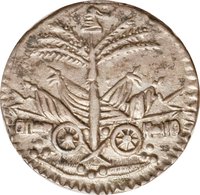
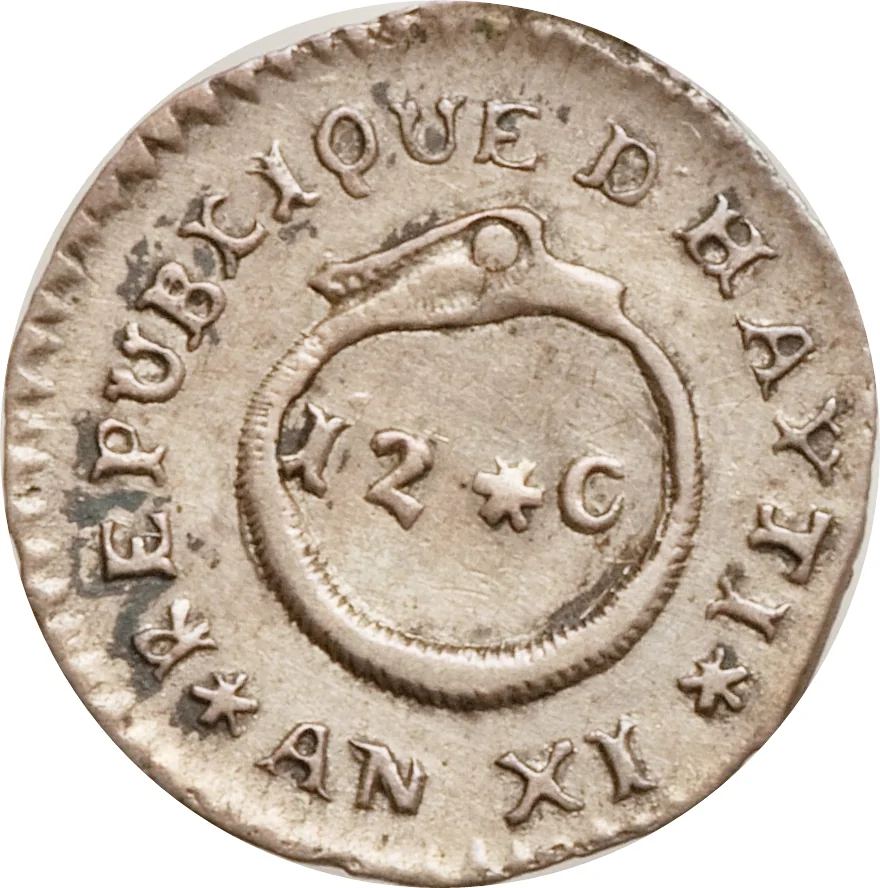
Obverse
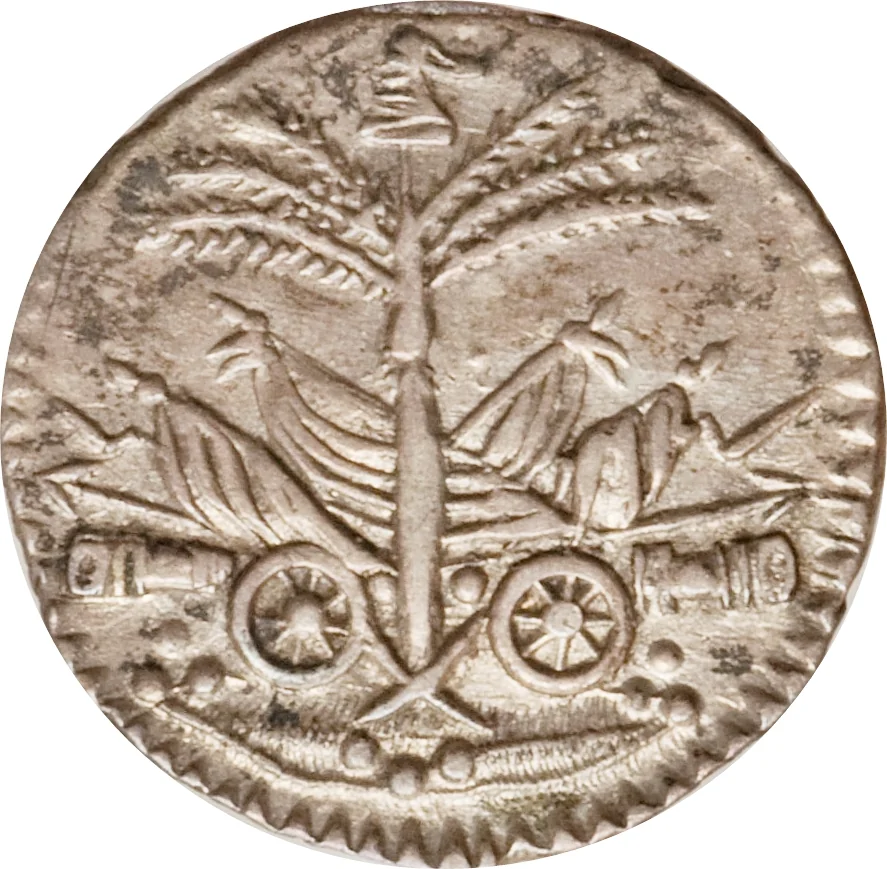
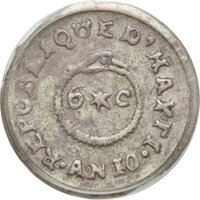
Reverse
Description:
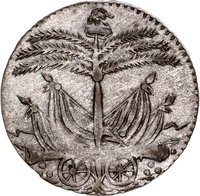
Heraldic emblem
Edge
Plain
Mintings
| Year | Mint Mark | Mintage | Quality | Collection |
|---|---|---|---|---|
| 1813 | — | — | ||
| 1814 | — | — | ||
| 1815 | — | — |
Historical background
In 1813, Haiti’s currency situation was a direct legacy of its revolutionary triumph and subsequent isolation. Having declared independence from France in 1804 under Emperor Jacques I (Jean-Jacques Dessalines), and later divided in 1807 into the northern State of Haiti under King Henry Christophe and the southern Republic of Haiti under President Alexandre Pétion, the nation faced profound economic challenges. Internationally blockaded and denied diplomatic recognition by major powers fearful of its slave revolt precedent, Haiti was cut off from formal credit and found its agricultural exports, particularly coffee, hampered. This isolation forced both Haitian states to develop autonomous fiscal systems without access to foreign specie (gold and silver coins), which were the bedrock of global trade at the time.
The primary circulating medium within Haiti was therefore a heterogeneous mix of foreign coins, alongside government-issued paper money and token coins. These local currencies were not backed by precious metal reserves but by the authority of the respective governments, essentially functioning as fiat money. In the North, Christophe maintained a more authoritarian system, issuing coins stamped with his likeness and enforcing their use to fund his lavish court and monumental projects like the Citadelle Laferrière. In the more liberal South, Pétion resorted to printing paper gourde notes to cover state expenses, including his landmark land redistribution program. This proliferation of paper, without sufficient economic output or hard currency backing, inevitably led to depreciation.
Consequently, by 1813, inflation was a growing concern, especially in Pétion’s republic. The value of the paper gourde fluctuated and fell against the still-circulating foreign silver and gold coins, which remained preferred for significant transactions. This created a dual-tier economy where hard currency was hoarded for foreign trade and savings, while the paper notes fueled domestic commerce at an eroding value. Thus, Haiti’s currency landscape in 1813 was defined by fragmentation, experimentation under duress, and the inflationary pressures of issuing money to sustain statehood in the face of a hostile world.
The primary circulating medium within Haiti was therefore a heterogeneous mix of foreign coins, alongside government-issued paper money and token coins. These local currencies were not backed by precious metal reserves but by the authority of the respective governments, essentially functioning as fiat money. In the North, Christophe maintained a more authoritarian system, issuing coins stamped with his likeness and enforcing their use to fund his lavish court and monumental projects like the Citadelle Laferrière. In the more liberal South, Pétion resorted to printing paper gourde notes to cover state expenses, including his landmark land redistribution program. This proliferation of paper, without sufficient economic output or hard currency backing, inevitably led to depreciation.
Consequently, by 1813, inflation was a growing concern, especially in Pétion’s republic. The value of the paper gourde fluctuated and fell against the still-circulating foreign silver and gold coins, which remained preferred for significant transactions. This created a dual-tier economy where hard currency was hoarded for foreign trade and savings, while the paper notes fueled domestic commerce at an eroding value. Thus, Haiti’s currency landscape in 1813 was defined by fragmentation, experimentation under duress, and the inflationary pressures of issuing money to sustain statehood in the face of a hostile world.
💎 Extremely Rare