

20 Cash – Kansu Province
China
Context
Year: 1919
Chinese republican Year: 8
Country: China 
Issuer: Kansu Province
Period:
(1912—1949)
Currency:
(1920—1949)
Demonetized: Yes
References
Y: #Click to copy to clipboard–
Numista: #276309
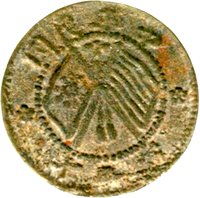
Obverse
Description:
Crossed flags with Chinese characters.
Inscription:
幣銅中華
年八民國
年八民國
Translation:
Copper Coin of the Republic of China
Year Eight
Year Eight
Language: Chinese
Reverse
Description:
Three Chinese characters encircled by a wreath.
Inscription:
貳
拾
文
拾
文
Translation:
Two
Ten
Cash
Ten
Cash
Language: Chinese
Edge
Plain
Mintings
| Year | Mint Mark | Mintage | Quality | Collection |
|---|---|---|---|---|
| 1919 | — | — |
Historical background
In 1919, Kansu (Gansu) Province was mired in a complex and debilitating currency crisis, a direct consequence of China's wider political fragmentation during the Warlord Era. Following the fall of the Qing Dynasty, the province was under the control of a succession of regional militarists, whose primary concern was funding their armies rather than maintaining monetary stability. The central government in Beijing had effectively lost the power to enforce a unified currency system, leading to a chaotic proliferation of money. In Kansu, this meant that alongside the rapidly depreciating national currency, a mix of old imperial copper coins (cash), silver sycee (by weight), and a flood of unbacked paper notes issued by local military authorities and even large merchants all circulated simultaneously.
The most acute problem was the rampant issuance of gongpiao (official notes) by the Kansu provincial government and its military rulers. These notes were essentially fiat currency, printed with little to no silver reserve to guarantee their value. To finance military campaigns and administrative costs, authorities printed these notes in excessive volumes, leading to severe inflation and a swift loss of public confidence. The value of paper money could plummet dramatically between one town and the next, and it was often discounted heavily against the more trusted silver. This created a two-tier economy where peasants and laborers paid in devalued paper suffered immensely, while transactions in silver or copper remained the preferred, more stable method for those who could demand it.
This monetary chaos severely disrupted Kansu's agrarian economy and trade. The uncertainty in exchange rates stifled commerce, as merchants faced immense risk in accepting payment. The situation exacerbated the province's existing poverty and isolation, making it difficult to integrate into any broader national economic framework. Ultimately, the currency disorder of 1919 was not an isolated financial issue but a stark symptom of the collapse of central authority, reflecting how warlord rule directly translated into economic hardship for the population of one of China's poorest and most remote regions.
The most acute problem was the rampant issuance of gongpiao (official notes) by the Kansu provincial government and its military rulers. These notes were essentially fiat currency, printed with little to no silver reserve to guarantee their value. To finance military campaigns and administrative costs, authorities printed these notes in excessive volumes, leading to severe inflation and a swift loss of public confidence. The value of paper money could plummet dramatically between one town and the next, and it was often discounted heavily against the more trusted silver. This created a two-tier economy where peasants and laborers paid in devalued paper suffered immensely, while transactions in silver or copper remained the preferred, more stable method for those who could demand it.
This monetary chaos severely disrupted Kansu's agrarian economy and trade. The uncertainty in exchange rates stifled commerce, as merchants faced immense risk in accepting payment. The situation exacerbated the province's existing poverty and isolation, making it difficult to integrate into any broader national economic framework. Ultimately, the currency disorder of 1919 was not an isolated financial issue but a stark symptom of the collapse of central authority, reflecting how warlord rule directly translated into economic hardship for the population of one of China's poorest and most remote regions.

✨ Legendary