

1 Yuan – Kweichow Province
China
Context
Year: 1890
Chinese - Guangxu era Year: 16
Country: China 
Issuer: Kweichow Province
Ruler: Guangxu
Currency:
(1888—1949)
Demonetized: Yes
Material

References
Numista: #275245
Value
Bullion value: $65.15
Obverse
Description:
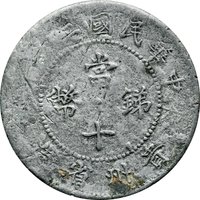
A dragon coils among Chinese characters.
Inscription:
貴川官爐造光緒十六年
Translation:
Manufactured by the official mint of Guichuan in the 16th year of the Guangxu reign.
Language: Chinese
Reverse
Description:
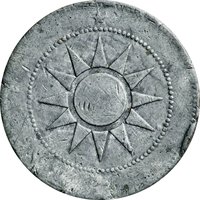
Two Chinese characters encircled by a wreath.
Inscription:
黔
寶
寶
Translation:
Guizhou Treasure
Language: Chinese
Edge
Categories
| Mythology> Fantastic animal |
| Plants> Flower |
Mintings
| Year | Mint Mark | Mintage | Quality | Collection |
|---|---|---|---|---|
| 1890 | — | — |
Historical background
In 1890, Kweichow (Guizhou) Province operated within a complex and fragmented monetary system, typical of late Qing China but exacerbated by the region's poverty and isolation. The official currency was the silver tael, a unit of weight rather than a coin, requiring cumbersome assaying for each transaction. Copper cash coins (tongbao) with square holes, strung in multiples of 100 or 1000, served as the everyday currency for the majority of the population. However, the scarcity of official mint output and the high cost of transporting heavy coinage led to severe shortages of reliable small-denomination currency.
This vacuum was filled by a proliferation of private and local monies, creating a chaotic financial environment. Various circulating media included cut or debased silver fragments, lead and tin tokens issued by local merchants, and "native notes" or privately minted copper coins of dubious value. Critically, the province was also inundated with "bad money"—counterfeit copper cash and heavily debased issues from unofficial mints, often from neighboring provinces like Yunnan and Sichuan. The lack of effective provincial mint control meant the value and acceptability of any coin or note were highly localized and constantly in flux.
The currency chaos reflected and intensified Kweichow's economic struggles. It hindered trade, complicated tax collection (which was demanded in silver), and placed ordinary people at the mercy of manipulative money-changers. While the Qing government recognized the destabilizing effect of such monetary disorder, its central authority was waning, and it lacked the resources or will to impose a uniform system in a remote, mountainous province. This situation would persist until the broader monetary reforms of the early 20th century began to slowly take effect.
This vacuum was filled by a proliferation of private and local monies, creating a chaotic financial environment. Various circulating media included cut or debased silver fragments, lead and tin tokens issued by local merchants, and "native notes" or privately minted copper coins of dubious value. Critically, the province was also inundated with "bad money"—counterfeit copper cash and heavily debased issues from unofficial mints, often from neighboring provinces like Yunnan and Sichuan. The lack of effective provincial mint control meant the value and acceptability of any coin or note were highly localized and constantly in flux.
The currency chaos reflected and intensified Kweichow's economic struggles. It hindered trade, complicated tax collection (which was demanded in silver), and placed ordinary people at the mercy of manipulative money-changers. While the Qing government recognized the destabilizing effect of such monetary disorder, its central authority was waning, and it lacked the resources or will to impose a uniform system in a remote, mountainous province. This situation would persist until the broader monetary reforms of the early 20th century began to slowly take effect.

✨ Legendary