

1 Yuan – Kweichow Province
China
Context
Year: 1888
Chinese - Guangxu era Year: 14
Country: China 
Issuer: Kweichow Province
Ruler: Guangxu
Currency:
(1888—1949)
Demonetized: Yes
Material
References
Numista: #275239
Value
Bullion value: $70.75
Obverse
Description:
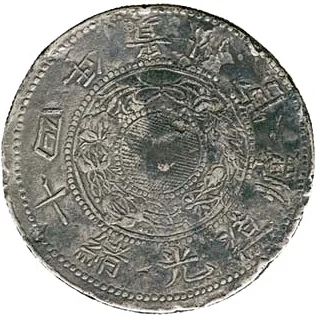
A wreath encircling horizontal lines, surrounded by Chinese characters.
Inscription:
貴川官爐造光緒十四年
Translation:
Manufactured by Guichuan Official Mint in the 14th year of the Guangxu reign.
Language: Chinese
Reverse
Description:
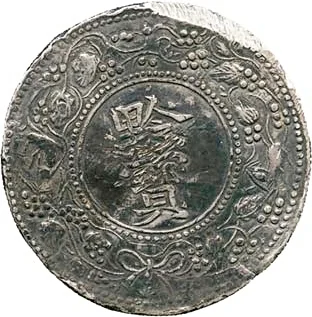
Two Chinese characters encircled by a wreath.
Inscription:
黔
寶
寶
Translation:
Guizhou Treasure
Language: Chinese
Edge
Mintings
| Year | Mint Mark | Mintage | Quality | Collection |
|---|---|---|---|---|
| 1888 | — | — |
Historical background
In 1888, Kweichow (modern Guizhou) Province operated within a complex and fragmented monetary system typical of late Qing China, characterized by a severe shortage of standardized official coinage. The primary medium for larger transactions was the silver tael, a unit of weight rather than a minted coin, which led to complications as the purity and weight standards (such as the local "Kweichow tael") often differed from those used in other provinces, disrupting interregional trade. For everyday commerce, the populace relied on a chaotic mix of copper cash coins, many of which were old, privately minted, or debased, leading to fluctuating and unreliable exchange rates between copper and silver.
This monetary instability was exacerbated by Kweichow's relative poverty, rugged geography, and the lingering effects of the Panthay and Miao rebellions, which had devastated the local economy and infrastructure in the preceding decades. The provincial government in Guiyang had limited capacity to mint its own currency or control the influx of inferior coins from neighboring provinces like Yunnan and Sichuan. Consequently, a significant "cash famine" plagued the region, where the scarcity of legitimate copper coins hindered daily market activities and encouraged widespread counterfeiting.
The situation in Kweichow reflected the broader monetary crisis of the Qing dynasty, where the central government's inability to provide a uniform currency created economic friction and localized inflation. While imperial reforms were being debated at the national level, in remote Kweichow in 1888, merchants and peasants alike navigated a daily economy defined by uncertainty, relying on a cumbersome system of weighing silver bullion and bargaining over the value of disparate copper coins, all of which stifled economic recovery and integration.
This monetary instability was exacerbated by Kweichow's relative poverty, rugged geography, and the lingering effects of the Panthay and Miao rebellions, which had devastated the local economy and infrastructure in the preceding decades. The provincial government in Guiyang had limited capacity to mint its own currency or control the influx of inferior coins from neighboring provinces like Yunnan and Sichuan. Consequently, a significant "cash famine" plagued the region, where the scarcity of legitimate copper coins hindered daily market activities and encouraged widespread counterfeiting.
The situation in Kweichow reflected the broader monetary crisis of the Qing dynasty, where the central government's inability to provide a uniform currency created economic friction and localized inflation. While imperial reforms were being debated at the national level, in remote Kweichow in 1888, merchants and peasants alike navigated a daily economy defined by uncertainty, relying on a cumbersome system of weighing silver bullion and bargaining over the value of disparate copper coins, all of which stifled economic recovery and integration.

✨ Legendary