

1 Jiao – Chihli Province
China
Context
Year: 1896
Chinese - Guangxu era Year: 22
Country: China 
Issuer: Chihli Province
Ruler: Guangxu
Currency:
(1896—1940)
Demonetized: Yes
Total mintage: 5,000
Material
References
Y: #Click to copy to clipboard62
Numista: #274554
Value
Bullion value: $6.12
Obverse
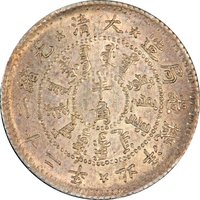
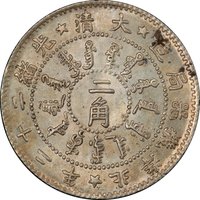
Description:
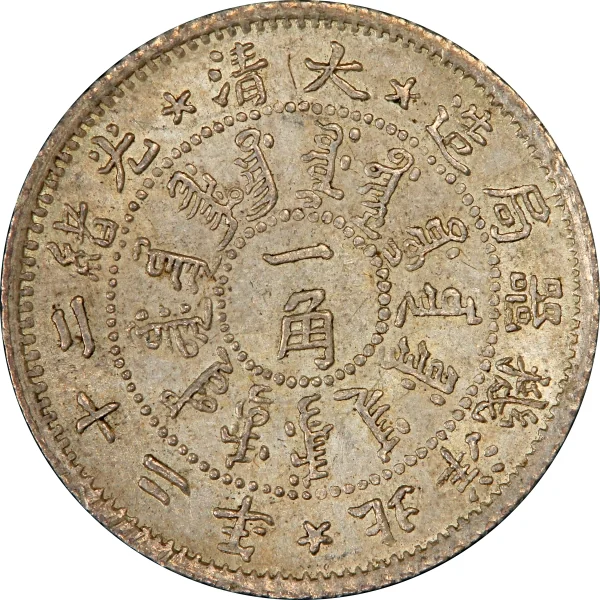
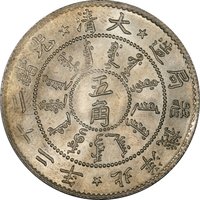
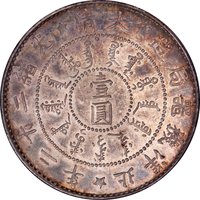
Manchu text encircles two Chinese characters, all within a larger ring of ideograms.
Inscription:
清大
造局器械洋北 - 年二十二绪光
ᡩᠠᡳᠴᡳᠩ ᡤᡠᡵᡠᠨ ᡳ᠋ ᠪᠠᡩᠠᡵᠠᠩᡤᠠ ᡩᠣᡵᠣ ᡳ᠋ ᠣᡵᡳᠨ ᠵᡠᠸᡝᠴᡳ ᠠᠨᡳᠶᠠ ᠠᠮᠠᡵᡤᡳ ᠨᠠᠮᡠ ᡳ᠋ ᡨᡝᡨᡠᠨ ᡧᡠᡵᡩᡝᡵᡝ ᡴᡡᠸᠠᡵᠠᠨ ᠸᡝᡳᡵᡝᡥᡝ
一
角
造局器械洋北 - 年二十二绪光
ᡩᠠᡳᠴᡳᠩ ᡤᡠᡵᡠᠨ ᡳ᠋ ᠪᠠᡩᠠᡵᠠᠩᡤᠠ ᡩᠣᡵᠣ ᡳ᠋ ᠣᡵᡳᠨ ᠵᡠᠸᡝᠴᡳ ᠠᠨᡳᠶᠠ ᠠᠮᠠᡵᡤᡳ ᠨᠠᠮᡠ ᡳ᠋ ᡨᡝᡨᡠᠨ ᡧᡠᡵᡩᡝᡵᡝ ᡴᡡᠸᠠᡵᠠᠨ ᠸᡝᡳᡵᡝᡥᡝ
一
角
Translation:
Clear Great
Manufacturing Bureau Equipment Foreign North - 22nd Year of Guangxu
One
Jiao
Manufacturing Bureau Equipment Foreign North - 22nd Year of Guangxu
One
Jiao
Scripts: Chinese, Mongolian / Manchu
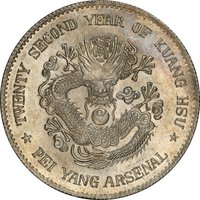
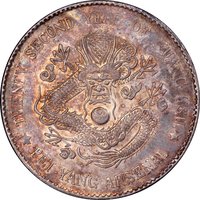
Reverse
Edge
Reeded.
Categories
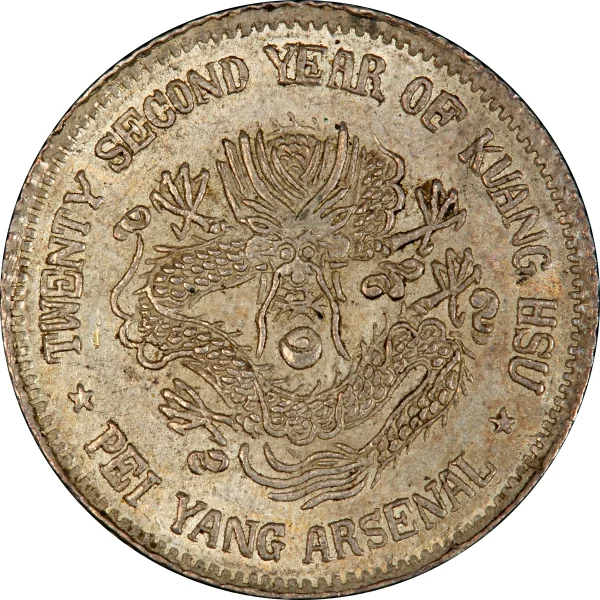
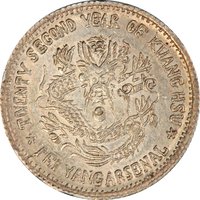
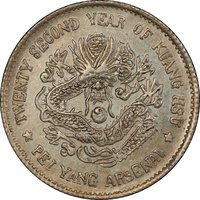
| Mythology> Fantastic animal |
Mintings
| Year | Mint Mark | Mintage | Quality | Collection |
|---|---|---|---|---|
| 1896 | — | 5,000 |
Historical background
In 1896, Chihli Province (roughly modern-day Hebei and the municipalities of Beijing and Tianjin) existed within a complex and deteriorating monetary system, emblematic of the wider Qing Dynasty's fiscal crisis. The province, containing the imperial capital Beijing and the vital treaty port of Tianjin, was at the epicenter of competing currency streams. Officially, the realm used a bimetallic system of silver taels (by weight) and copper cash coins, but in practice, a chaotic mix of local tael standards, foreign-minted silver dollars (especially Mexican and British trade dollars), and privately issued banknotes from native banks (qianzhuang) all circulated with fluctuating values. This fragmentation caused severe hindrance to trade and tax collection, as constant conversion and regional disparities created uncertainty and opportunity for fraud.
The situation was acutely exacerbated by the aftermath of the First Sino-Japanese War (1894-1895). The crushing indemnity of 230 million taels of silver, payable in British pounds, forced the Qing government to borrow heavily from foreign banks, draining the national silver reserve. This external drain precipitated a severe internal scarcity of silver in Chihli and across the empire. The resulting divergence between the market value of silver (high) and copper cash (low) created a devastating "cash famine" for the common populace, who conducted daily transactions in copper. Prices and debts denominated in cash became ruinous, causing widespread hardship and social unrest in the province.
Recognizing the chaos, reform-minded officials like Li Hongzhang, then Viceroy of Zhili (Chihli), had begun advocating for monetary standardization. However, in 1896, decisive central action was still lacking. The imperial court was aware of the need for a national silver coinage to displace foreign dollars and stabilize the system—a process that would culminate in the failed "Imperial Coinage" reforms of the early 1900s. Thus, the currency situation in Chihli in 1896 was one of profound transition and stress, caught between a collapsing traditional order, the heavy exactions of imperialism, and the first uncertain steps toward a modern, unified monetary system.
The situation was acutely exacerbated by the aftermath of the First Sino-Japanese War (1894-1895). The crushing indemnity of 230 million taels of silver, payable in British pounds, forced the Qing government to borrow heavily from foreign banks, draining the national silver reserve. This external drain precipitated a severe internal scarcity of silver in Chihli and across the empire. The resulting divergence between the market value of silver (high) and copper cash (low) created a devastating "cash famine" for the common populace, who conducted daily transactions in copper. Prices and debts denominated in cash became ruinous, causing widespread hardship and social unrest in the province.
Recognizing the chaos, reform-minded officials like Li Hongzhang, then Viceroy of Zhili (Chihli), had begun advocating for monetary standardization. However, in 1896, decisive central action was still lacking. The imperial court was aware of the need for a national silver coinage to displace foreign dollars and stabilize the system—a process that would culminate in the failed "Imperial Coinage" reforms of the early 1900s. Thus, the currency situation in Chihli in 1896 was one of profound transition and stress, caught between a collapsing traditional order, the heavy exactions of imperialism, and the first uncertain steps toward a modern, unified monetary system.
✨ Legendary