

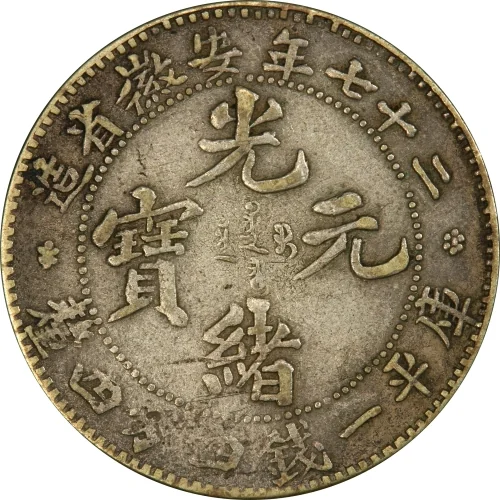
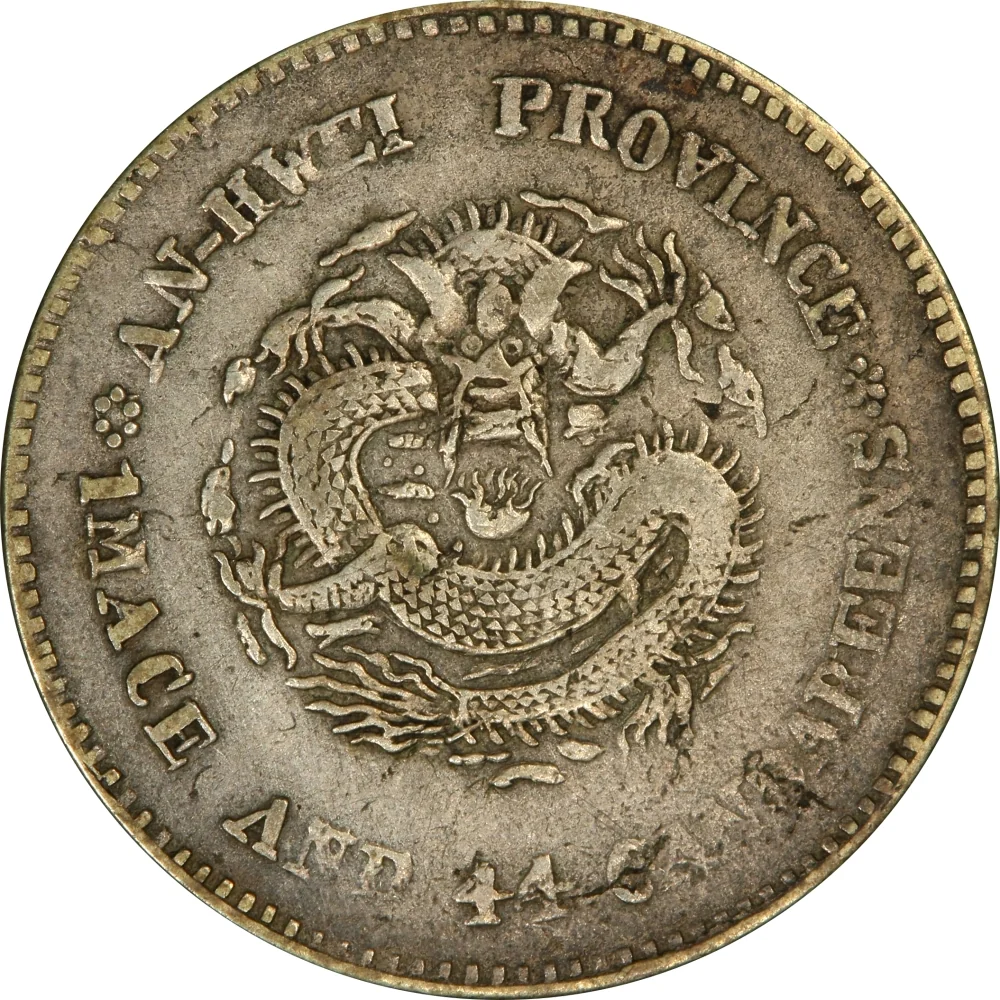
20 Fen – Anhwei Province
China
Context
Year: 1901
Chinese - Guangxu era Year: 27
Country: China 
Issuer: Anhwei Province
Ruler: Guangxu
Currency:
(1897—1949)
Demonetized: Yes
Material
References
Y: #Click to copy to clipboard43.5
Numista: #274411
Value
Bullion value: $13.96
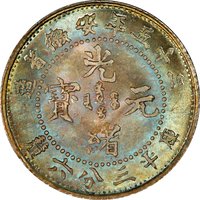
Obverse
Description:
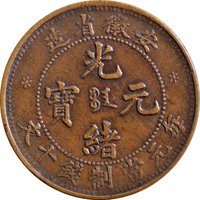
Chinese ideograms top to bottom, right to left, with central Manchu text, all encircled by more Chinese characters.
Inscription:
造省徽安年七十二
光
ᠪᠠᡩᠠᡵᠠᠩᡤᠠ
寶 ᠶᡠᠸᠠᠨ ᠪᠣᠣ 元
ᡩᠣᡵᠣ
緒
釐四分四錢一平庫
光
ᠪᠠᡩᠠᡵᠠᠩᡤᠠ
寶 ᠶᡠᠸᠠᠨ ᠪᠣᠣ 元
ᡩᠣᡵᠣ
緒
釐四分四錢一平庫
Translation:
Made in the Anhui Province, Year 72 of the Guangxu Reign
Badarangga
Yuan Bao (Coin)
Doro (Virtue/Reign)
Xu (Guangxu Reign)
One Pingku (Treasury Standard) Coin, Four Fen, Four Qian
Badarangga
Yuan Bao (Coin)
Doro (Virtue/Reign)
Xu (Guangxu Reign)
One Pingku (Treasury Standard) Coin, Four Fen, Four Qian
Scripts: Chinese, Mongolian / Manchu
Languages: Manchu, Classical Chinese
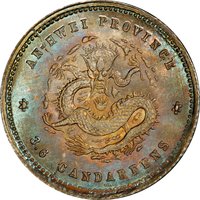
Reverse
Description:
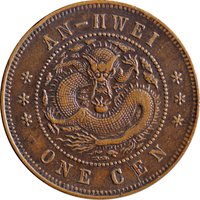
Dragon encircling a pearl, surrounded by English text.
Inscription:
AN-HWEI PROVINCE
1 MACE AND 4.4 CANDAREENS
1 MACE AND 4.4 CANDAREENS
Script: Latin
Edge
Reeded.
Categories
| Mythology> Fantastic animal |
Mintings
| Year | Mint Mark | Mintage | Quality | Collection |
|---|---|---|---|---|
| 1901 | — | — |
Historical background
In 1901, Anhwei (modern Anhui) Province, like much of late Qing China, was mired in a complex and debilitating monetary crisis. The core of the problem was a chaotic bimetallic system where silver, measured in taels, coexisted with a vast array of copper-alloy cash coins. Internationally, the price of silver had been falling for decades, devastating China's fiscal position and increasing the real burden of foreign indemnities like the one imposed after the Boxer Protocol (1901). Locally, this meant severe inflation in the copper currency used by the common populace. Provincial mints, including the one at Anking, produced debased copper coinage to raise revenue, leading to a dramatic divergence between the official exchange rate (often 1,000 cash coins per tael) and the much higher market rate, which could exceed 1,500 or even 2,000 cash per tael.
This currency disorder had devastating social and economic consequences. Peasants sold their harvest for copper cash but had to pay taxes and rents calculated in silver taels, effectively causing their real tax burden to skyrocket. Merchants and trade suffered from wildly fluctuating exchange rates between cities and even market towns, hampering internal commerce. The situation was exacerbated by the circulation of privately minted, inferior "sand" cash coins and the increasing inflow of foreign silver dollars (like Mexican Eagles), which further undermined the official Qing currency. For the provincial government, already strained by Boxer-related levies, managing this monetary collapse was a primary and nearly insurmountable challenge.
The Qing court recognized the need for unified monetary reform, but central authority was weak. In 1901, Anhwei was caught between the old, failing system and tentative, uneven attempts at modernization. While some provinces began experimenting with new copper coinage and silver yuan, Anhwei's situation in the immediate aftermath of the Boxer Uprising was one of profound instability. The currency chaos fueled widespread popular grievance, eroded government legitimacy, and contributed to the social unrest that would culminate in the 1911 Revolution. Thus, the monetary background in Anhwei was not merely a financial issue but a critical symptom of the Qing state's fragmentation and impending collapse.
This currency disorder had devastating social and economic consequences. Peasants sold their harvest for copper cash but had to pay taxes and rents calculated in silver taels, effectively causing their real tax burden to skyrocket. Merchants and trade suffered from wildly fluctuating exchange rates between cities and even market towns, hampering internal commerce. The situation was exacerbated by the circulation of privately minted, inferior "sand" cash coins and the increasing inflow of foreign silver dollars (like Mexican Eagles), which further undermined the official Qing currency. For the provincial government, already strained by Boxer-related levies, managing this monetary collapse was a primary and nearly insurmountable challenge.
The Qing court recognized the need for unified monetary reform, but central authority was weak. In 1901, Anhwei was caught between the old, failing system and tentative, uneven attempts at modernization. While some provinces began experimenting with new copper coinage and silver yuan, Anhwei's situation in the immediate aftermath of the Boxer Uprising was one of profound instability. The currency chaos fueled widespread popular grievance, eroded government legitimacy, and contributed to the social unrest that would culminate in the 1911 Revolution. Thus, the monetary background in Anhwei was not merely a financial issue but a critical symptom of the Qing state's fragmentation and impending collapse.
✨ Legendary