

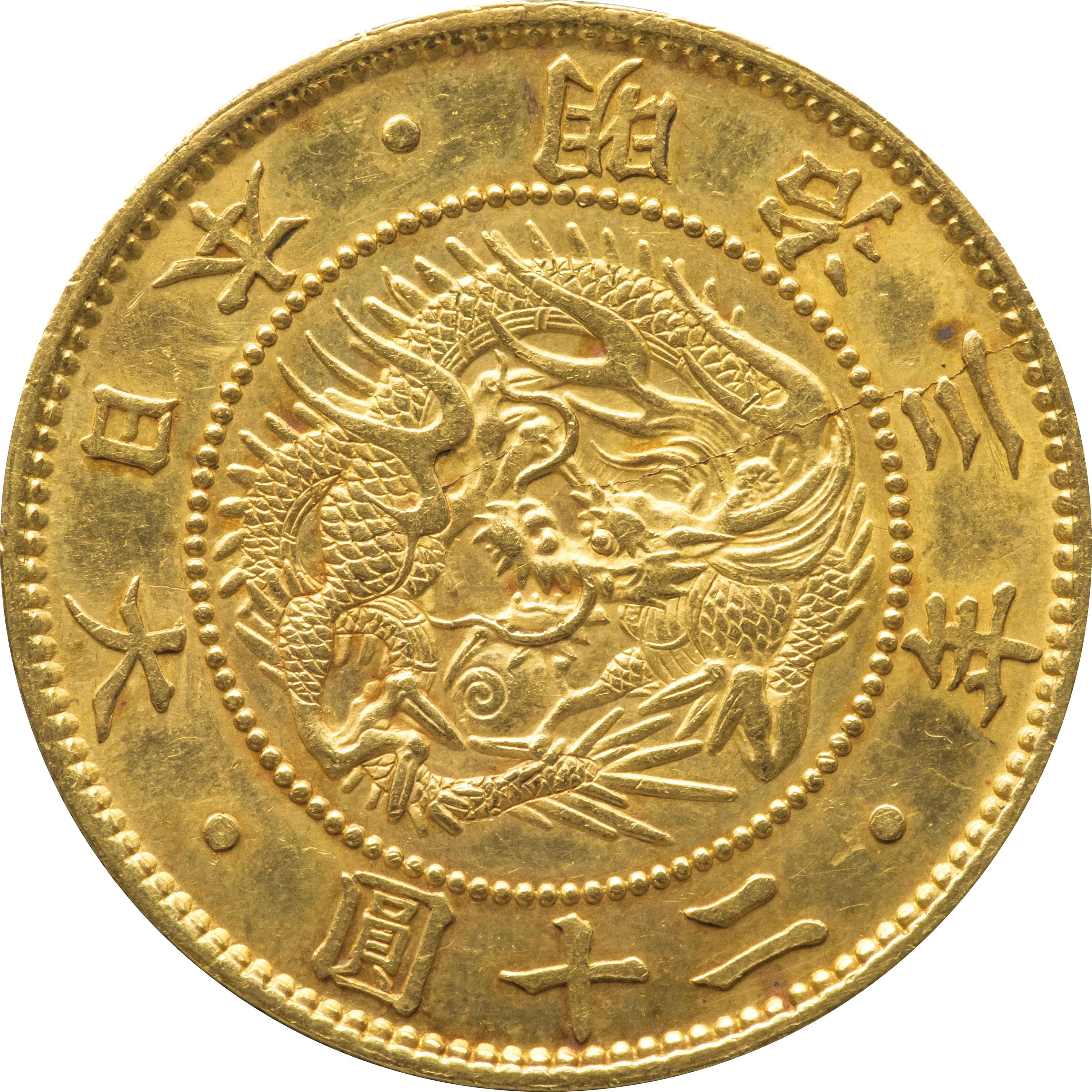
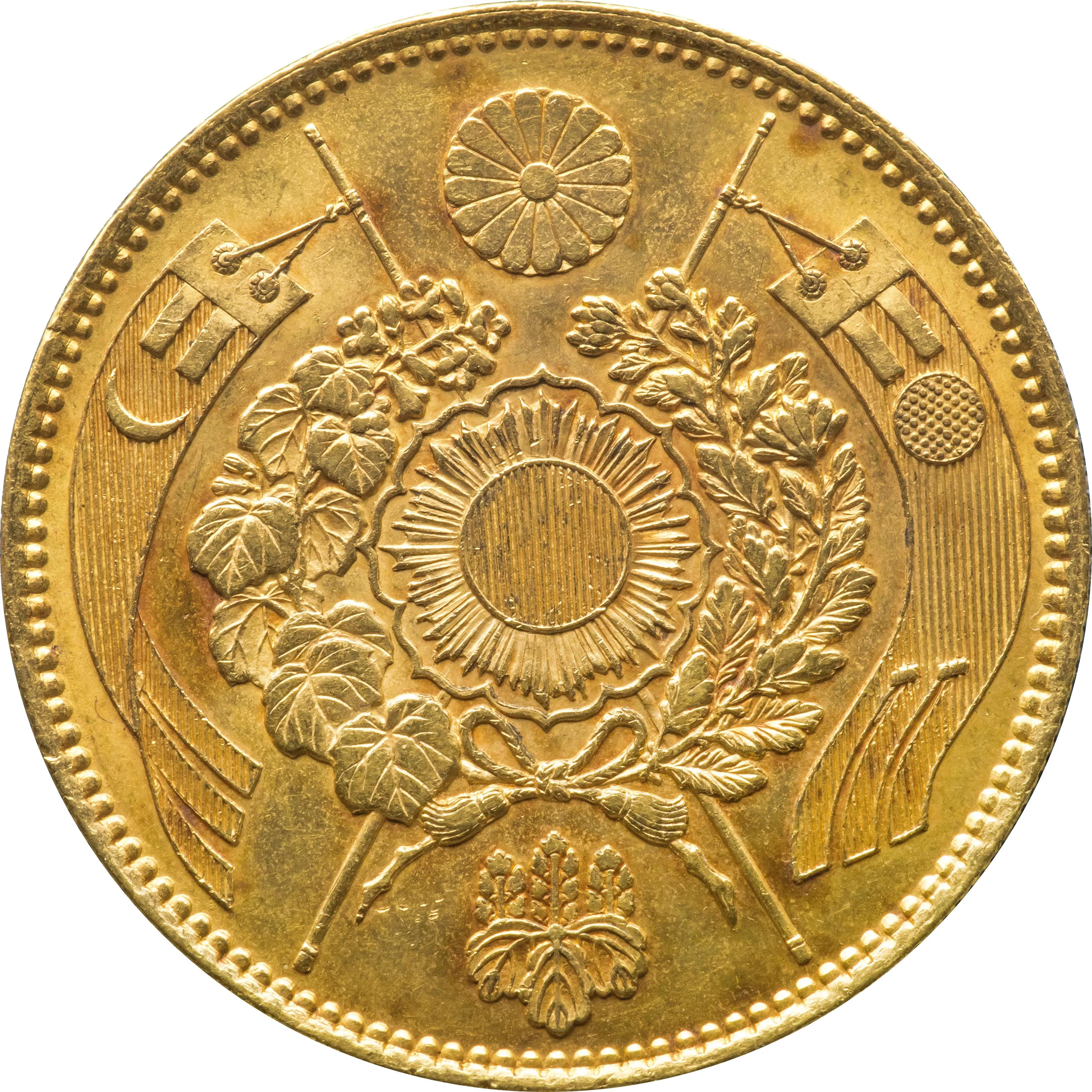

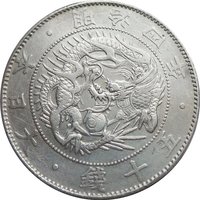
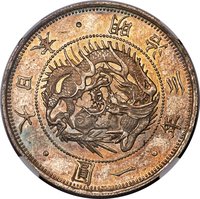
Obverse
Description:
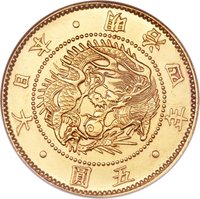
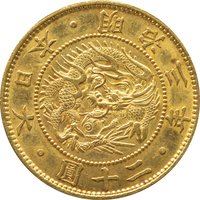
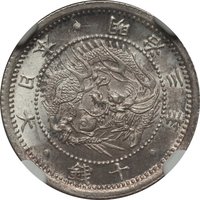
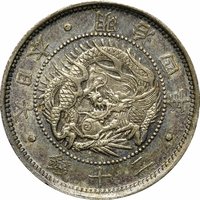
Dragon encircled by beads, legend above, value below.
Inscription:
年 三 治 明 · 本 日 大
· 圓 十 二 ·
· 圓 十 二 ·
Translation:
Third Year of Meiji; Great Japan;
Ten Sen;
Ten Sen;
Language: Chinese
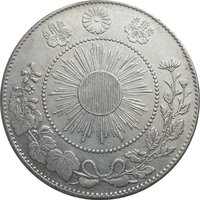
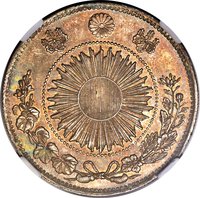
Reverse
Description:
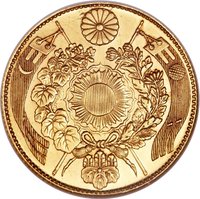
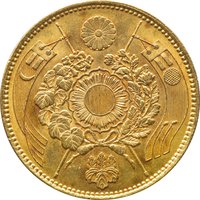
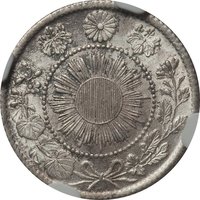
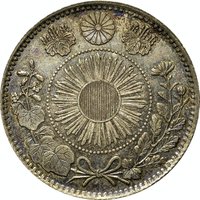
Sunburst crest on a sacred mirror, between banners, with chrysanthemum above and paulownia below.
Edge
Reeded
Categories
| Symbol> Wreath |
| Mythology> Fantastic animal |
| Symbol> Flag |
| Plants> Flower |
| Symbols> Coat of Arms |
| Symbol> Sun |
Mints
| Name | Mark |
|---|---|
| Japan Mint | — |
Mintings
| Year | Mint Mark | Mintage | Quality | Collection |
|---|---|---|---|---|
| 1870 | — | 46,139 | ||
| 1870 | — | — | Proof | |
| 1876 | — | 954 | ||
| 1877 | — | 29 | ||
| 1880 | — | 103 | ||
| 1892 | — | — |
Historical background
In the 1870s, Japan was undergoing the profound transformation of the Meiji Restoration, and its currency system was in a state of chaotic transition. The new government inherited a complex and debased feudal monetary system, where over 1,600 different types of coins and paper notes issued by the shogunate and hundreds of individual domains circulated with no fixed exchange rate. This patchwork system, riddled with counterfeiting and regional barriers, severely hampered national commerce, industrial development, and the central government's fiscal authority. Establishing a unified, modern currency was therefore a critical priority for the Meiji oligarchs to consolidate power, foster a capitalist economy, and gain recognition in the international financial system.
The government's solution was the New Currency Act of 1871, which laid the foundation for Japan's modern monetary system. It established the yen (meaning "round object") as the new decimal-based unit, adopting the gold standard with one yen defined as 1.5 grams of pure gold. The minting of new Western-style gold, silver, and copper coins began at the newly established Osaka Mint, with technical assistance from British engineers. However, the transition was fraught with difficulty. The fixed exchange rates between the new yen and old currencies often overvalued the new coinage, leading to hoarding and the export of gold, while vast quantities of obsolete feudal notes (hansatsu) remained in circulation, causing inflation and public confusion.
Consequently, the early 1870s were a period of severe monetary instability. The government's commitment to the gold standard was quickly tested by global silver depreciations, which made Japanese silver coins cheaper abroad and triggered a massive outflow of gold reserves. Furthermore, the high costs of modernization and suppressing samurai rebellions like the Satsuma Rebellion (1877) forced the government to issue large amounts of inconvertible paper currency, leading to significant inflation. Thus, while the decade began with the bold creation of a unified national currency, it ended with the system in crisis, setting the stage for the financial reforms and the eventual establishment of the Bank of Japan in the 1880s to achieve true stability.
The government's solution was the New Currency Act of 1871, which laid the foundation for Japan's modern monetary system. It established the yen (meaning "round object") as the new decimal-based unit, adopting the gold standard with one yen defined as 1.5 grams of pure gold. The minting of new Western-style gold, silver, and copper coins began at the newly established Osaka Mint, with technical assistance from British engineers. However, the transition was fraught with difficulty. The fixed exchange rates between the new yen and old currencies often overvalued the new coinage, leading to hoarding and the export of gold, while vast quantities of obsolete feudal notes (hansatsu) remained in circulation, causing inflation and public confusion.
Consequently, the early 1870s were a period of severe monetary instability. The government's commitment to the gold standard was quickly tested by global silver depreciations, which made Japanese silver coins cheaper abroad and triggered a massive outflow of gold reserves. Furthermore, the high costs of modernization and suppressing samurai rebellions like the Satsuma Rebellion (1877) forced the government to issue large amounts of inconvertible paper currency, leading to significant inflation. Thus, while the decade began with the bold creation of a unified national currency, it ended with the system in crisis, setting the stage for the financial reforms and the eventual establishment of the Bank of Japan in the 1880s to achieve true stability.
Series: 1870 Japan circulation coins
💎 Extremely Rare