

1 sen – Japan
Add to wishlist
Japan
Context
Year: 1943
Japanese - Shōwa era Year:: 18
Issuer: Japan
Ruler: Shōwa
Currency:
(since 1871)
Demonetization: 31 December 1953
Total mintage: 627,160,000
Material
References
Y: #
Numista: #25128
Value
Exchange value: 0.01 JPY
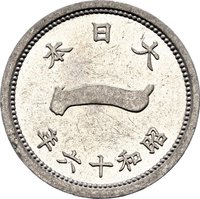
Obverse
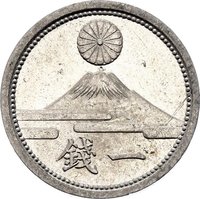
Reverse
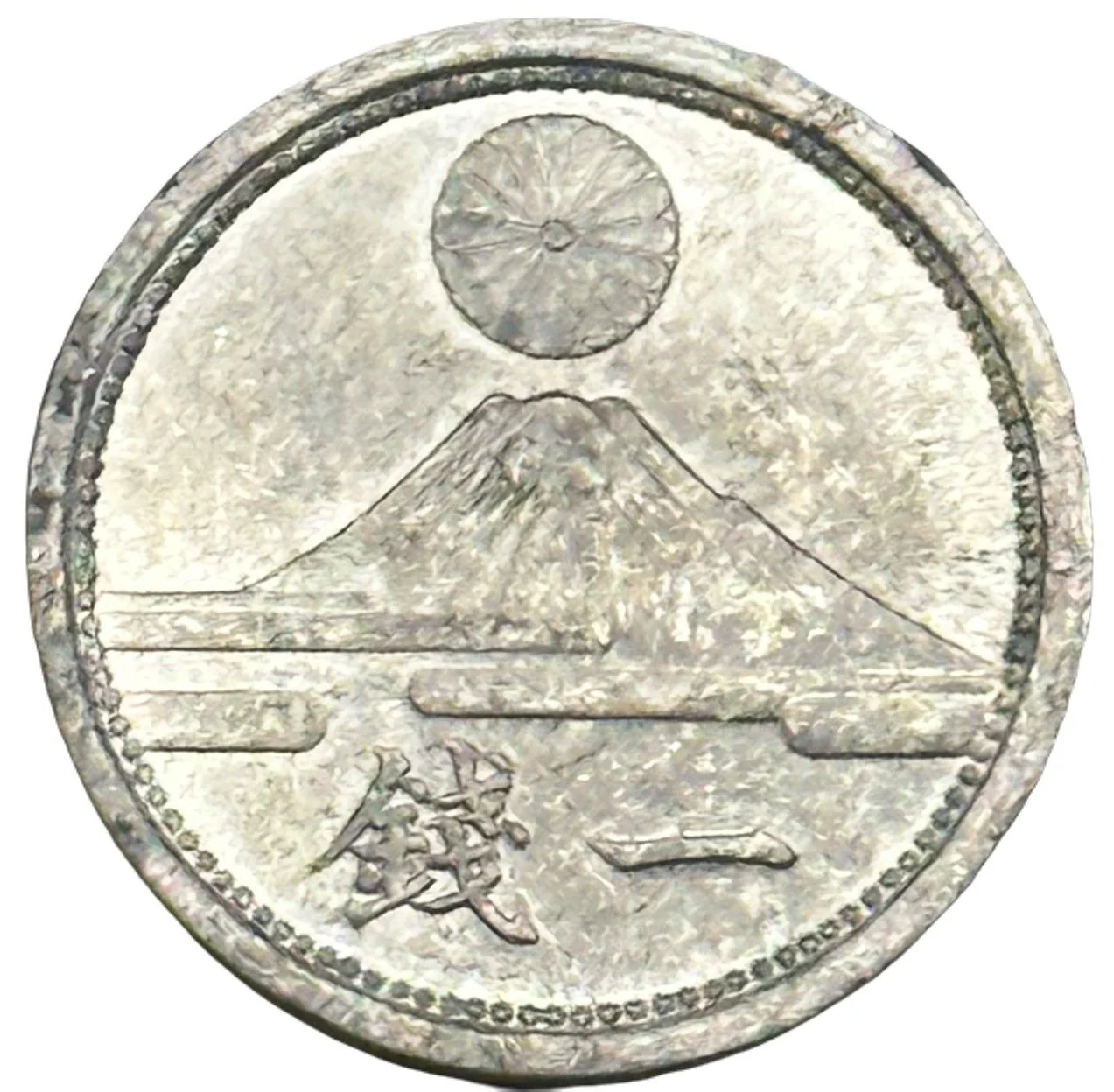
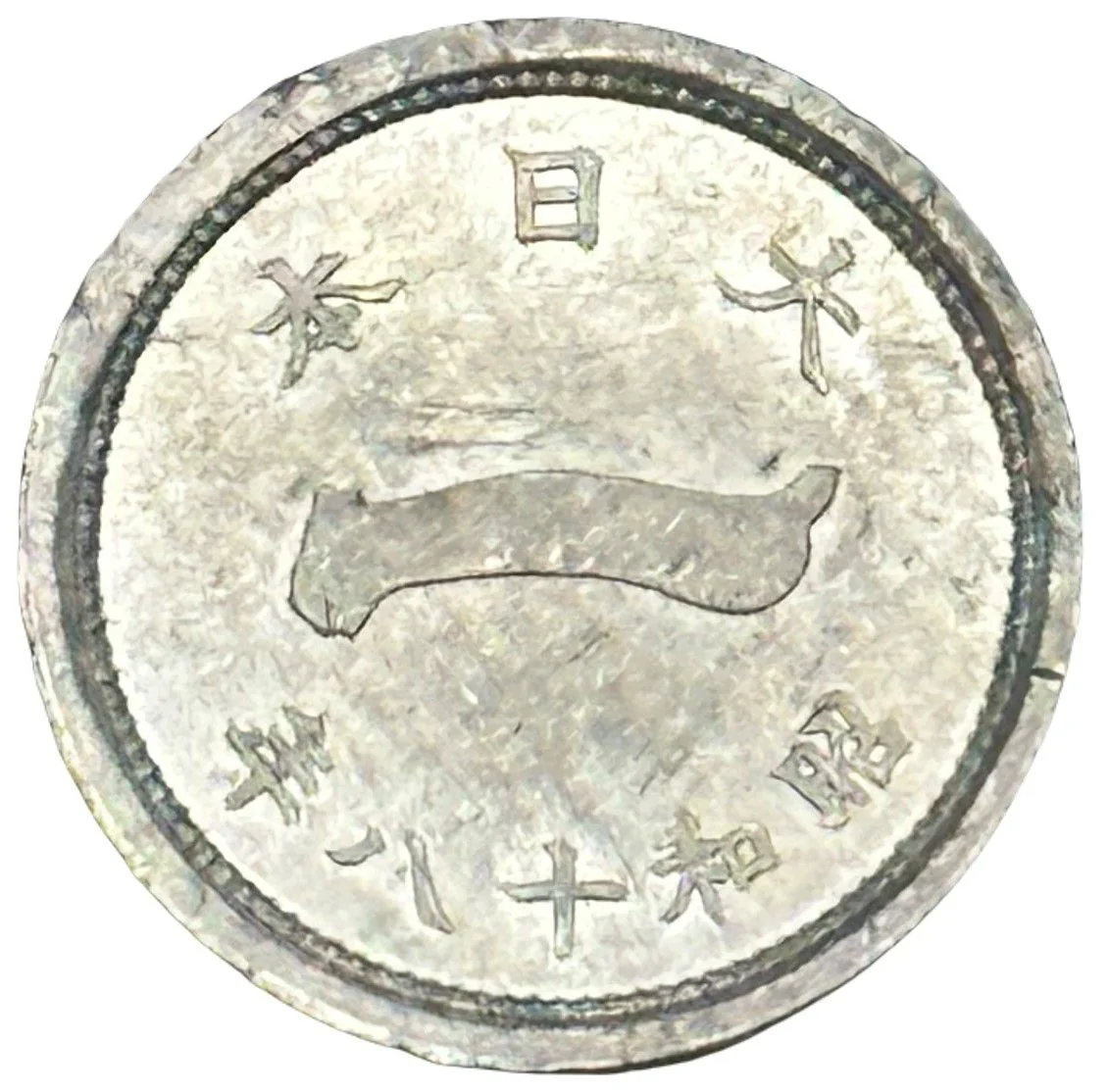
Description:
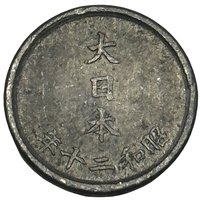
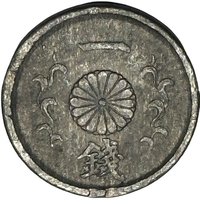
Central value, authority above, date below.
Inscription:
本 日 大
一
年 八 十 和 昭
一
年 八 十 和 昭
Translation:
The 18th year of Showa, a great day.
Language: Japanese
Edge
Plain
Mintings
| Year | Mint Mark | Mintage | Quality | Collection |
|---|---|---|---|---|
| 1943 | — | 627,160,000 |
Historical background
In 1943, Japan's currency situation was entirely subordinated to the demands of total war. The yen, managed by the Bank of Japan under strict government control, was no longer a conventional market currency but a tool for financing the vast military expansion across Asia and the Pacific. The government funded its campaigns primarily through war bonds, which the Bank of Japan was compelled to underwrite, effectively printing money to cover the spiraling deficits. This led to a significant, though still partially suppressed, expansion of the money supply, planting the seeds for the severe inflation that would erupt in the later war years and post-war period.
Internally, strict economic controls masked the currency's deteriorating real value. The government imposed comprehensive price controls, rationing, and wage freezes in an attempt to maintain stability and direct all resources toward war production. While this kept official prices artificially low, a thriving black market emerged for basic goods, where the yen traded at a fraction of its official purchasing power. Externally, the yen was imposed as the official currency in occupied territories like Korea, Manchuria, and Southeast Asia, but these "yen bloc" currencies were often military scrip, forcibly used to extract resources and fund occupation armies, further divorcing the currency from any stable economic foundation.
The broader context was one of increasing strain and isolation. By 1943, after pivotal defeats at Midway and Guadalcanal, Japan's strategic position was shifting from expansion to defense, severing vital resource lines. The ability to pay for imports from neutral nations dwindled as gold and foreign exchange reserves were exhausted and Allied naval blockades tightened. Consequently, the yen's value became entirely abstract, sustained not by economic productivity or reserves, but by government fiat and the diminishing prospect of military victory. The financial system was operating on borrowed time, with the true inflationary consequences awaiting the final years of the conflict.
Internally, strict economic controls masked the currency's deteriorating real value. The government imposed comprehensive price controls, rationing, and wage freezes in an attempt to maintain stability and direct all resources toward war production. While this kept official prices artificially low, a thriving black market emerged for basic goods, where the yen traded at a fraction of its official purchasing power. Externally, the yen was imposed as the official currency in occupied territories like Korea, Manchuria, and Southeast Asia, but these "yen bloc" currencies were often military scrip, forcibly used to extract resources and fund occupation armies, further divorcing the currency from any stable economic foundation.
The broader context was one of increasing strain and isolation. By 1943, after pivotal defeats at Midway and Guadalcanal, Japan's strategic position was shifting from expansion to defense, severing vital resource lines. The ability to pay for imports from neutral nations dwindled as gold and foreign exchange reserves were exhausted and Allied naval blockades tightened. Consequently, the yen's value became entirely abstract, sustained not by economic productivity or reserves, but by government fiat and the diminishing prospect of military victory. The financial system was operating on borrowed time, with the true inflationary consequences awaiting the final years of the conflict.
🌱 Common