

5 chon – Korean Empire
Add to wishlist
Context
Year: 1902
Korean - Gwangmu era Year:: 6
Country: Korea
Issuer: Korean Empire
Ruler: Gojong
Currency:
(1901—1910)
Demonetized: Yes
Total mintage: 2,800,000
References
KM: #
Numista: #24482
Obverse
Description:
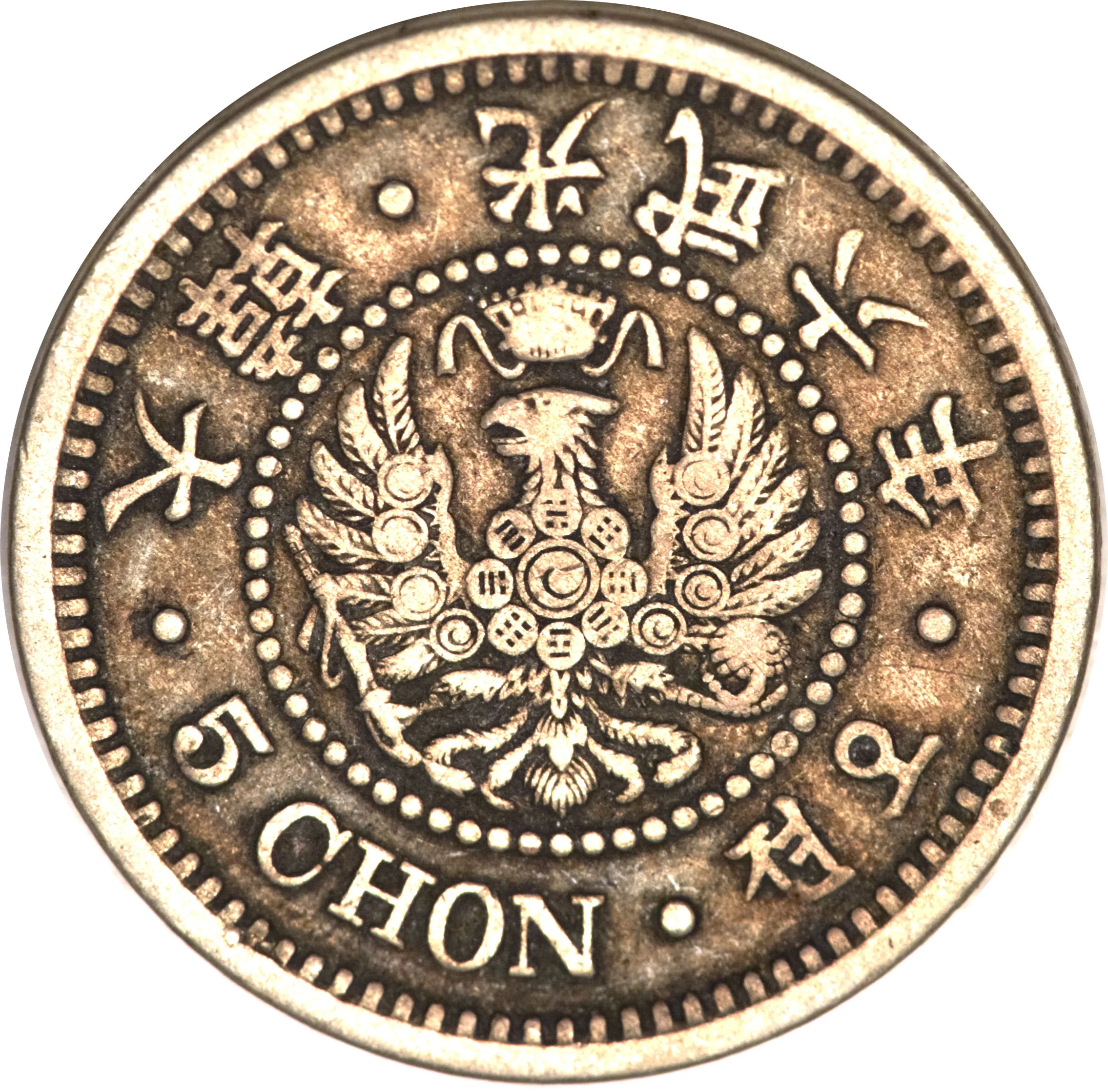
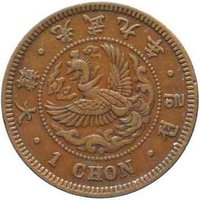
Imperial eagle, date above, denomination below.
Inscription:
• 大韓 • 光武六年 • 오젼 • 5 CHON
Translation:
• GREAT HAN • 6th Year of Gwangmu • 5 CHON
Reverse
Description:
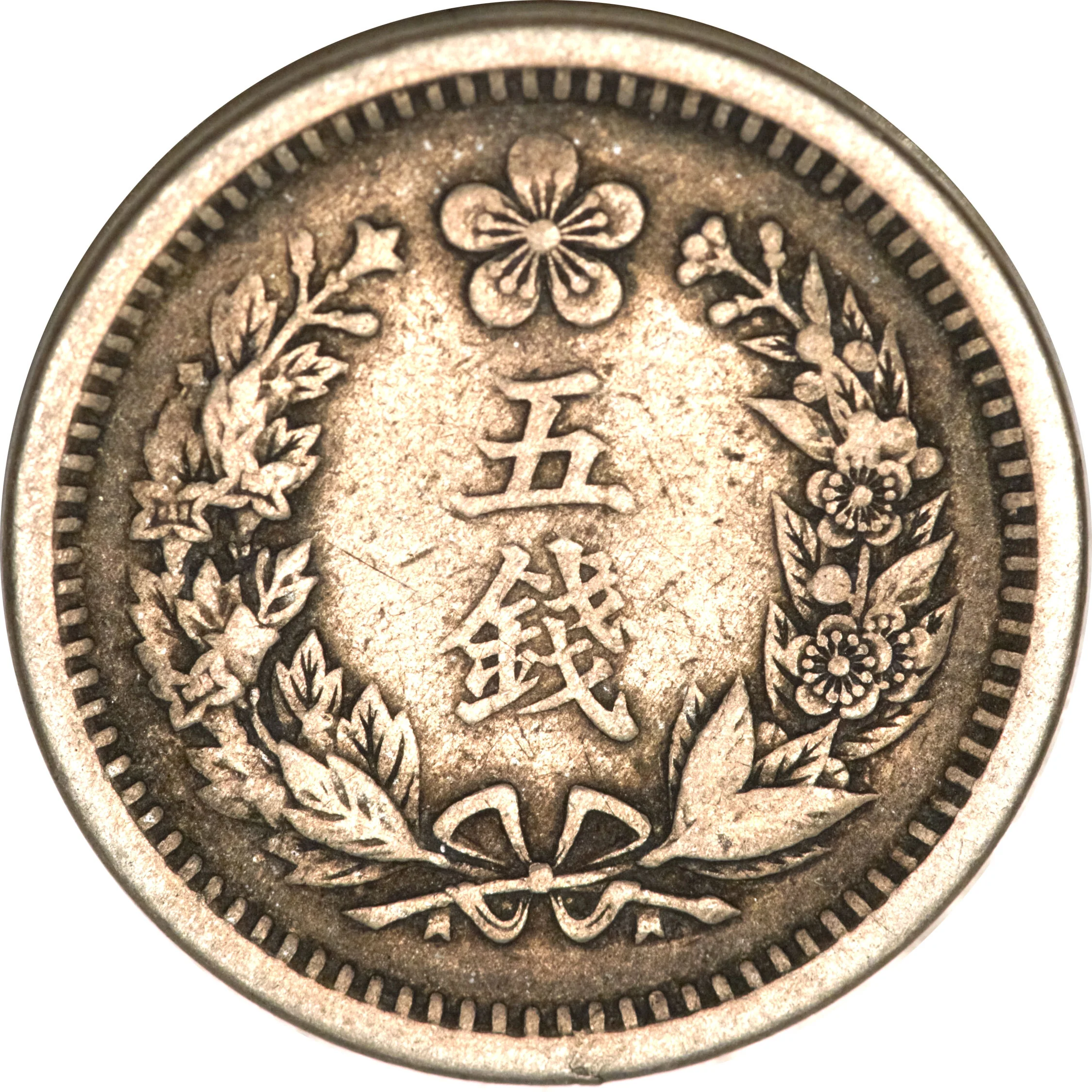
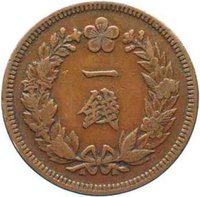
Denomination with wreath and plum flower (Imperial Seal of Korea).
Inscription:
五
錢
錢
Translation:
Five Cash
Scripts: Chinese (traditional, regular script)
Language: Classical Chinese
Edge
Mintings
| Year | Mint Mark | Mintage | Quality | Collection |
|---|---|---|---|---|
| 1902 | — | 2,800,000 |
Historical background
By 1902, the currency system of the Korean Empire was in a state of profound crisis and fragmentation, emblematic of the nation's broader political and economic vulnerability. The traditional Korean yang, a brass coin, remained in circulation but was plagued by severe inflation and rampant counterfeiting, which destroyed public trust. More critically, the monetary sphere had become a battleground for imperial competition, primarily between Japan and Russia, who were vying for dominance over the peninsula. Both powers aggressively circulated their own currencies—the Japanese Yen and the Russian Ruble—within Korea, creating a chaotic multi-currency environment where exchange rates fluctuated wildly and economic sovereignty was eroding.
Emperor Gojong's government recognized the threat this posed to national independence and attempted reform. The foundation of a modern financial system had been laid with the establishment of the Juhan Bank in 1899, but it was effectively a Japanese financial instrument. In a direct effort to reassert control, the government promulgated the "Currency Ordinance" in 1901, aiming to introduce a new, standardized national currency, the won (圓), backed by a silver standard. By 1902, the first new coins (both silver and copper) were being minted at the new Yongsan Mint, representing a symbolic attempt to create a uniform, modern monetary system under state authority.
However, these efforts in 1902 were ultimately too little, too late. The new won failed to displace the entrenched foreign currencies, as Korea lacked the central banking authority and foreign reserves to manage a stable conversion. The Juhan Bank, with its issuance of banknotes, continued to expand Japanese financial influence. Consequently, the currency chaos persisted, undermining commerce and state revenue. This monetary disarray was a clear symptom and accelerator of Korea's declining sovereignty, foreshadowing the nation's inability to resist the external pressures that would lead to the 1905 protectorate treaty and, ultimately, annexation by Japan in 1910.
Emperor Gojong's government recognized the threat this posed to national independence and attempted reform. The foundation of a modern financial system had been laid with the establishment of the Juhan Bank in 1899, but it was effectively a Japanese financial instrument. In a direct effort to reassert control, the government promulgated the "Currency Ordinance" in 1901, aiming to introduce a new, standardized national currency, the won (圓), backed by a silver standard. By 1902, the first new coins (both silver and copper) were being minted at the new Yongsan Mint, representing a symbolic attempt to create a uniform, modern monetary system under state authority.
However, these efforts in 1902 were ultimately too little, too late. The new won failed to displace the entrenched foreign currencies, as Korea lacked the central banking authority and foreign reserves to manage a stable conversion. The Juhan Bank, with its issuance of banknotes, continued to expand Japanese financial influence. Consequently, the currency chaos persisted, undermining commerce and state revenue. This monetary disarray was a clear symptom and accelerator of Korea's declining sovereignty, foreshadowing the nation's inability to resist the external pressures that would lead to the 1905 protectorate treaty and, ultimately, annexation by Japan in 1910.
✨ Legendary