Logo Title
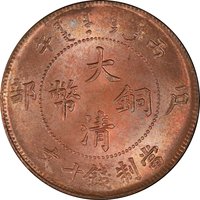
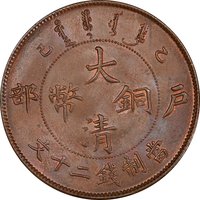
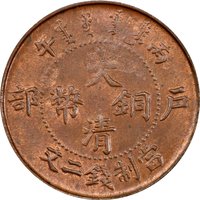
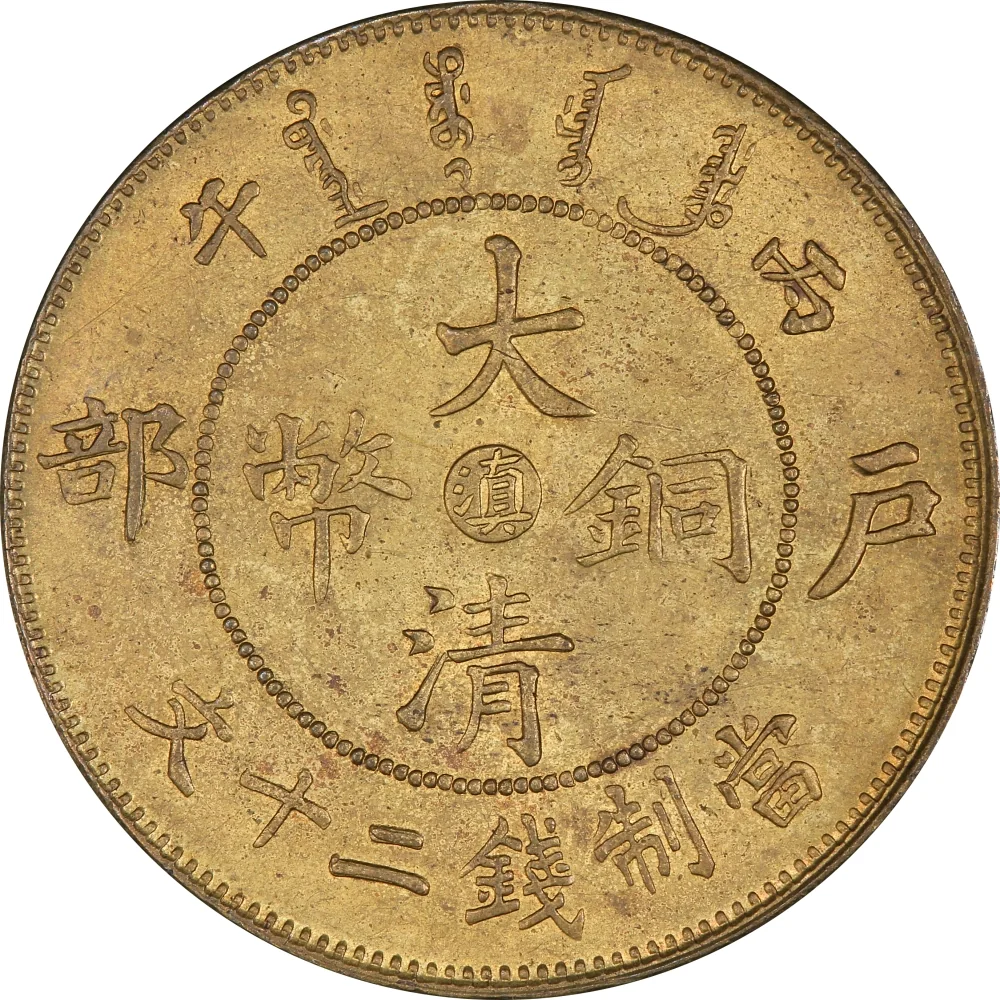
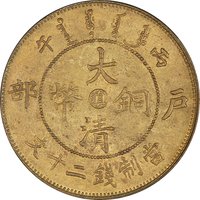
obverse
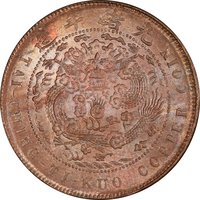
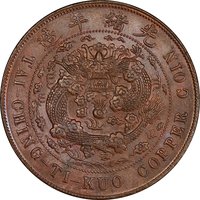
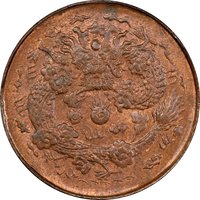
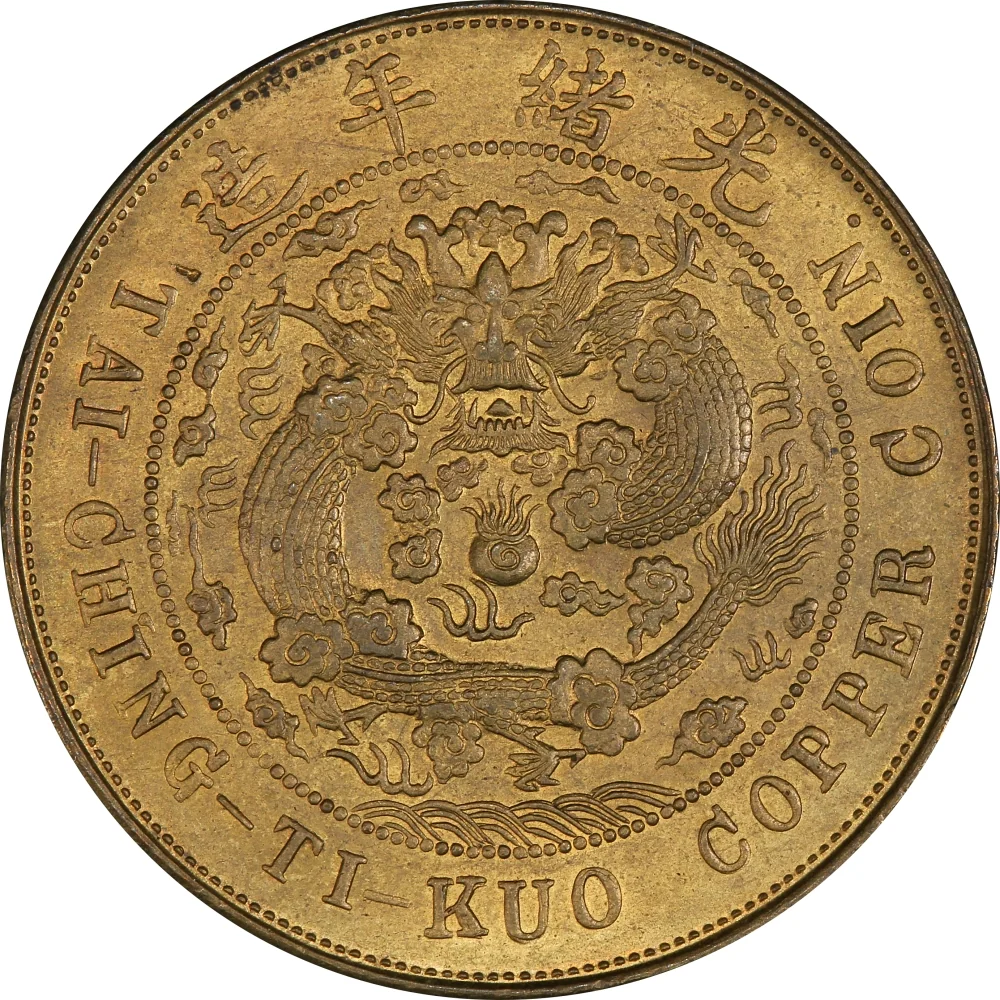
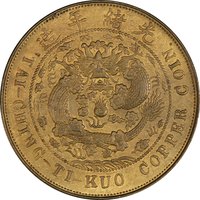
reverse
PCGS
Context
Years: 1905–1906
Country: China Country flag
Ruler: Guangxu
Currency:
(1903—1912)
Demonetized: Yes
Material
Diameter: 32 mm
Thickness: 1.5 mm
Shape: Round
Composition: Brass
Magnetic: No
Technique: Milled
Alignment: Medal alignment
Obverse
OBVERSE ↑
flip
Reverse
REVERSE ↑
References
Y: #Click to copy to clipboard11e
Numista: #243413

Obverse

Description:
Four Chinese characters read vertically, right to left, with Manchu text above and additional characters around.
Inscription:
午 ᠪᠠᡩᠠᠷᠠᠩᡤᠠ ᡩᠣᠷᠣ ᡳ ᠠᠨᡳᠶᠠᡳ ᠸᡝᡳᠯᡝᡥᡝ 丙

部戶


幣滇銅


文十二錢制當
Translation:
Badaranggadoro-i aniyai weilehe. Bing.

Bu Hu.

Da.

Bi Dian Tong.

Qing.

Wen Shi'er Qian Zhi Dang.
Languages: Chinese, Manchu

Reverse

Description:
Dragon encircling a pearl, with Chinese characters above and English text below.
Inscription:
造年緒光

TAI-CHING-TI-KUO COPPER COIN.
Translation:
Made in the Reign of Kuang Hsü of the Great Ch'ing Empire.
Language: Chinese

Edge

Plain

Mintings

YearMint MarkMintageQualityCollection
1905
1906

Historical background

By 1905, the currency situation in the Qing Empire was one of profound and chaotic multiplicity, a direct reflection of its political fragmentation and economic subjugation to foreign powers. The imperial system was based on silver, primarily in the form of sycee (shoe-shaped ingots weighed in taels), but there was no national standard; the Kuping tael for treasury use, the Caoping tael for maritime customs, and dozens of regional tael standards all differed in weight and purity. Concurrently, a vast array of copper-alloy cash coins with square holes, strung into strings of nominally 1,000 coins, served for everyday small transactions. The exchange rate between silver and copper was volatile, causing severe hardship for peasants who paid taxes in silver but earned in copper. This bimetallic system, decentralized and unwieldy, stifled domestic trade and complicated state finance.

Compounding this internal complexity was the aggressive intrusion of foreign currencies. Following military defeats and the imposition of the "Unequal Treaties," major foreign silver dollars—most notably the Mexican Silver Dollar and the British Trade Dollar—circulated widely in coastal treaty ports. Their reliable silver content and uniform design made them more trusted than irregular sycee, leading them to dominate large-scale commerce. Furthermore, foreign banks, operating under extraterritoriality, issued their own banknotes, further undermining monetary sovereignty. Japan’s victory in the Sino-Japanese War (1894-95) and the resulting Boxer Indemnity after 1901 also forced massive foreign-denominated debt onto the Qing, tying its fiscal health to the volatile global gold-standard silver price.

Recognizing this monetary chaos as a threat to both sovereignty and modernization, the Qing government initiated ambitious reforms in the early 1900s. In 1905, a key institution was established: the Board of Revenue Bank (later renamed the Great Qing Government Bank), modeled on Western central banks and granted a monopoly on issuing official, uniform banknotes convertible to silver. This year was part of a broader, decade-long effort to create a national silver coinage, the Yuan, to replace both sycee and foreign dollars. However, in 1905, these reforms were still in their fragile infancy, facing resistance from provincial mints, entrenched foreign interests, and a skeptical public. Thus, the empire’s monetary landscape remained a discordant mixture of ancient sycee, traditional cash, foreign dollars, and new, struggling national currencies—a financial metaphor for the decaying dynasty itself, caught between tradition and an uncertain modernity.

Series: 1905 Empire of China circulation coins

10 Cash obverse
10 Cash reverse
10 Cash
1905-1908
20 Cash obverse
20 Cash reverse
20 Cash
1905-1907
20 Cash obverse
20 Cash reverse
20 Cash
1905-1906
2 Cash obverse
2 Cash reverse
2 Cash
1905-1907
5 Cash obverse
5 Cash reverse
5 Cash
1905-1906
5 Cash obverse
5 Cash reverse
5 Cash
1905-1907
💎 Extremely Rare