

1 jiao – Manchukuo
Add to wishlist
China
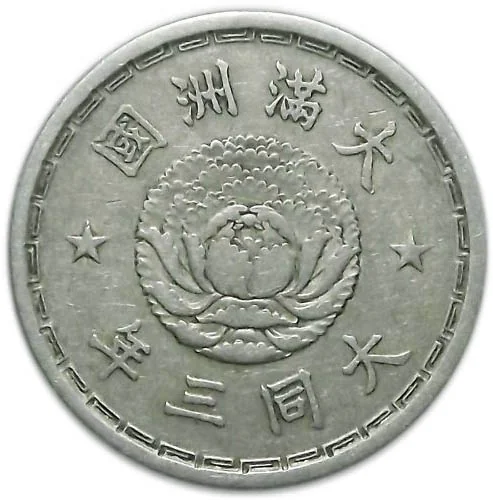
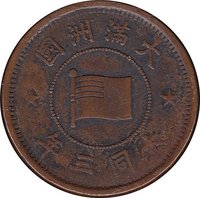
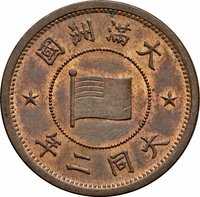
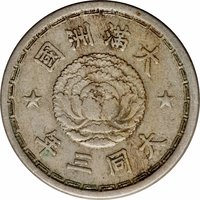
Obverse
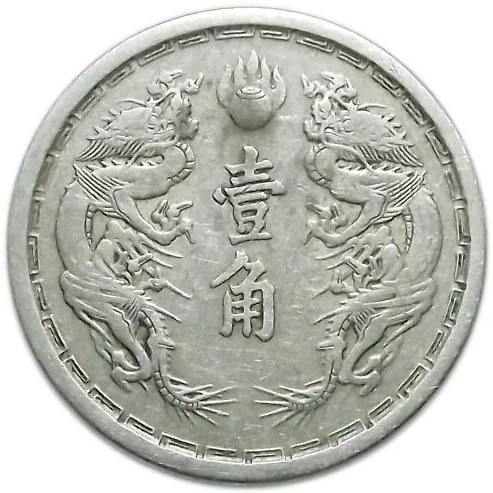
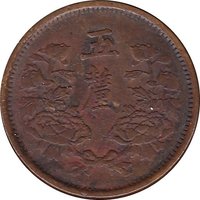
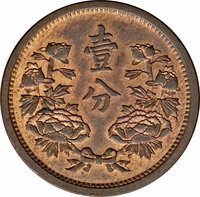
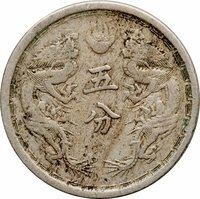
Reverse
Edge
Plain
Categories
| Mythology> Fantastic animal |
Mintings
| Year | Mint Mark | Mintage | Quality | Collection |
|---|---|---|---|---|
| 1933 | — | — | ||
| 1934 | — | — |
Historical background
In 1933, the currency situation in Manchukuo was in a state of deliberate and chaotic transition, engineered by its Japanese occupiers to sever the region’s financial ties from China and integrate it into the Japanese economic sphere. Following the establishment of the puppet state in 1932, multiple currencies circulated, including the old Fengtien notes from the former warlord government, various Chinese banknotes, and the Japanese yen. This multiplicity created confusion and hindered Japan's control, prompting the establishment of the Central Bank of Manchou in July 1932 as a critical institution for financial colonialism.
The core reform began in 1933 with the aggressive promotion of a new unified currency, the Manchukuo yuan (or "Manchukuo yuan"), which was pegged at par to the Japanese yen. The authorities enacted laws to demonetize older Chinese currencies and systematically replace them with the new notes, which were issued by the Japanese-controlled central bank. This process was not merely administrative but a tool of political subjugation, as it stripped the region of its previous monetary sovereignty and made its economy entirely dependent on Japanese financial policy and capital.
Consequently, by the end of 1933, the Manchukuo yuan was becoming the dominant medium of exchange, facilitating the extraction of Manchuria's rich resources for Japan's industrial and military needs. The currency reform solidified the region's role as a resource colony and a financial satellite, funding the buildup of infrastructure and heavy industry that would later support Japan's wider war efforts in Asia. The system established a classic colonial currency board-like arrangement, where Manchukuo's money supply was effectively governed by the Bank of Japan, ensuring economic stability for Japanese investors while exploiting the local population.
The core reform began in 1933 with the aggressive promotion of a new unified currency, the Manchukuo yuan (or "Manchukuo yuan"), which was pegged at par to the Japanese yen. The authorities enacted laws to demonetize older Chinese currencies and systematically replace them with the new notes, which were issued by the Japanese-controlled central bank. This process was not merely administrative but a tool of political subjugation, as it stripped the region of its previous monetary sovereignty and made its economy entirely dependent on Japanese financial policy and capital.
Consequently, by the end of 1933, the Manchukuo yuan was becoming the dominant medium of exchange, facilitating the extraction of Manchuria's rich resources for Japan's industrial and military needs. The currency reform solidified the region's role as a resource colony and a financial satellite, funding the buildup of infrastructure and heavy industry that would later support Japan's wider war efforts in Asia. The system established a classic colonial currency board-like arrangement, where Manchukuo's money supply was effectively governed by the Bank of Japan, ensuring economic stability for Japanese investors while exploiting the local population.
Series: 1933 Manchukuo circulation coins
🌱 Fairly Common