

20 yuan – Republic of China
Add to wishlist
China
Context
Year: 1919
Chinese republican Year:: 8
Country: China
Issuer: Republic of China
Period:
(1912—1949)
Currency:
(1912—1948)
Demonetized: Yes
Material
References
Y: #
Numista: #22879
Value
Bullion value: $2132.81
Obverse
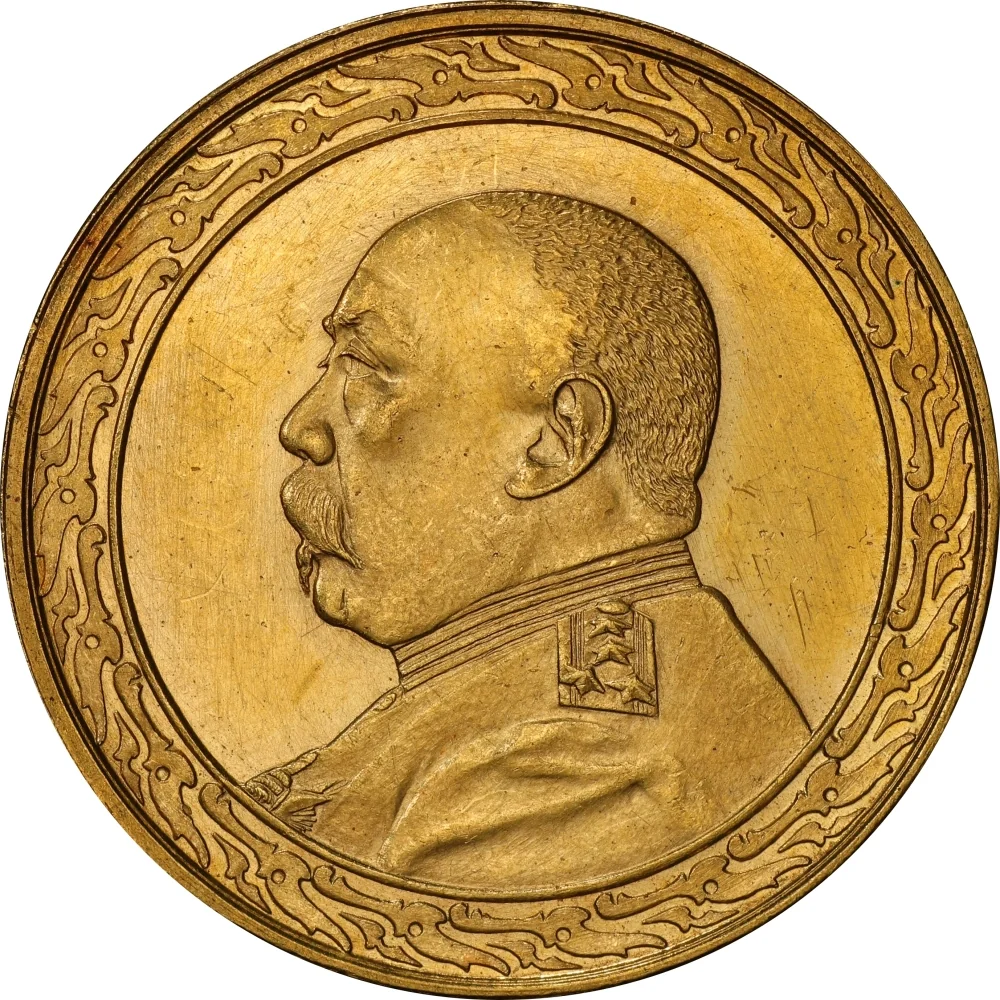
Description:
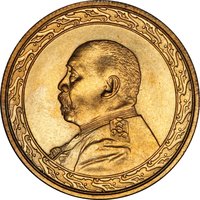
Yuan Shikai bust facing left within decorative border.
Engraver: Luigi Giorgi
Reverse
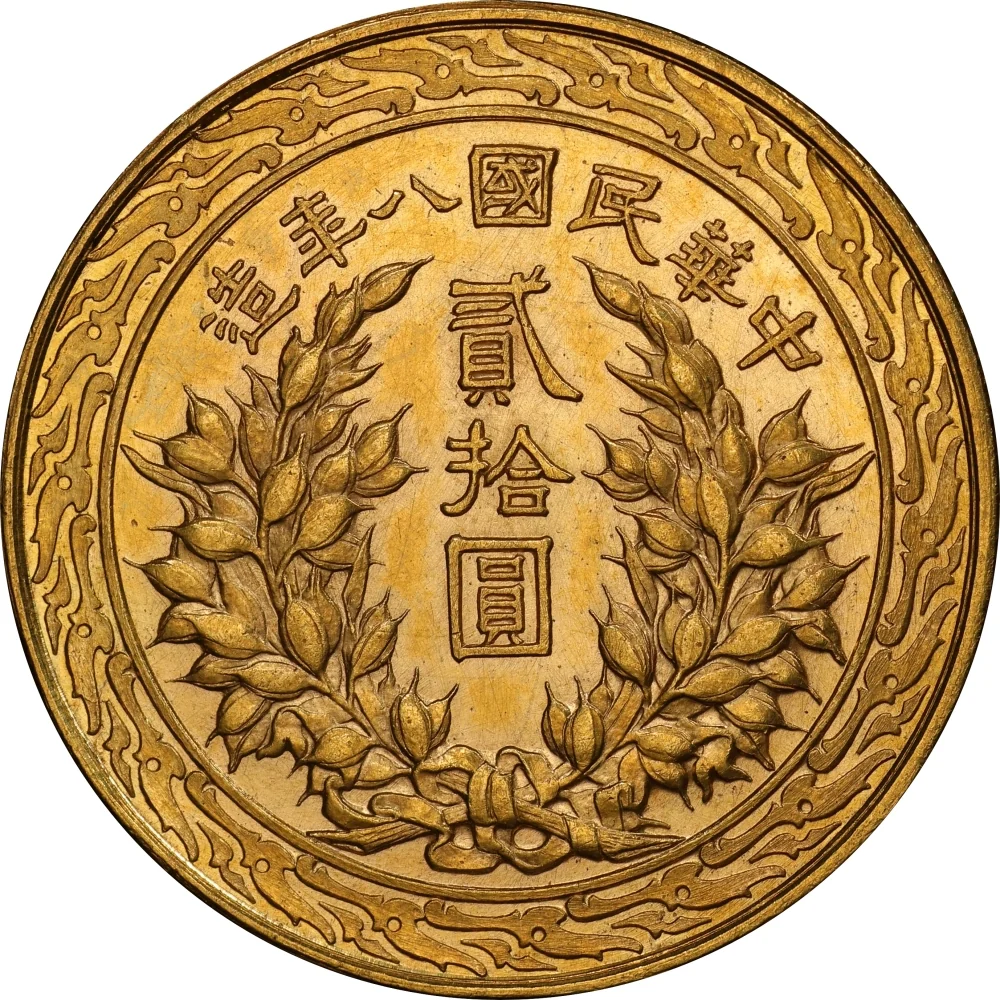
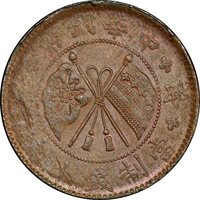
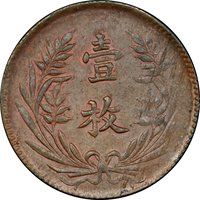
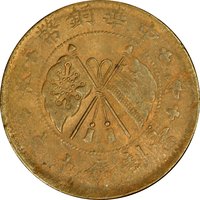
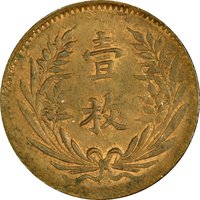
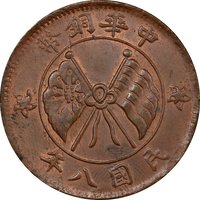
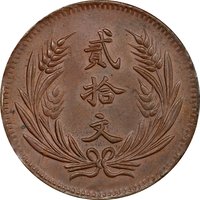
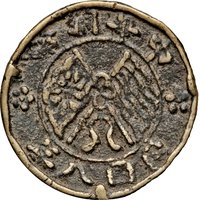
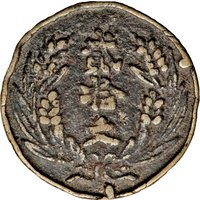
Description:
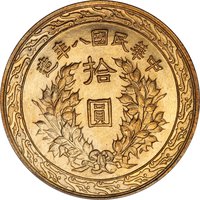
Three ideograms in a wreath, more above, within a decorative border.
Inscription:
造年八國民華中
貳
拾
圓
貳
拾
圓
Translation:
Republic of China Year 8
Two
Ten
Dollars
Two
Ten
Dollars
Language: Chinese
Engraver: Luigi Giorgi
Edge
Categories
| Person> Politician |
| Mustache/Beard |
| Symbol> Wreath |
Mintings
| Year | Mint Mark | Mintage | Quality | Collection |
|---|---|---|---|---|
| 1919 | — | — |
Historical background
In 1919, the currency situation in the Republic of China was one of profound complexity and instability, a direct legacy of the post-imperial fragmentation and the ongoing struggle for national control. Following the 1911 Revolution, central authority had collapsed, and the country entered the Warlord Era, where regional military leaders issued their own currencies to finance their regimes. Consequently, there was no unified national currency. A multitude of mediums circulated simultaneously: silver sycee (by weight), foreign silver dollars (like Mexican "Eagle" dollars), Chinese silver yuan (notably the "Yuan Shikai" dollar), various provincial and bank notes of dubious value, and even copper cash for small transactions. This monetary chaos severely hampered trade, facilitated warlord exploitation, and reflected the fractured state of the republic.
The theoretical backbone of the system remained the silver standard, but in practice, the value and acceptability of any coin or note depended entirely on the reputation of its issuing authority and its silver backing. Warlord banks and provincial mints often issued unbacked paper money, leading to rampant inflation in their territories. Meanwhile, the internationally recognized Beiyang Government in Beijing, though weak, continued to mint the standard "Yuan Shikai" silver dollar, which served as a relatively stable and widely accepted unit in major coastal cities and for foreign trade. This created a stark duality: a chaotic, inflationary paper economy in the hinterlands versus pockets of metallic stability in treaty ports, where foreign banks also circulated their own notes.
This fragmented monetary landscape was more than an economic inconvenience; it was a symbol of the nation's political disunity and a major obstacle to modern state-building. The situation directly undermined efforts by industrialists and the emerging nationalist movement to create a integrated national economy. It was within this context that financial reformers and Sun Yat-sen's Guangzhou-based government began to advocate for a centralized banking system and a unified currency—a goal that would only begin to be realized a decade later under the Nanjing Decade with the introduction of the fabi (legal tender) by the Central Bank of China. Thus, in 1919, China's currency was not a single system, but a contested and unstable mosaic of competing monies.
The theoretical backbone of the system remained the silver standard, but in practice, the value and acceptability of any coin or note depended entirely on the reputation of its issuing authority and its silver backing. Warlord banks and provincial mints often issued unbacked paper money, leading to rampant inflation in their territories. Meanwhile, the internationally recognized Beiyang Government in Beijing, though weak, continued to mint the standard "Yuan Shikai" silver dollar, which served as a relatively stable and widely accepted unit in major coastal cities and for foreign trade. This created a stark duality: a chaotic, inflationary paper economy in the hinterlands versus pockets of metallic stability in treaty ports, where foreign banks also circulated their own notes.
This fragmented monetary landscape was more than an economic inconvenience; it was a symbol of the nation's political disunity and a major obstacle to modern state-building. The situation directly undermined efforts by industrialists and the emerging nationalist movement to create a integrated national economy. It was within this context that financial reformers and Sun Yat-sen's Guangzhou-based government began to advocate for a centralized banking system and a unified currency—a goal that would only begin to be realized a decade later under the Nanjing Decade with the introduction of the fabi (legal tender) by the Central Bank of China. Thus, in 1919, China's currency was not a single system, but a contested and unstable mosaic of competing monies.
✨ Legendary