

5 francs – France
Add to wishlist
France
Context
Years: 1802–1803
Issuer: France
Ruler: Napoleon I
Currency:
(1795—1959)
Demonetization: 25 June 1928
Total mintage: 7,288,846
Material
References
KM: #
Numista: #21917
Value
Bullion value: $57.49
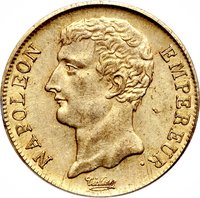
Obverse
Description:
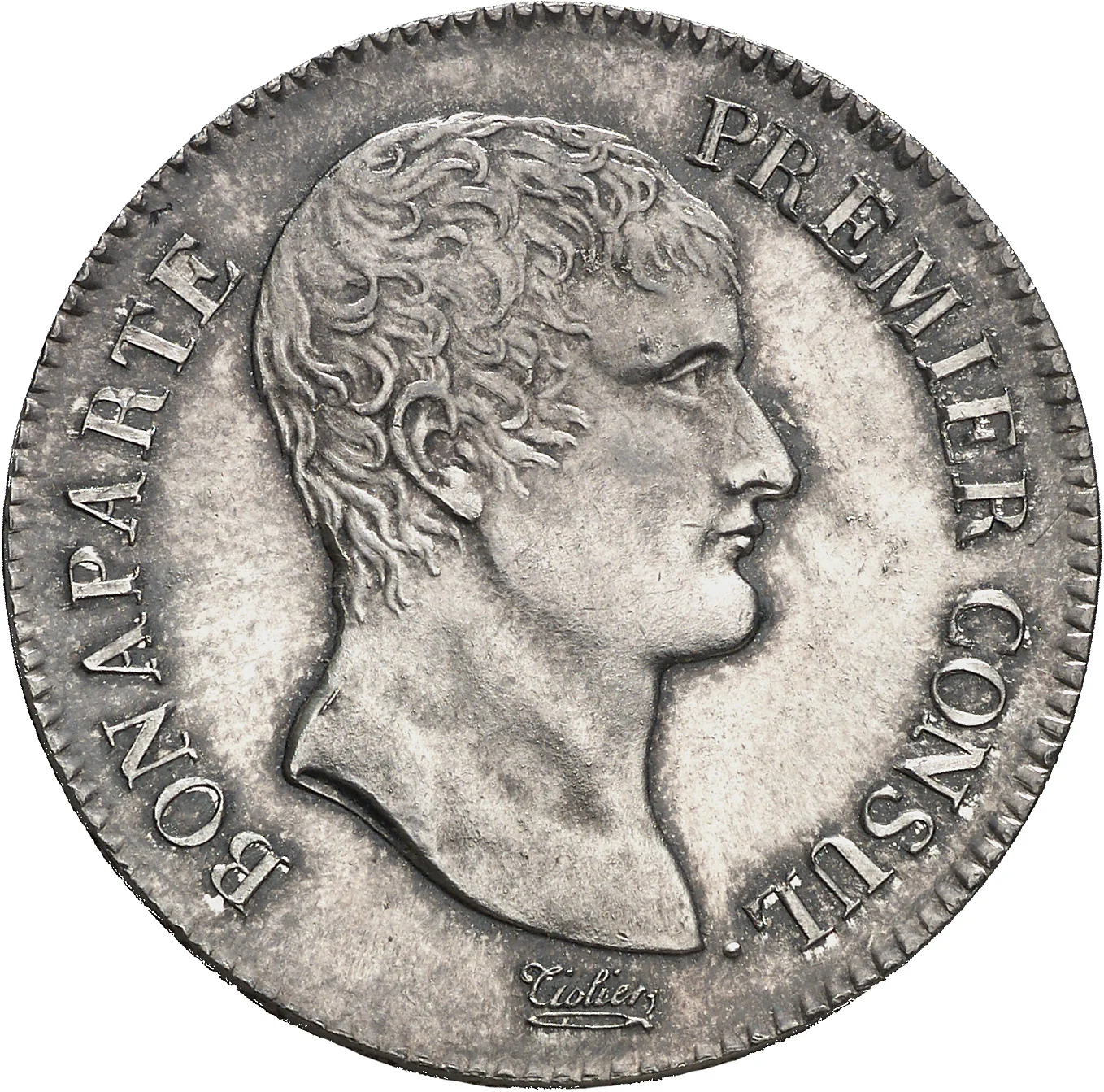
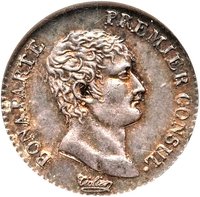
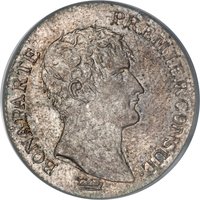
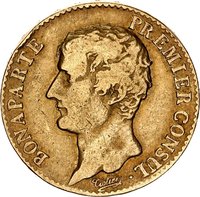
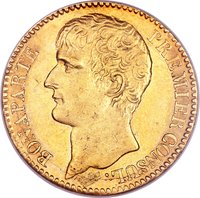
Napoleon Bonaparte as First Consul.
Inscription:
BONAPARTE PREMIER CONSUL.
Tiolier
Tiolier
Translation:
Bonaparte First Consul.
Script: Latin
Language: French
Engraver: Pierre-Joseph Tiolier
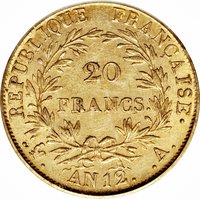
Reverse
Description:
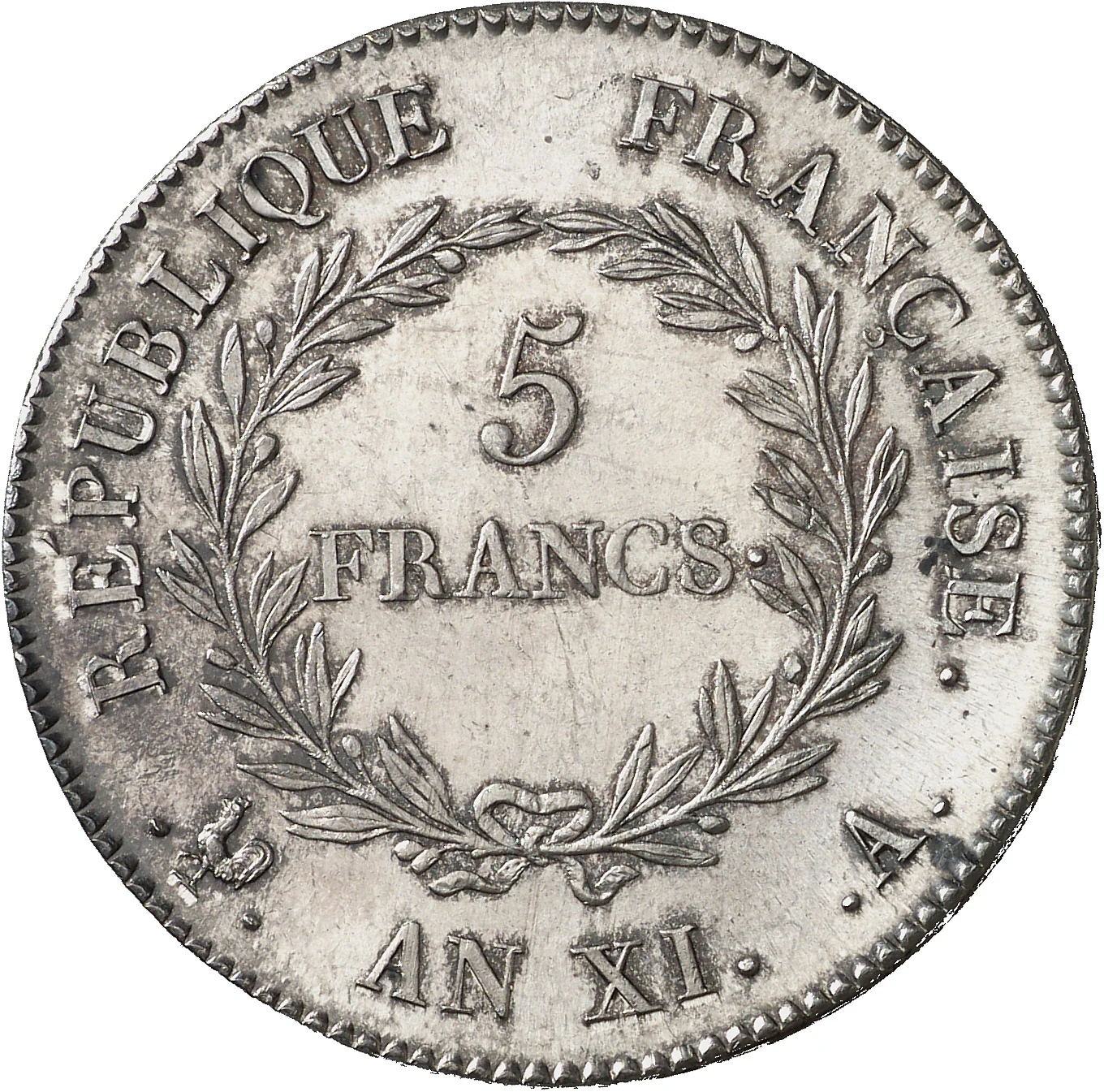
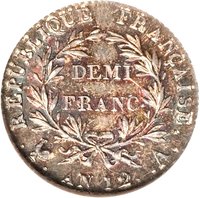
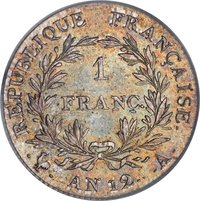
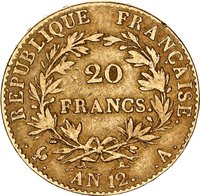
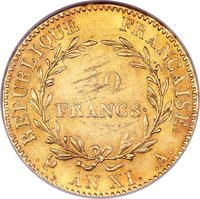
Face value encircled by a laurel wreath.
Inscription:
RÉPUBLIQUE FRANÇAISE.
5
FRANCS·
. . AN 12. .A.
5
FRANCS·
. . AN 12. .A.
Translation:
FRENCH REPUBLIC.
5
FRANCS
. . YEAR 12. .A.
5
FRANCS
. . YEAR 12. .A.
Script: Latin
Language: French
Engraver: Pierre-Joseph Tiolier
Edge
Debossed inscriptions.
Legend:
★ DIEU PROTEGE LA FRANCE
Mints
| Name | Mark |
|---|---|
| Monnaie de Paris | A |
| Rouen | B |
| Strasbourg | BB |
| Lyon | D |
| Geneva | G |
| Bordeaux | K |
| Bayonne | L |
| Toulouse | M |
| Marseille | MA |
| Nantes | T |
| Turin | U |
| Lille | W |
Mintings
| Year | Mint Mark | Mintage | Quality | Collection |
|---|---|---|---|---|
| 1802 | — | 3,877,151 | ||
| 1803 | — | 3,411,695 |
Historical background
In 1802, France’s currency situation was one of profound instability and transition, a direct legacy of the hyperinflation of the Revolutionary assignat and mandat territorial paper money, which had become virtually worthless by 1796. The collapse of this paper regime left the economy reliant on a chaotic mix of metallic coins—old royal louis d'or, republican écus, and foreign currencies—circulating at fluctuating values. This environment crippled commerce, undermined public trust, and posed a critical challenge to the new Consular government led by First Consul Napoleon Bonaparte, who recognized that monetary order was essential for political legitimacy and economic recovery.
The key institutional response was the creation of the Bank of France (Banque de France) in 1800, which was granted the exclusive right to issue banknotes in Paris. By 1802, the Bank was still consolidating its authority, its notes gaining cautious acceptance primarily within financial and commercial circles in the capital. The more fundamental reform, however, was the preparation for a complete recoinage. The Law of 7 Germinal Year XI (28 March 1803) established the Franc Germinal, defining the new currency in pure silver and gold, with a fixed bimetallic ratio. While formally enacted in early 1803, the intense planning and political will driving this reform defined the monetary landscape of 1802.
Thus, 1802 was a pivotal year of anticipation, lying between the ruin of the old system and the imminent implementation of a durable new one. The Franc Germinal, soon to be backed by the Bank of France’s disciplined note issuance, promised the stability of a metallic standard linked to pre-Revolutionary values. This reform was not merely economic; it was a cornerstone of Napoleon’s project to normalize the state’s finances, restore public confidence, and lay the foundation for the expansion of French power and industry in the coming decade.
The key institutional response was the creation of the Bank of France (Banque de France) in 1800, which was granted the exclusive right to issue banknotes in Paris. By 1802, the Bank was still consolidating its authority, its notes gaining cautious acceptance primarily within financial and commercial circles in the capital. The more fundamental reform, however, was the preparation for a complete recoinage. The Law of 7 Germinal Year XI (28 March 1803) established the Franc Germinal, defining the new currency in pure silver and gold, with a fixed bimetallic ratio. While formally enacted in early 1803, the intense planning and political will driving this reform defined the monetary landscape of 1802.
Thus, 1802 was a pivotal year of anticipation, lying between the ruin of the old system and the imminent implementation of a durable new one. The Franc Germinal, soon to be backed by the Bank of France’s disciplined note issuance, promised the stability of a metallic standard linked to pre-Revolutionary values. This reform was not merely economic; it was a cornerstone of Napoleon’s project to normalize the state’s finances, restore public confidence, and lay the foundation for the expansion of French power and industry in the coming decade.
Series: 1802 France circulation coins
🌱 Fairly Common