

30 Soldi – Cisalpine Republic
Italy
Context
Year: 1801
French republican Year: 9
Country: Italy 
Issuer: Cisalpine Republic
Period:
(1797—1802)
Currency:
Demonetized: Yes
Total mintage: 300,000
Material
References
KM: #Click to copy to clipboard1
Numista: #21526
Value
Bullion value: $14.50
Obverse
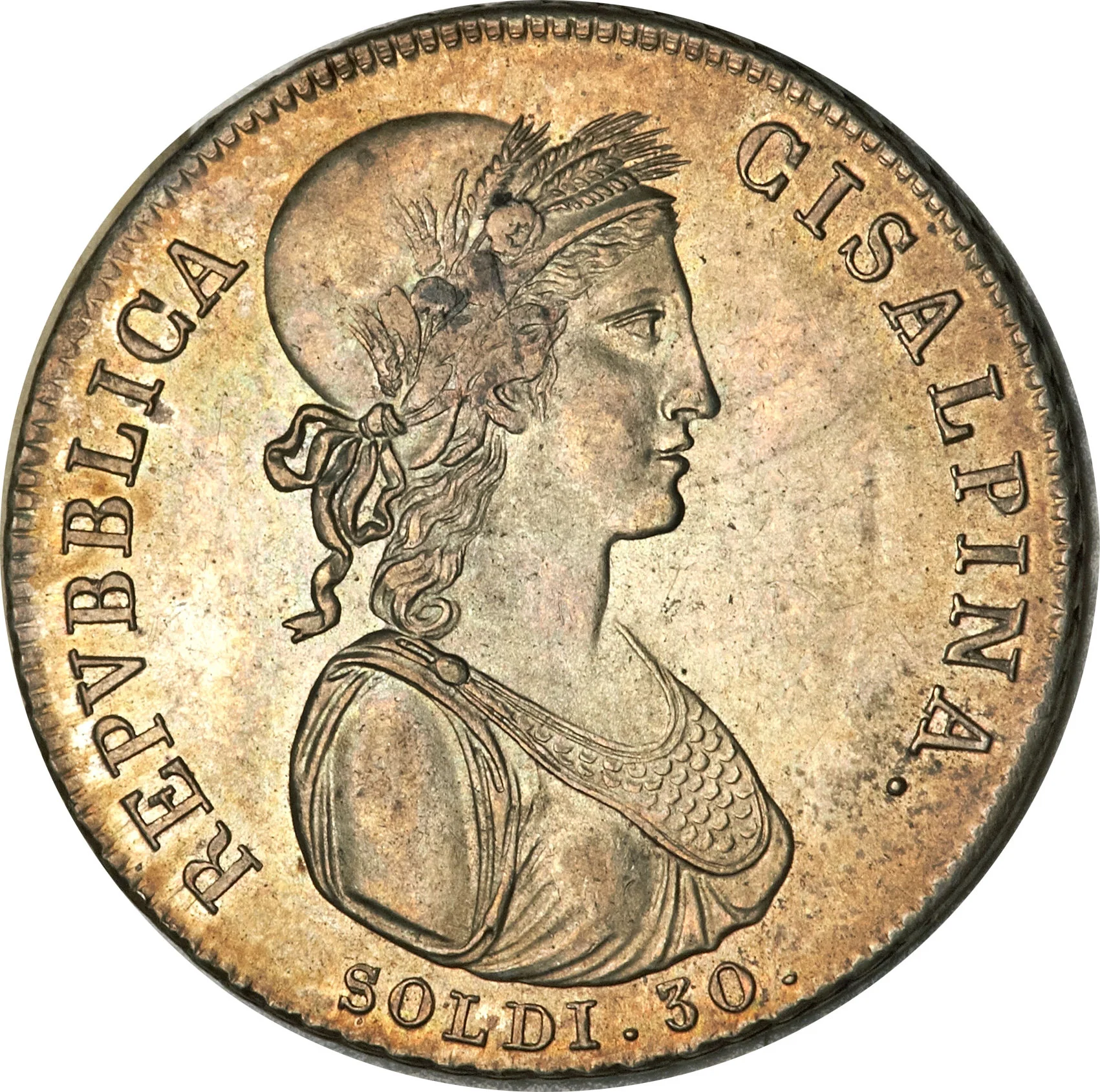
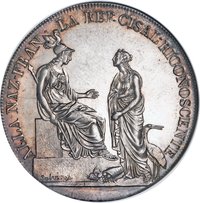
Description:
Right-facing bust with surrounding and bottom text.
Inscription:
REPUBBLICA CISALPINA
SOLDI. 30
SOLDI. 30
Script: Latin
Reverse
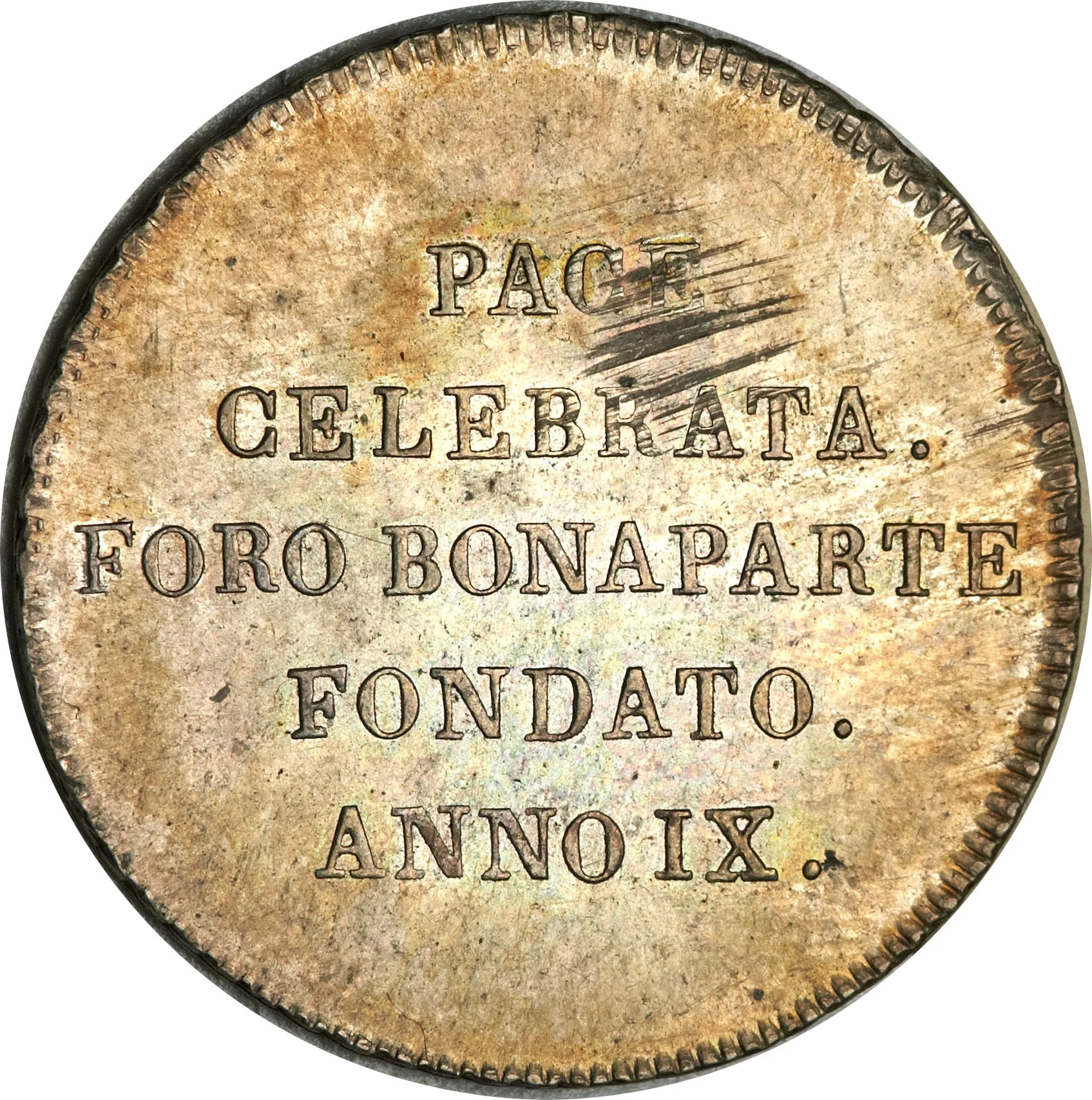
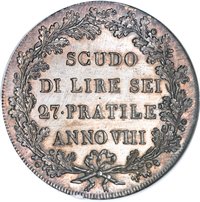
Description:
Six lines to frame
a moment, a feeling,
a fleeting scene.
Brief words holding
a world within
their quiet borders.
a moment, a feeling,
a fleeting scene.
Brief words holding
a world within
their quiet borders.
Inscription:
PAGE
CELEBRATA.
FORO BONAPARTE
FONDATO.
ANNO IX.
CELEBRATA.
FORO BONAPARTE
FONDATO.
ANNO IX.
Script: Latin
Edge
Puff pastry
Mints
| Name | Mark |
|---|---|
| Milan | — |
Mintings
| Year | Mint Mark | Mintage | Quality | Collection |
|---|---|---|---|---|
| 1801 | — | 300,000 |
Historical background
By 1801, the currency situation in the Cisalpine Republic was one of profound disorder and instability, a direct legacy of its creation and the preceding decades of conflict. The republic, a French client state in northern Italy, had inherited a chaotic monetary landscape from the various Austrian and regional administrations it replaced. This resulted in a complex and confusing circulation of multiple coin types, including old Austrian thalers, Venetian zecchini, Milanese scudi, and various French revolutionary coins. The lack of a unified, authoritative currency severely hampered trade, state finance, and public confidence.
Napoleon Bonaparte, as First Consul of France, sought to impose order as part of his broader reorganization of the Italian territories. In 1801, following the Treaty of Lunéville, he pushed for a comprehensive monetary reform. The plan was to replace the mosaic of existing coins with a new, decimalized currency directly tied to the French franc, mirroring the reforms enacted in France itself. The proposed unit was the lira (divided into 100 centesimi), which was to be established on a bimetallic standard, with its value precisely fixed to the French franc at a 1:1 ratio.
However, in 1801, this system remained largely aspirational. The actual minting and widespread circulation of the new Cisalpine lira had not yet been fully implemented. The period was thus a transitional one, characterized by the planning and legal foundation for a modern currency, while in daily economic life, people still contended with the old, heterogeneous coinage. This gap between decree and reality meant that monetary confusion persisted, awaiting the practical implementation of the minting and withdrawal processes that would only gather pace in the following years under the renewed Italian Republic (1802) and later the Kingdom of Italy (1805).
Napoleon Bonaparte, as First Consul of France, sought to impose order as part of his broader reorganization of the Italian territories. In 1801, following the Treaty of Lunéville, he pushed for a comprehensive monetary reform. The plan was to replace the mosaic of existing coins with a new, decimalized currency directly tied to the French franc, mirroring the reforms enacted in France itself. The proposed unit was the lira (divided into 100 centesimi), which was to be established on a bimetallic standard, with its value precisely fixed to the French franc at a 1:1 ratio.
However, in 1801, this system remained largely aspirational. The actual minting and widespread circulation of the new Cisalpine lira had not yet been fully implemented. The period was thus a transitional one, characterized by the planning and legal foundation for a modern currency, while in daily economic life, people still contended with the old, heterogeneous coinage. This gap between decree and reality meant that monetary confusion persisted, awaiting the practical implementation of the minting and withdrawal processes that would only gather pace in the following years under the renewed Italian Republic (1802) and later the Kingdom of Italy (1805).
💎 Very Rare