

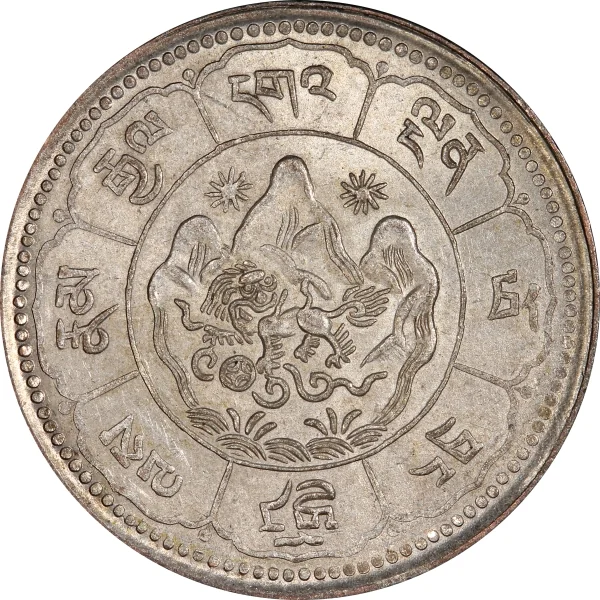
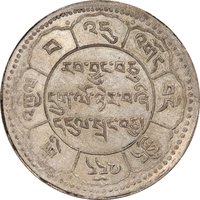
Obverse
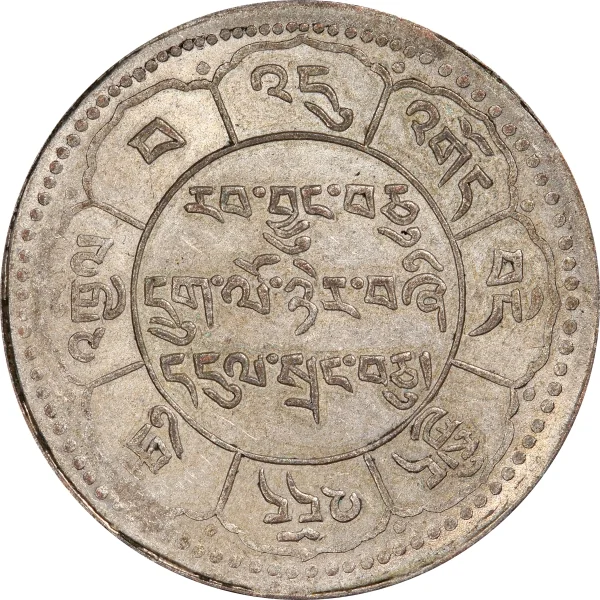
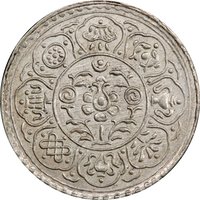
Reverse
Description:
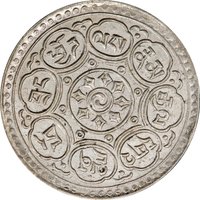
Tibetan characters within an eight-petalled lotus.
Inscription:
འདུ་ དགོད་ བདེ་སྐྱིད་ འདོད་རྒུ་ འཁྱིལ་བ་
རབ་བྱུང་ བཅུ་
དྲུག་ལོ་ ལོ་ ཉེར་བཞི་
དངུལ་སྲང་ བཅུ་
རབ་བྱུང་ བཅུ་
དྲུག་ལོ་ ལོ་ ཉེར་བཞི་
དངུལ་སྲང་ བཅུ་
Translation:
May the assembly, laughter, happiness, and desired gatherings be complete.
Sixteenth Rabjung, twenty-fourth year.
Ten silver srang.
Sixteenth Rabjung, twenty-fourth year.
Ten silver srang.
Script: Tibetan
Language: Tibetan
Edge
Reeded.
Mintings
| Year | Mint Mark | Mintage | Quality | Collection |
|---|---|---|---|---|
| 1950 | — | — | ||
| 1951 | — | — |
Historical background
In 1950, Tibet operated under a traditional monetary system that was largely isolated and fragmented. The primary currency in circulation was the Tibetan silver coin, known as the srang, which was minted by the government in Lhasa. Alongside this, a significant amount of physical silver (in ingot or lump form, called tangka) was used for larger transactions, and Chinese silver dollars, Indian rupees, and even salt bars served as supplementary mediums of exchange in border regions. This system was not a modern, unified currency but a commodity-based one, lacking central banking institutions and prone to regional variation.
This financial landscape existed within a complex political context. While Tibet had functioned with de facto autonomy for decades, it was entering a period of profound transition. In October 1950, the People's Liberation Army's advance into the Kham region marked the beginning of the incorporation of Tibet into the newly established People's Republic of China. This military and political move immediately cast uncertainty over the future of Tibet's independent currency and its entire economic framework, as it signaled impending Chinese administrative control.
Therefore, the currency situation at that precise moment was one of a fragile status quo on the brink of fundamental change. The traditional srang still circulated, but its future was now directly tied to unresolved political negotiations between Lhasa and Beijing. The stage was set for the gradual dissolution of Tibet's independent coinage and its eventual replacement by the Chinese Renminbi, a process that would unfold over the coming decade as part of broader integration policies.
This financial landscape existed within a complex political context. While Tibet had functioned with de facto autonomy for decades, it was entering a period of profound transition. In October 1950, the People's Liberation Army's advance into the Kham region marked the beginning of the incorporation of Tibet into the newly established People's Republic of China. This military and political move immediately cast uncertainty over the future of Tibet's independent currency and its entire economic framework, as it signaled impending Chinese administrative control.
Therefore, the currency situation at that precise moment was one of a fragile status quo on the brink of fundamental change. The traditional srang still circulated, but its future was now directly tied to unresolved political negotiations between Lhasa and Beijing. The stage was set for the gradual dissolution of Tibet's independent coinage and its eventual replacement by the Chinese Renminbi, a process that would unfold over the coming decade as part of broader integration policies.
⭐ Rare