

10 chon – Korean Empire
Add to wishlist
Context
Years: 1908–1910
Country: Korea
Issuer: Korean Empire
Period:
(1907—1910)
Currency:
(1901—1910)
Demonetized: Yes
Total mintage: 15,800,000
Material
References
KM: #
Numista: #21047
Value
Bullion value: $4.42
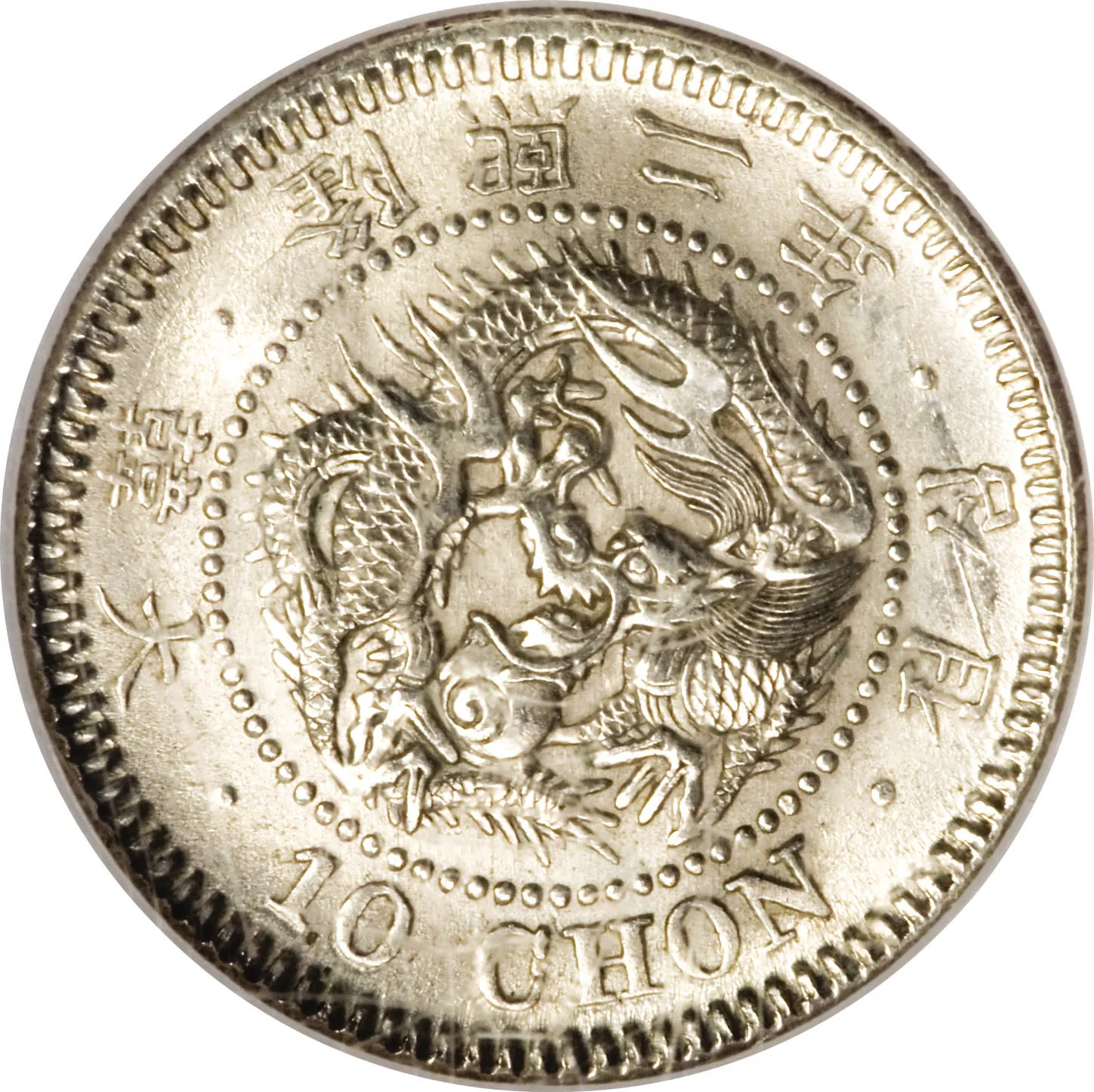
Obverse
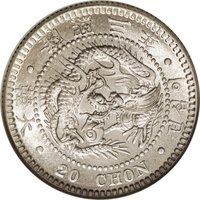
Description:
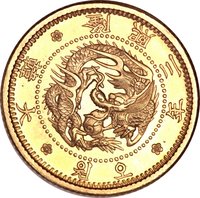
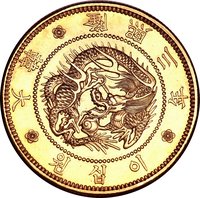
Dragon above, date below, denomination beneath.
Inscription:
• 大韓 • 隆熙二年 • 십젼 • 10 CHON
Translation:
KOREA; YONGHEE SECOND YEAR; TEN JEON; 10 CHON
Language: Korean
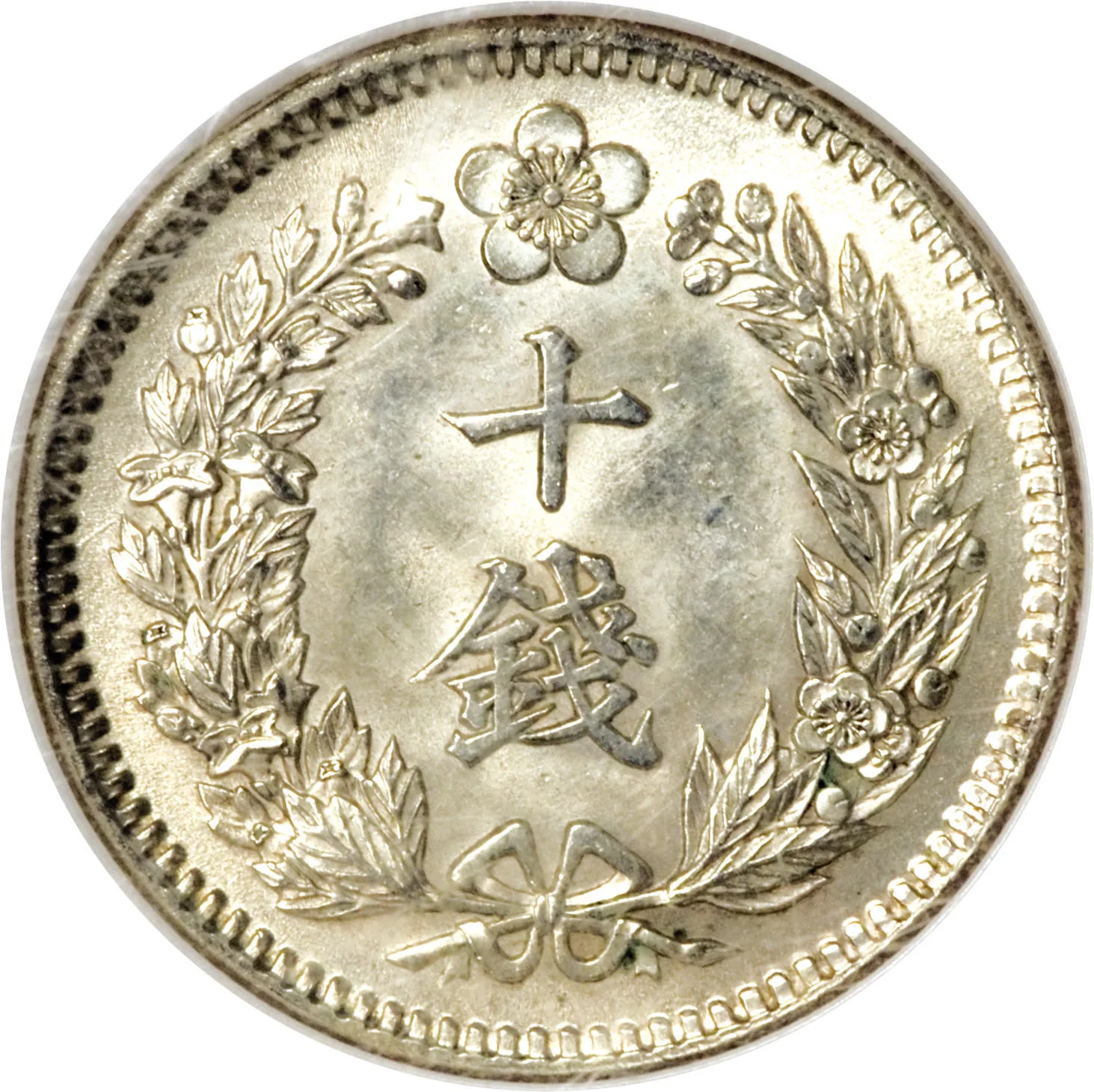
Reverse
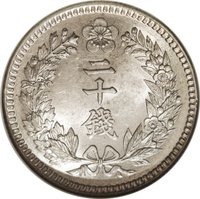
Description:
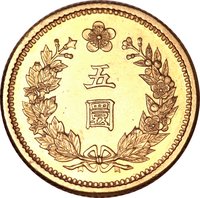
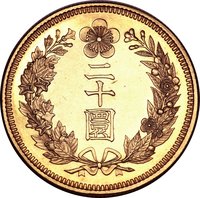
Denomination encircled by Rose of Sharon (left) and plum (right), with the Plum Blossom (Imperial Seal) above.
Inscription:
十
錢
錢
Translation:
Ten Cash.
Scripts: Chinese (traditional, regular script)
Language: Chinese
Edge
Reeded
Categories
| Mythology> Fantastic animal |
| Plants> Flower |
| Symbols> Coat of Arms |
| Symbol> Wreath |
Mintings
| Year | Mint Mark | Mintage | Quality | Collection |
|---|---|---|---|---|
| 1908 | — | 6,300,000 | ||
| 1909 | — | — | ||
| 1910 | — | 9,500,000 |
Historical background
By 1908, the currency situation in the Korean Empire was one of profound instability and foreign domination, reflecting the peninsula's rapid slide toward annexation by Japan. The traditional Korean monetary system, based on copper "sangpyeong" coins and silver "yang," had been plagued for decades by debasement, counterfeiting, and hyperinflation, leading to a severe loss of public confidence. This vacuum was aggressively filled by foreign currencies, most notably the Japanese yen, but also the Mexican silver dollar and Russian rubles, which circulated freely and further undermined Korean economic sovereignty.
The Japanese government, having established a protectorate over Korea in 1905, moved decisively to formalize its financial control. In 1905, it had already founded the Dai-Ichi Bank (a forerunner of the Bank of Japan) as the central financial institution in Korea, giving it the power to issue banknotes. The pivotal event came with the Currency Reform of 1908, a decree enforced by the Japanese Residency-General. This law demonetized the old Korean "yang" and established the Korean yen (equal to the Japanese yen) as the sole official currency, backed by and fully convertible to gold. While this reform successfully standardized the chaotic monetary system, it was not an act of sovereign Korean policy but a critical step in integrating Korea into Japan's financial orbit.
Consequently, by the end of 1908, Korea's monetary autonomy had been effectively extinguished. The currency reform tied the Korean economy directly to Japan's, facilitating the unchecked flow of Japanese capital and the exploitation of Korean resources. The stage was now fully set for the complete annexation of the Korean Empire in 1910, after which the Korean yen would be formally replaced by the Japanese yen, marking the final chapter in the erosion of Korea's financial and national independence.
The Japanese government, having established a protectorate over Korea in 1905, moved decisively to formalize its financial control. In 1905, it had already founded the Dai-Ichi Bank (a forerunner of the Bank of Japan) as the central financial institution in Korea, giving it the power to issue banknotes. The pivotal event came with the Currency Reform of 1908, a decree enforced by the Japanese Residency-General. This law demonetized the old Korean "yang" and established the Korean yen (equal to the Japanese yen) as the sole official currency, backed by and fully convertible to gold. While this reform successfully standardized the chaotic monetary system, it was not an act of sovereign Korean policy but a critical step in integrating Korea into Japan's financial orbit.
Consequently, by the end of 1908, Korea's monetary autonomy had been effectively extinguished. The currency reform tied the Korean economy directly to Japan's, facilitating the unchecked flow of Japanese capital and the exploitation of Korean resources. The stage was now fully set for the complete annexation of the Korean Empire in 1910, after which the Korean yen would be formally replaced by the Japanese yen, marking the final chapter in the erosion of Korea's financial and national independence.

⭐ Somewhat Rare