

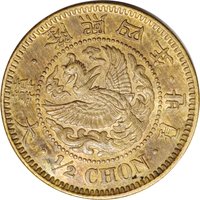
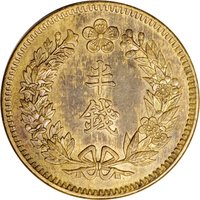
½ won – Korean Empire
Add to wishlist
Context
Year: 1907
Korean - Gwangmu era Year:: 11
Country: Korea
Issuer: Korean Empire
Period:
(1897—1907)
Currency:
(1901—1910)
Demonetized: Yes
Total mintage: 1,000,000
Material
References
KM: #
Numista: #21045
Value
Bullion value: $19.88
Obverse
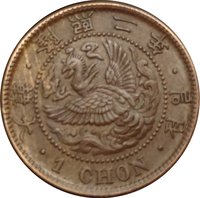
Description:
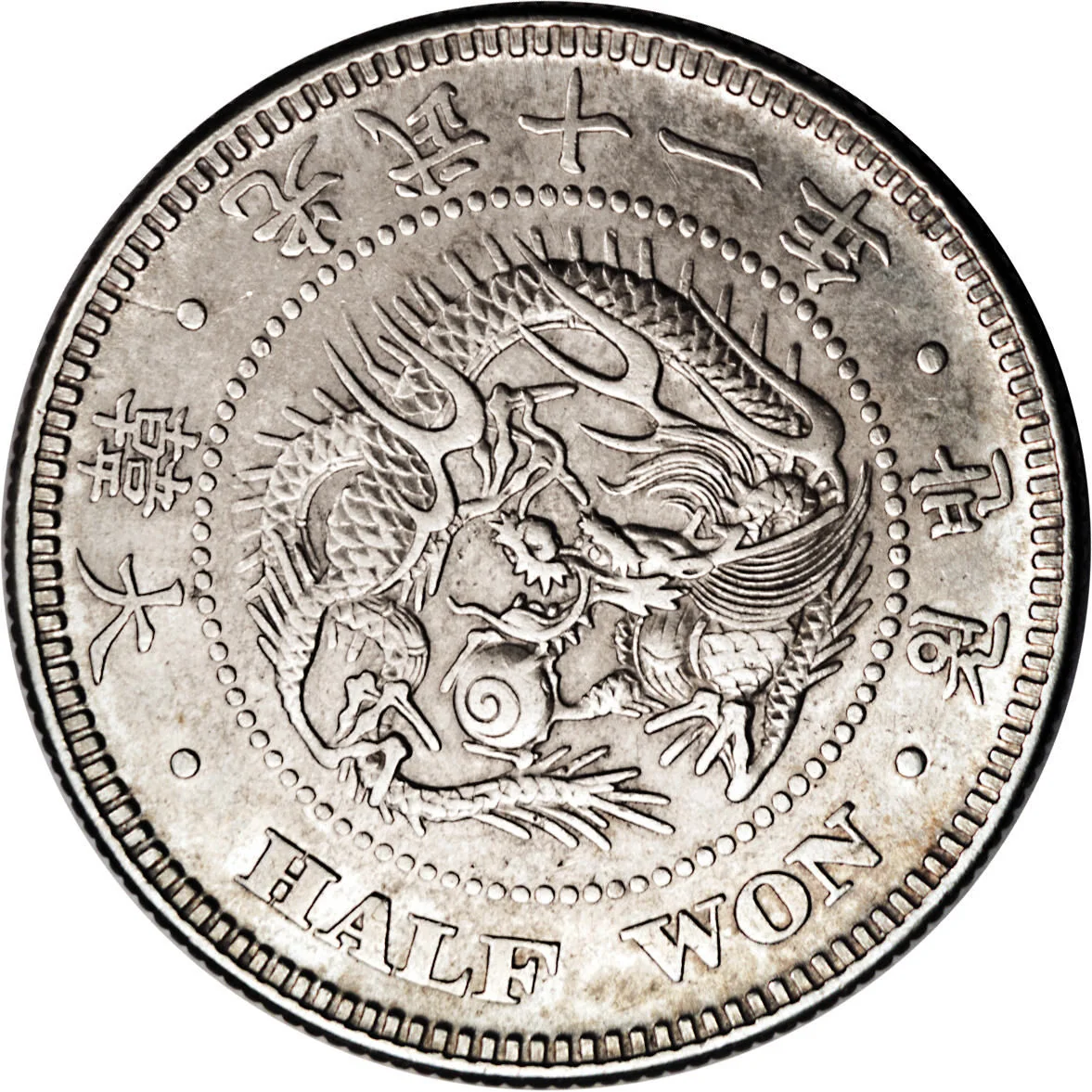
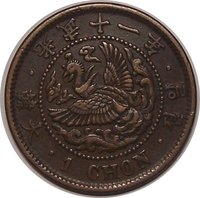
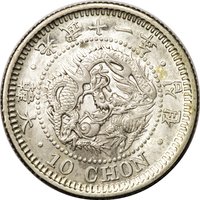
Dragon above, date below, denomination beneath.
Inscription:
• 大韓 • 光武十一年 • 반원 • HALF WON
Translation:
THE KOREAN EMPIRE;
KWANGMU 11TH YEAR;
HALF WON;
HALF WON
KWANGMU 11TH YEAR;
HALF WON;
HALF WON
Reverse
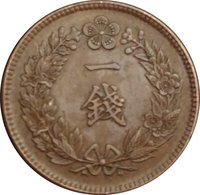
Description:
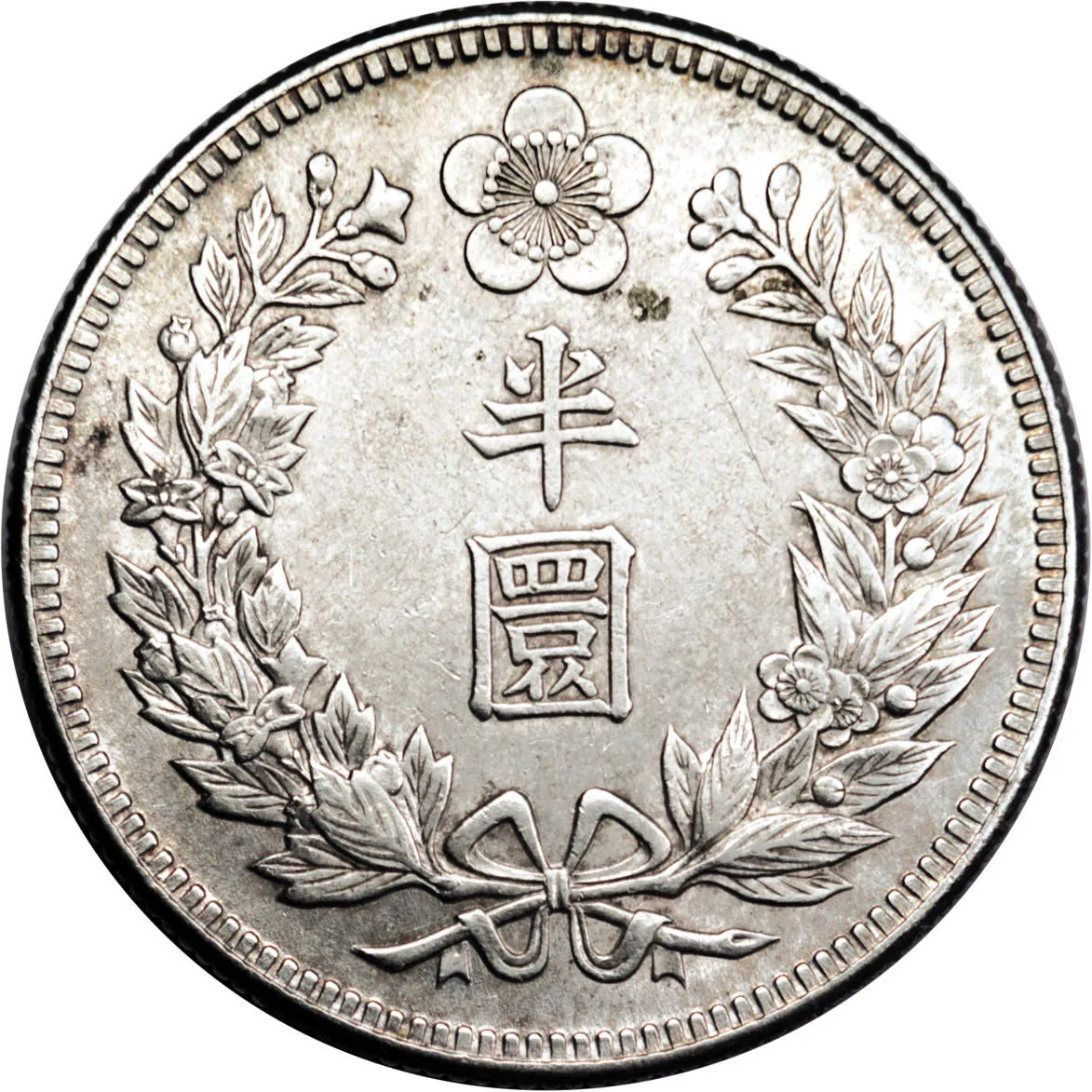
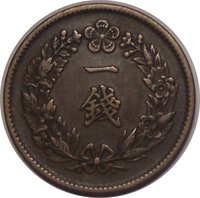
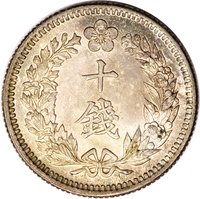
Denomination with wreath and plum flower (Imperial Seal of Korea).
Inscription:
半
圜
圜
Translation:
Half Dollar
Scripts: Chinese (traditional, regular script)
Language: Chinese
Edge
Categories
| Mythology> Fantastic animal |
| Plants> Flower |
| Symbols> Coat of Arms |
| Symbol> Wreath |
Mintings
| Year | Mint Mark | Mintage | Quality | Collection |
|---|---|---|---|---|
| 1907 | — | 1,000,000 |
Historical background
By 1907, the currency situation in the Korean Empire was one of profound instability and foreign domination, reflecting the nation's rapid loss of sovereignty. The traditional monetary system, based on copper "sangpyeong" coins and silver "yang" notes, was chaotic and debased due to rampant counterfeiting and the government's own issuance of unconvertible paper currency to cover fiscal deficits. This created severe inflation and a crisis of public trust, crippling domestic commerce and state finances at a critical juncture.
This internal weakness was aggressively exploited by the Japanese Empire, which was tightening its control following the 1905 protectorate treaty. The Japanese-led Korean Central Bank (Daehan Cheon-il Bank), established in 1905, had already begun issuing a new currency, the "yen" (or "won"), backed by gold reserves and intended to displace Korean specie. In 1907, this process accelerated as Japan systematically tied the Korean economy to its own, moving Korea from a silver-based to a gold-standard system aligned with the Japanese yen. The primary goal was to facilitate Japanese colonial trade and investment, ensuring economic subordination.
Consequently, the currency reform of 1907 was less a sovereign remedy and more a key step in Japan's financial colonization. While it introduced a modern, unified currency that temporarily stabilized exchange rates, it did so by dismantling Korea's independent monetary sovereignty. The Korean Empire’s own currency was being deliberately phased out, mirroring the political reality: by the end of 1907, with the forced abdication of Emperor Gojong and the imposition of the Japan-Korea Treaty, the state had effectively lost all control over its fiscal and monetary policy, paving the way for formal annexation in 1910.
This internal weakness was aggressively exploited by the Japanese Empire, which was tightening its control following the 1905 protectorate treaty. The Japanese-led Korean Central Bank (Daehan Cheon-il Bank), established in 1905, had already begun issuing a new currency, the "yen" (or "won"), backed by gold reserves and intended to displace Korean specie. In 1907, this process accelerated as Japan systematically tied the Korean economy to its own, moving Korea from a silver-based to a gold-standard system aligned with the Japanese yen. The primary goal was to facilitate Japanese colonial trade and investment, ensuring economic subordination.
Consequently, the currency reform of 1907 was less a sovereign remedy and more a key step in Japan's financial colonization. While it introduced a modern, unified currency that temporarily stabilized exchange rates, it did so by dismantling Korea's independent monetary sovereignty. The Korean Empire’s own currency was being deliberately phased out, mirroring the political reality: by the end of 1907, with the forced abdication of Emperor Gojong and the imposition of the Japan-Korea Treaty, the state had effectively lost all control over its fiscal and monetary policy, paving the way for formal annexation in 1910.

💎 Extremely Rare