

500 yen – Japan
Add to wishlist
Japan
Context
Year: 2020
Japanese - Reiwa era Year:: 2
Issuer: Japan
Ruler: Reiwa
Currency:
(since 1871)
Total mintage: 4,001,000
Material
References
Y: #
Numista: #193703
Value
Exchange value: 500 JPY
Inflation-adjusted value: 543.71 JPY
Obverse
Description:
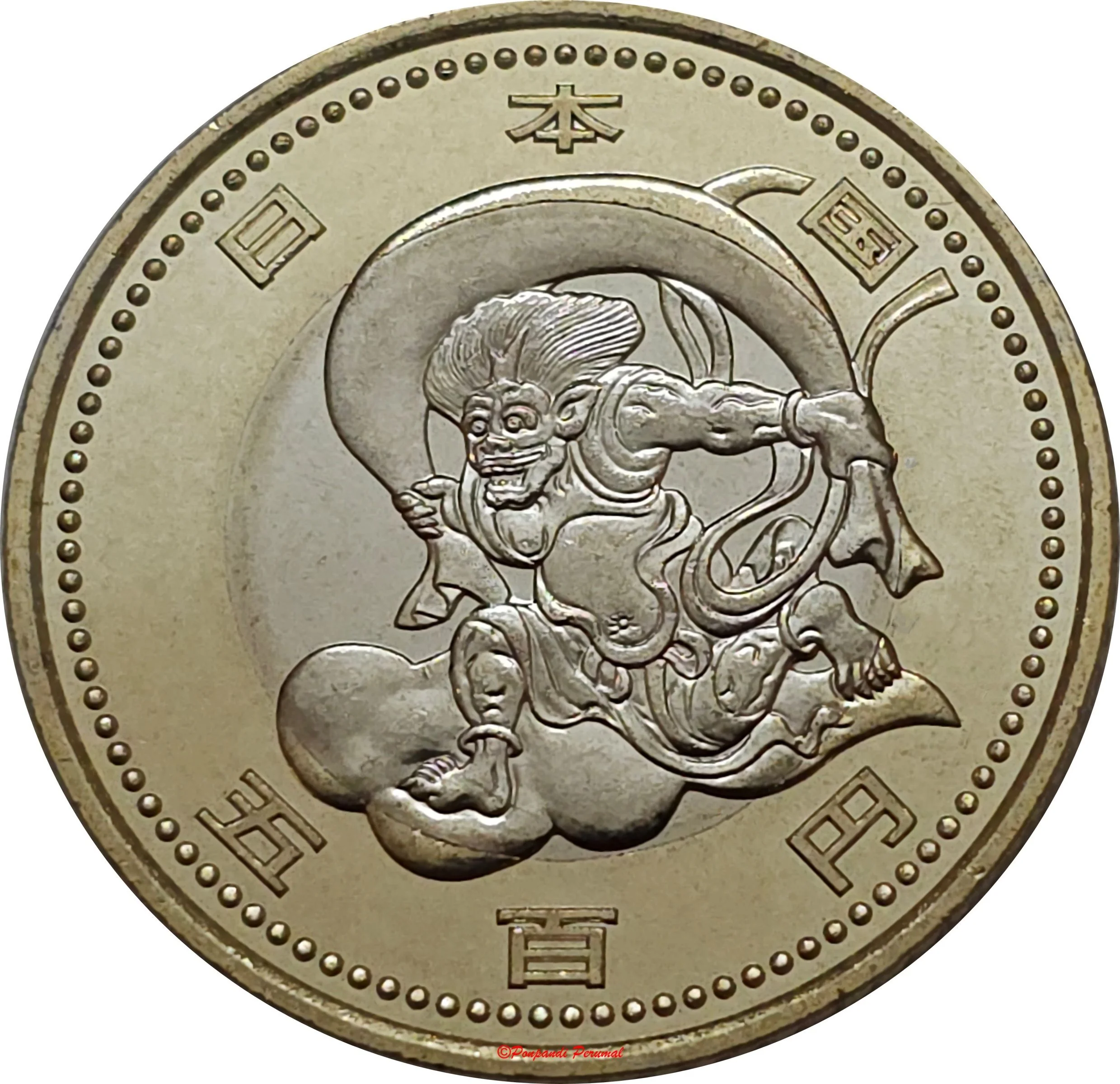
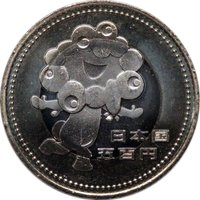
Fūjin, the wind god, from Sōtatsu's "Wind God and Thunder God" screens.
Inscription:
日 本 国
五 百 円
五 百 円
Translation:
Japan;
500 Yen
500 Yen
Language: Japanese
Reverse
Edge
Slanted reeding
Categories
| Art> Painting |
| Sport> Summer Olympic Games |
| Mythology |
Mints
| Name | Mark |
|---|---|
| Japan Mint | — |
Mintings
| Year | Mint Mark | Mintage | Quality | Collection |
|---|---|---|---|---|
| 2020 | — | 4,000,000 | ||
| 2020 | — | 1,000 | Proof |
Historical background
In 2020, Japan's currency situation was dominated by the profound economic shock of the COVID-19 pandemic and the enduring challenge of ultra-low inflation. The year began with the Japanese yen, a traditional safe-haven asset, strengthening significantly as global investors sought stability amid the initial market panic. This appreciation posed a headwind for Japan's export-dependent economy, which was already grappling with a consumption tax hike in late 2019 and then the sudden collapse of domestic and international demand due to lockdowns and supply chain disruptions. The government's declaration of a state of emergency in April plunged the economy into its deepest postwar recession, exacerbating deflationary pressures.
Monetary policy remained aggressively accommodative under the Bank of Japan's (BOJ) longstanding framework of Quantitative and Qualitative Easing (QQE) with Yield Curve Control (YCC). The BOJ's key short-term policy rate was held at -0.1%, and it targeted a 0% yield on 10-year government bonds. In response to the pandemic, the BOJ further eased policy in April 2020 by removing limits on government bond purchases, committing to buy unlimited amounts, and significantly increasing purchases of corporate debt and commercial paper to ensure market liquidity. Despite these measures, the core consumer price index (CPI) hovered around zero for much of the year, stubbornly distant from the BOJ's 2% inflation target.
By the latter half of 2020, the yen's trajectory shifted as global risk sentiment improved with unprecedented fiscal and monetary stimulus worldwide, particularly in the United States. The yen weakened against the US dollar in this environment, providing some relief for exporters. However, this depreciation was moderate compared to past crises, reflecting Japan's large current account surplus and its persistent status as a net creditor nation. Overall, the year highlighted the limits of monetary policy in spurring inflation, even during a massive crisis, and set the stage for continued pressure on the BOJ to maintain its ultra-loose stance while navigating global economic uncertainty.
Monetary policy remained aggressively accommodative under the Bank of Japan's (BOJ) longstanding framework of Quantitative and Qualitative Easing (QQE) with Yield Curve Control (YCC). The BOJ's key short-term policy rate was held at -0.1%, and it targeted a 0% yield on 10-year government bonds. In response to the pandemic, the BOJ further eased policy in April 2020 by removing limits on government bond purchases, committing to buy unlimited amounts, and significantly increasing purchases of corporate debt and commercial paper to ensure market liquidity. Despite these measures, the core consumer price index (CPI) hovered around zero for much of the year, stubbornly distant from the BOJ's 2% inflation target.
By the latter half of 2020, the yen's trajectory shifted as global risk sentiment improved with unprecedented fiscal and monetary stimulus worldwide, particularly in the United States. The yen weakened against the US dollar in this environment, providing some relief for exporters. However, this depreciation was moderate compared to past crises, reflecting Japan's large current account surplus and its persistent status as a net creditor nation. Overall, the year highlighted the limits of monetary policy in spurring inflation, even during a massive crisis, and set the stage for continued pressure on the BOJ to maintain its ultra-loose stance while navigating global economic uncertainty.
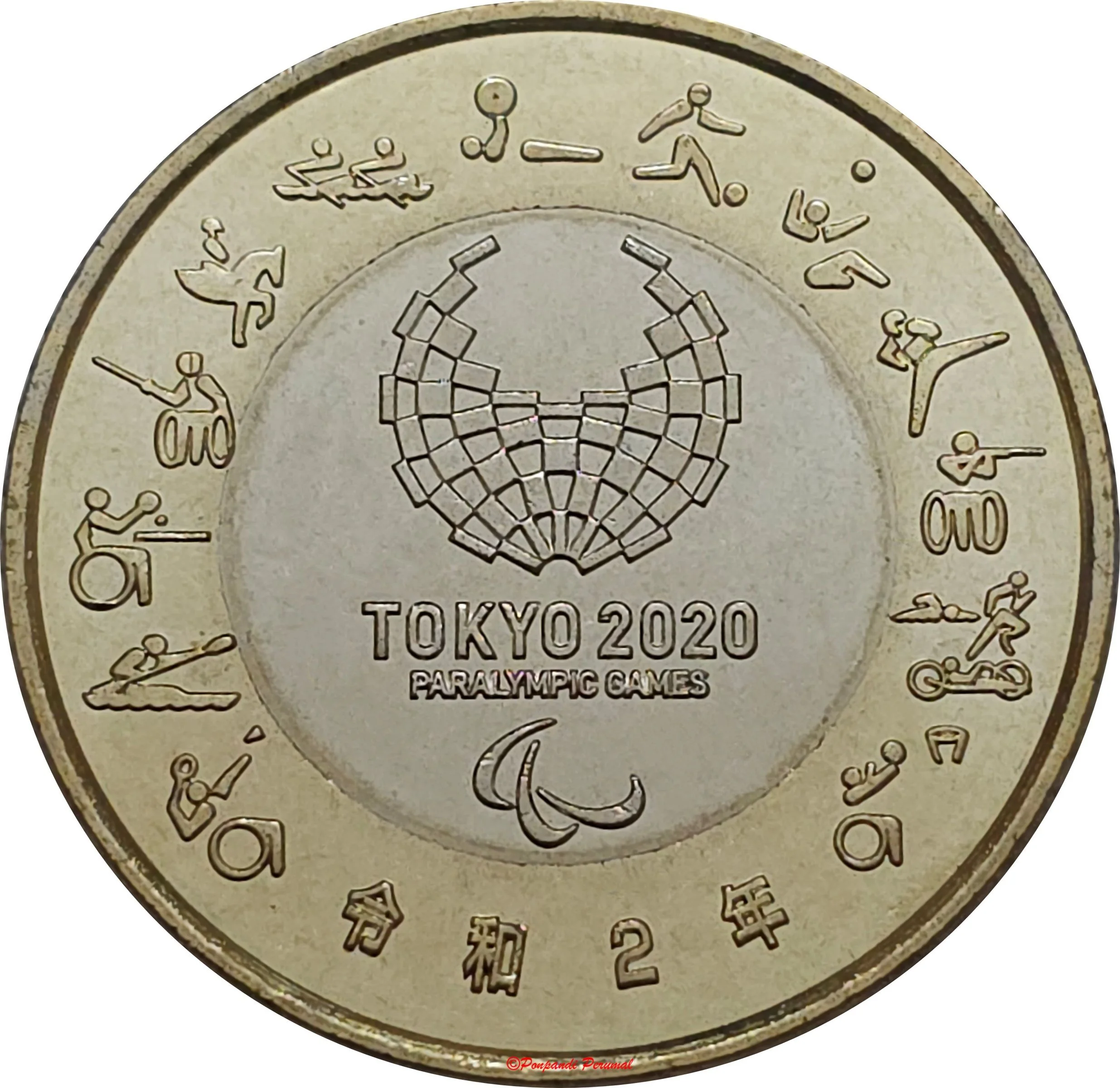
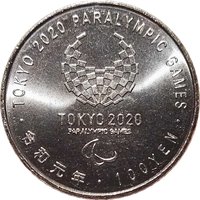
Series: 2020 Paralympics, Tokyo











🌟 Uncommon