

20 centimes – Haiti
Add to wishlist
Haiti
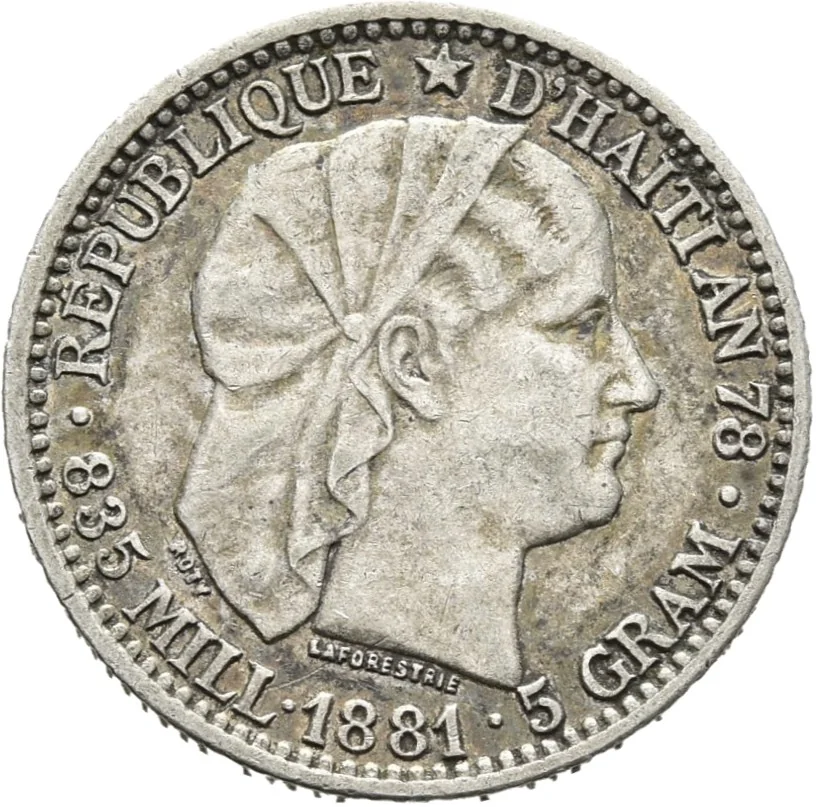
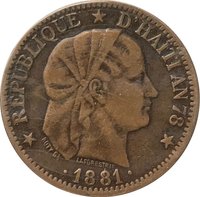
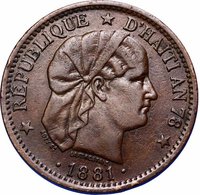
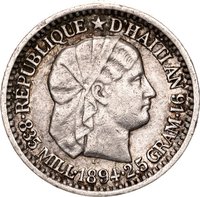
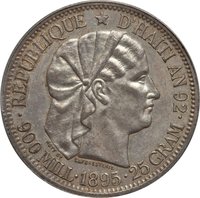
Obverse
Description:
Right-facing bust
Inscription:
.REPUBLIQUE * D'HAÏTI AN 78.
835 MILL·1881·5 GRAM
835 MILL·1881·5 GRAM
Translation:
REPUBLIC * OF HAITI YEAR 78.
835 MILL·1881·5 GRAM
835 MILL·1881·5 GRAM
Script: Latin
Language: French
Engraver: Louis-Oscar Roty
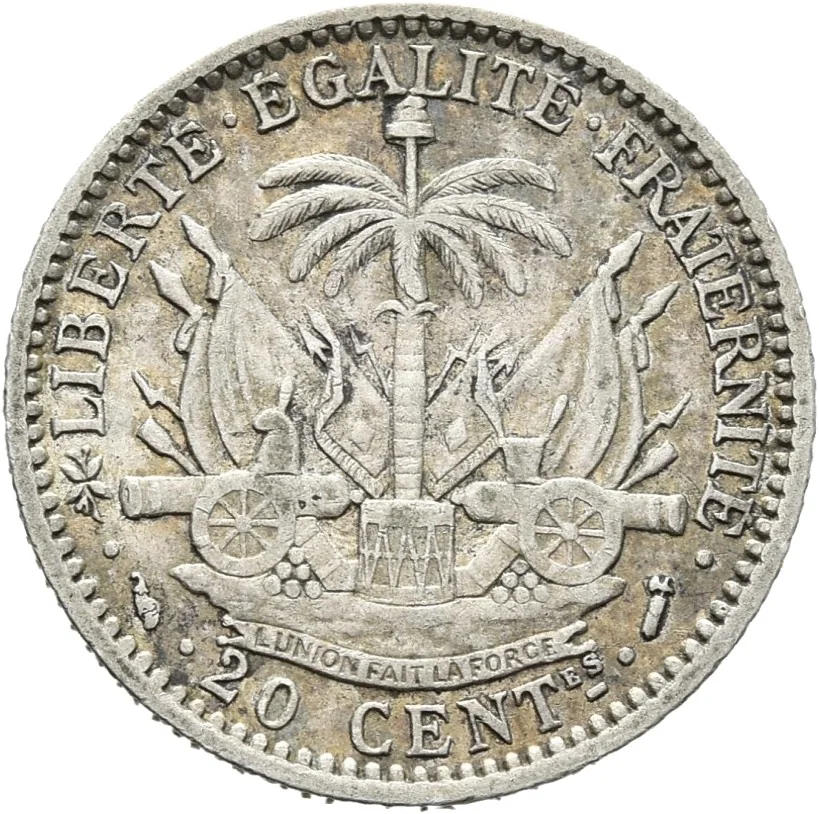
Reverse
Description:
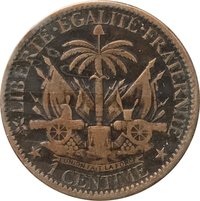
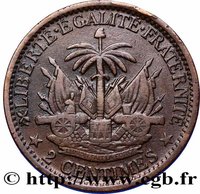
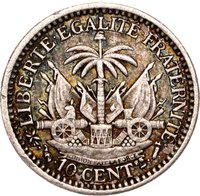
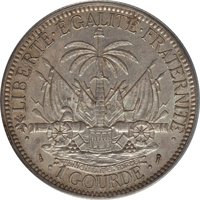
Heraldic emblem
Inscription:
*LIBERTÉ·ÉGALITÉ·FRATERNITÉ·
·20 CENTes·
·20 CENTes·
Translation:
LIBERTY EQUALITY FRATERNITY;
20 CENTIMES
20 CENTIMES
Script: Latin
Language: French
Engraver: Louis-Oscar Roty
Edge
Reeded
Categories
| Symbol> Allegory |
| Symbols> Coat of Arms |
Mints
| Name | Mark |
|---|---|
| Monnaie de Paris | — |
Mintings
| Year | Mint Mark | Mintage | Quality | Collection |
|---|---|---|---|---|
| 1881 | — | 1,250,000 | ||
| 1881 | — | — | Proof | |
| 1882 | — | 1,250,000 | ||
| 1882 | — | — | Proof | |
| 1887 | — | 350,000 | ||
| 1887 | — | — | Proof | |
| 1890 | — | 70,000 | ||
| 1890 | — | — | Proof | |
| 1894 | — | 1,850,000 | ||
| 1894 | — | — | Proof | |
| 1895 | — | 1,270,000 | ||
| 1895 | — | — | Proof |
Historical background
In 1881, Haiti’s currency situation was characterized by profound instability and complexity, a legacy of its post-independence economic struggles and foreign pressures. The nation operated on a bimetallic system nominally tied to the French franc, but in practice, a chaotic mix of coins circulated. These included older French, Spanish, and colonial écu, alongside newer Haitian-issued gourde coins, but the system was undermined by a severe shortage of specie (hard currency). This scarcity crippled everyday commerce and state finances, forcing the government to frequently issue depreciating paper money to cover deficits, which further eroded public trust.
The core of the crisis lay in the gourde's severe depreciation on international markets, particularly against the British pound and the U.S. dollar. While officially pegged at 5 gourdes to 1 U.S. dollar (a "Haitian dollar"), the actual value had fallen dramatically. This devaluation was driven by chronic trade imbalances, limited export earnings primarily from coffee, and the heavy burden of foreign debt. The infamous "French Debt"—the 1825 indemnity imposed by France to recognize Haitian independence—remained a massive drain on the treasury, consuming a significant portion of state revenue for interest payments and perpetuating a cycle of borrowing.
Consequently, the year 1881 fell within a period of contentious monetary debates and short-lived reforms. The government, under President Lysius Salomon, was actively seeking financial stabilization to attract foreign investment and modernize the economy. Efforts included negotiating loans from French banks and attempting to reform the currency system, but these measures often led to further dependency on foreign capital and harsh austerity. The unstable gourde of 1881 thus symbolized Haiti’s broader predicament: political sovereignty was firmly established, but economic independence remained elusive, constrained by historical indemnities, external financial control, and internal fiscal challenges.
The core of the crisis lay in the gourde's severe depreciation on international markets, particularly against the British pound and the U.S. dollar. While officially pegged at 5 gourdes to 1 U.S. dollar (a "Haitian dollar"), the actual value had fallen dramatically. This devaluation was driven by chronic trade imbalances, limited export earnings primarily from coffee, and the heavy burden of foreign debt. The infamous "French Debt"—the 1825 indemnity imposed by France to recognize Haitian independence—remained a massive drain on the treasury, consuming a significant portion of state revenue for interest payments and perpetuating a cycle of borrowing.
Consequently, the year 1881 fell within a period of contentious monetary debates and short-lived reforms. The government, under President Lysius Salomon, was actively seeking financial stabilization to attract foreign investment and modernize the economy. Efforts included negotiating loans from French banks and attempting to reform the currency system, but these measures often led to further dependency on foreign capital and harsh austerity. The unstable gourde of 1881 thus symbolized Haiti’s broader predicament: political sovereignty was firmly established, but economic independence remained elusive, constrained by historical indemnities, external financial control, and internal fiscal challenges.
Series: 1881 Haiti circulation coins
🌟 Uncommon