

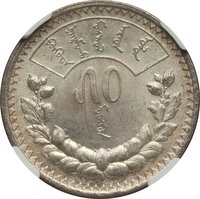
Obverse
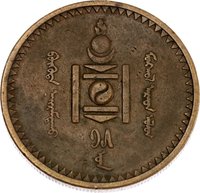
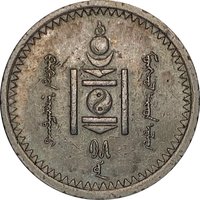
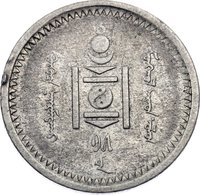
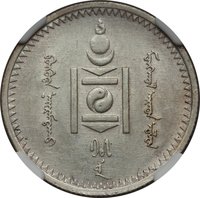
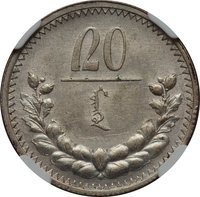
Description:
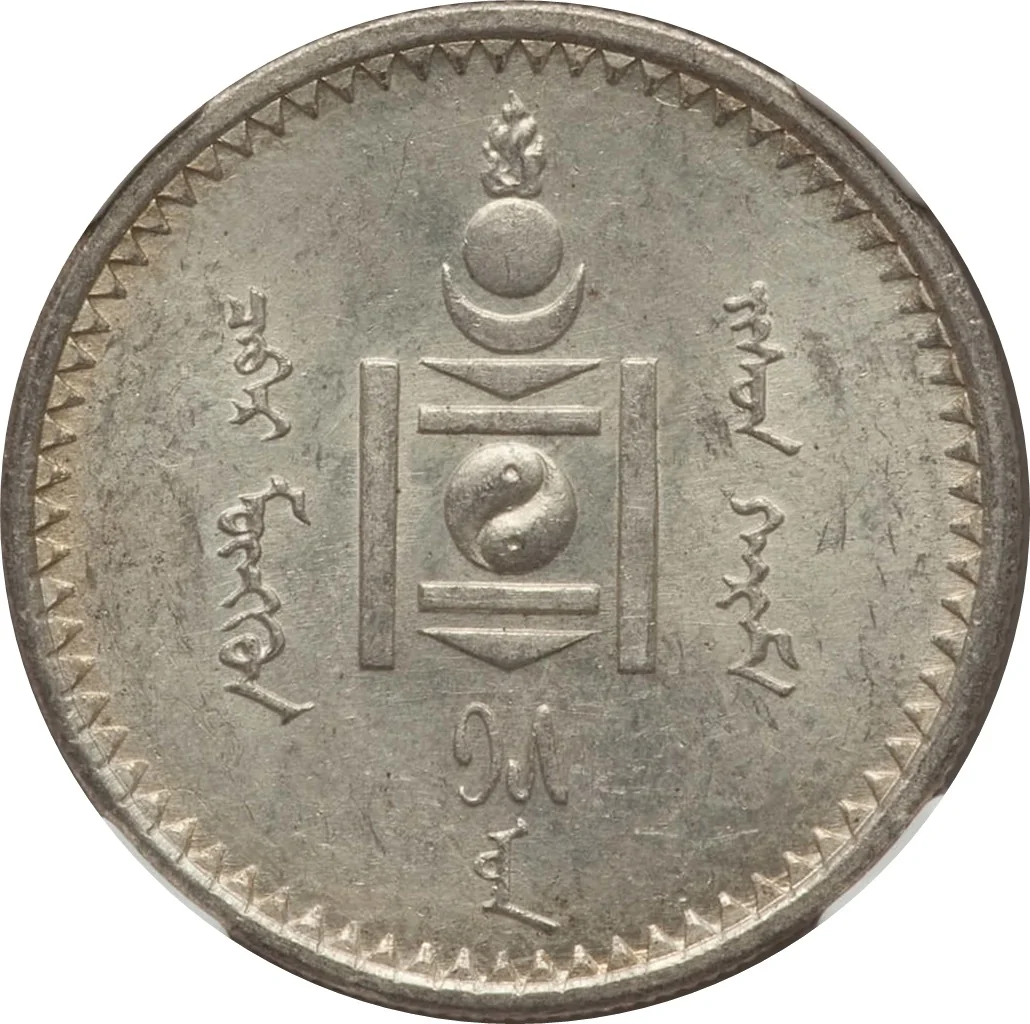
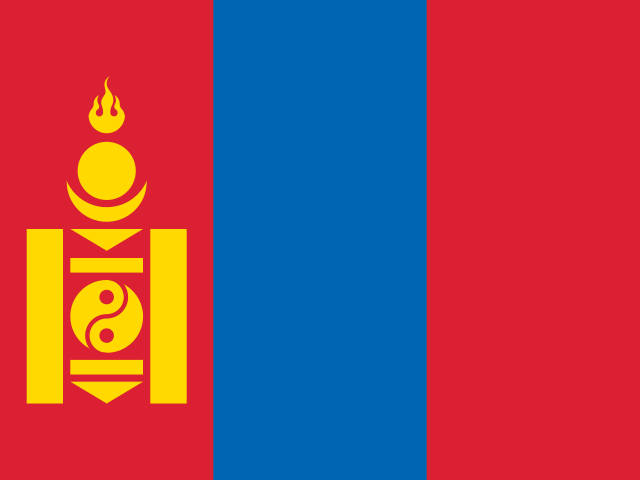
Soyombo script and symbol with date. State emblem of the People's Republic of Mongolia (1924–1939).
Inscription:
ᠴᠡᠪᠡᠷ ᠮᠥᠩᠭᠥᠨ ᠶᠢᠰᠦᠨ ᠭᠷᠠᠮ
᠑᠕
ᠣᠨ
᠑᠕
ᠣᠨ
Translation:
Cebeg munggun yisun gram
15
On
15
On
Language: Mongolian
Reverse
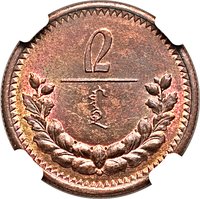
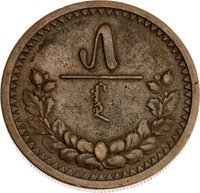
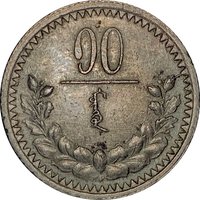
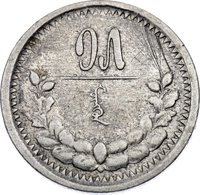
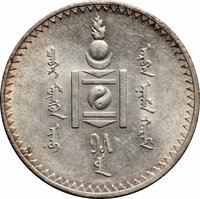
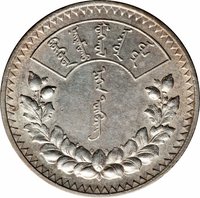
Description:
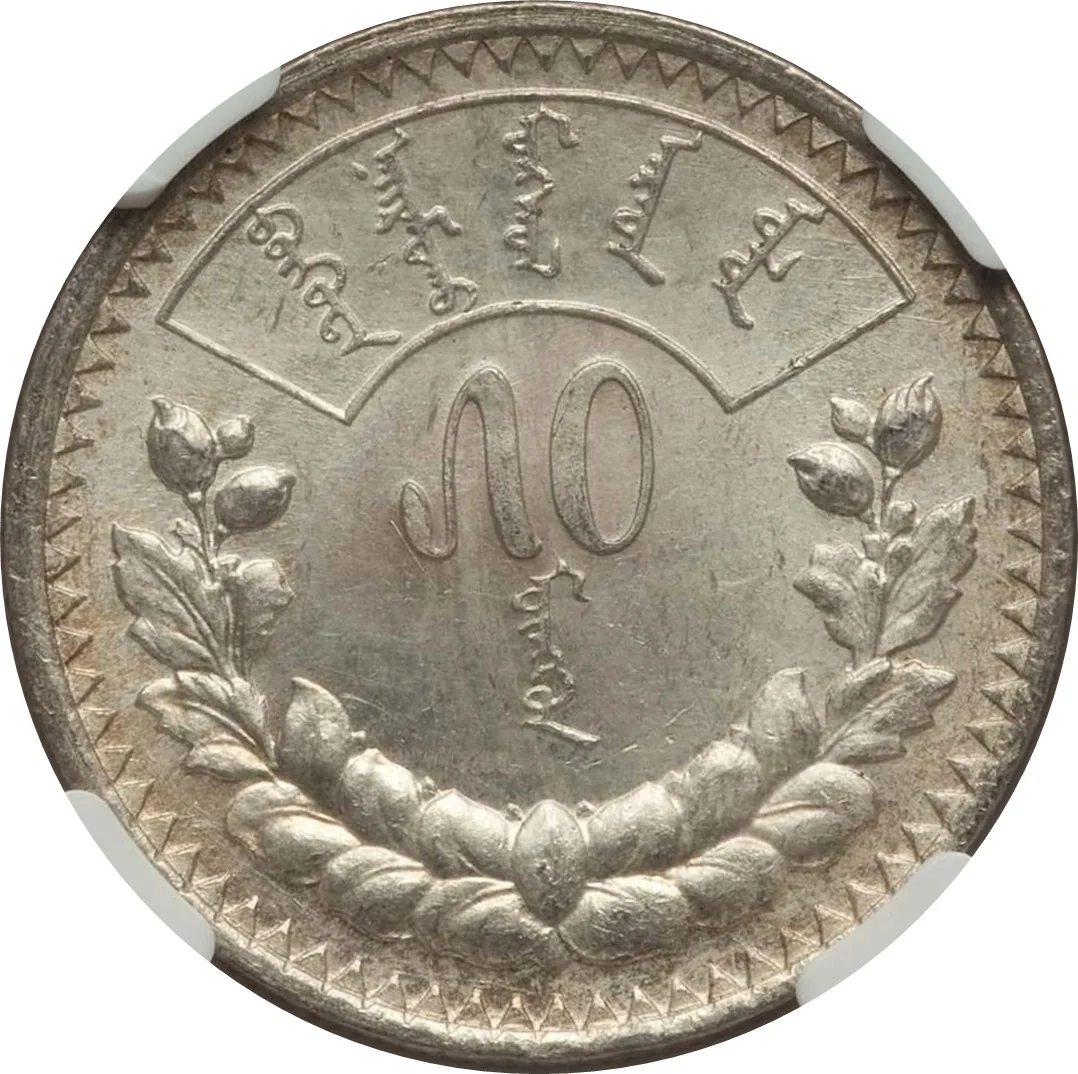
Value above wreath
Inscription:
ᠪᠦᠭᠦᠳᠡ ᠨᠠᠶᠢᠷᠠᠮᠳᠠᠬᠤ ᠮᠣᠩᠭᠣᠯ ᠠᠷᠠᠳ ᠤᠯᠤᠰ
᠕᠐
ᠮᠥᠩᠭᠥᠨ
᠕᠐
ᠮᠥᠩᠭᠥᠨ
Translation:
By the power of the eternal heaven, of the Mongol people, of the great nation.
50
Möngke
50
Möngke
Language: Mongolian
Edge
Milled
Mints
| Name | Mark |
|---|---|
| Saint Petersburg | — |
Mintings
| Year | Mint Mark | Mintage | Quality | Collection |
|---|---|---|---|---|
| 1925 | — | 920,000 |
Historical background
By 1925, the Mongolian People's Republic, under Soviet influence, was in the final stages of consolidating its monetary system after a period of profound instability. For over a decade following independence in 1911, the economy suffered from a chaotic mix of currencies, including pre-revolutionary Russian rubles, Chinese taels and silver dollars, old Qing dynasty coinage, and even bricks of tea used as barter. This multiplicity hindered state control, facilitated smuggling, and reflected the country's contested position between Russian and Chinese spheres of influence.
The decisive shift began in 1925 with the establishment of the country's first central bank, the Mongolian Trade and Industrial Bank (Mongolbank), founded with crucial Soviet financial and technical assistance. Its primary and immediate task was to introduce a stable, unified national currency. That same year, Mongolbank prepared for the launch of the tögrög (MNT), which would formally enter circulation in December 1925, replacing all previous currencies at fixed exchange rates. The tögrög was pegged to the Soviet ruble, cementing the economic and political alignment with the USSR.
Thus, the currency situation in 1925 was one of transition and Soviet-driven centralization. The creation of the tögrög was not merely an economic reform but a key act of state-building, designed to erase the monetary legacy of the Qing dynasty and the Bogd Khanate, assert sovereignty by ending monetary dependence on China, and integrate Mongolia firmly into the Soviet economic bloc. This move provided the foundational financial infrastructure for the state-planned economy that would characterize Mongolia for the next six decades.
The decisive shift began in 1925 with the establishment of the country's first central bank, the Mongolian Trade and Industrial Bank (Mongolbank), founded with crucial Soviet financial and technical assistance. Its primary and immediate task was to introduce a stable, unified national currency. That same year, Mongolbank prepared for the launch of the tögrög (MNT), which would formally enter circulation in December 1925, replacing all previous currencies at fixed exchange rates. The tögrög was pegged to the Soviet ruble, cementing the economic and political alignment with the USSR.
Thus, the currency situation in 1925 was one of transition and Soviet-driven centralization. The creation of the tögrög was not merely an economic reform but a key act of state-building, designed to erase the monetary legacy of the Qing dynasty and the Bogd Khanate, assert sovereignty by ending monetary dependence on China, and integrate Mongolia firmly into the Soviet economic bloc. This move provided the foundational financial infrastructure for the state-planned economy that would characterize Mongolia for the next six decades.
Series: 1925 Mongolia circulation coins
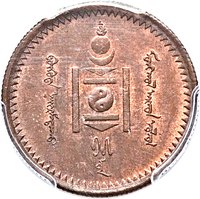
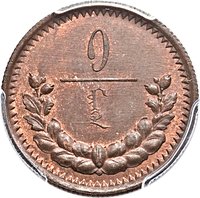
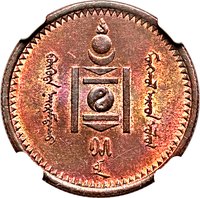
🌟 Uncommon