Logo Title
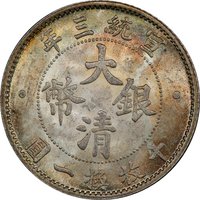
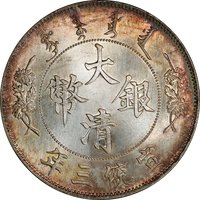
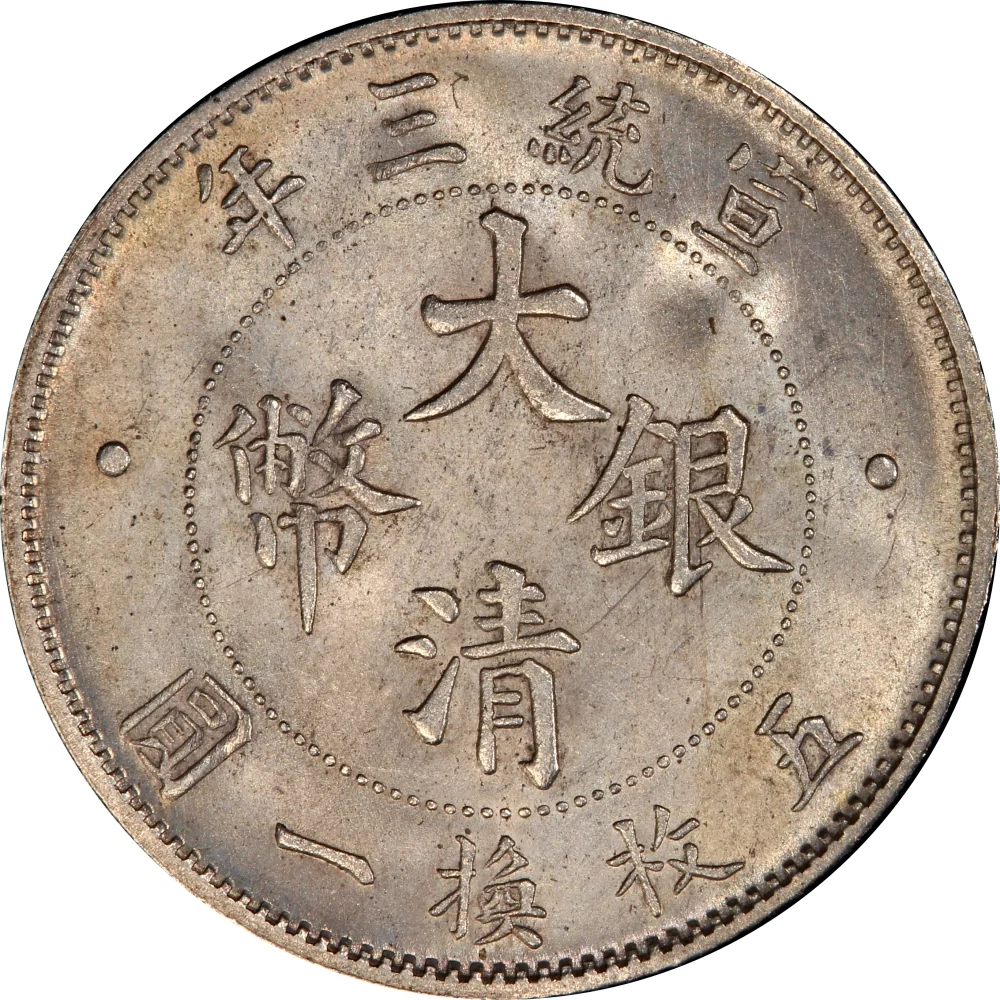
obverse
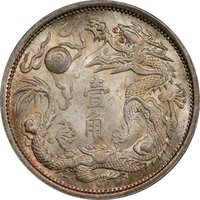
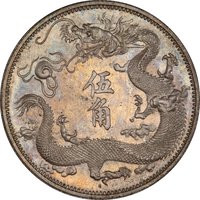
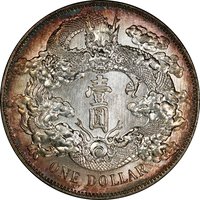
reverse
PCGS
Context
Year: 1911
Country: China Country flag
Ruler: Xuantong
Currency:
(1903—1912)
Demonetized: Yes
Material
Diameter: 24 mm
Weight: 5.4 g
Silver weight: 4.43 g
Shape: Round
Composition: 82% Silver
Magnetic: No
Technique: Milled
Alignment: Medal alignment
Obverse
OBVERSE ↑
flip
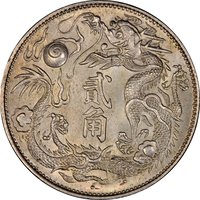
Reverse
REVERSE ↑
References
Y: #Click to copy to clipboard29
Numista: #17677
Value
Bullion value: $12.34

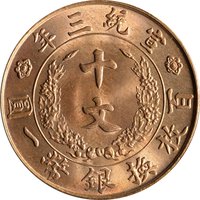
Obverse

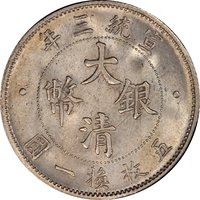
Description:
Four Chinese characters read vertically, right to left, within a longer column.
Inscription:
年三統宣


幣銀


圓一換枚五
Translation:
Third Year of Xuantong

Great

Qing Silver Coin

One Dollar, Exchange for Five Pieces

Reverse

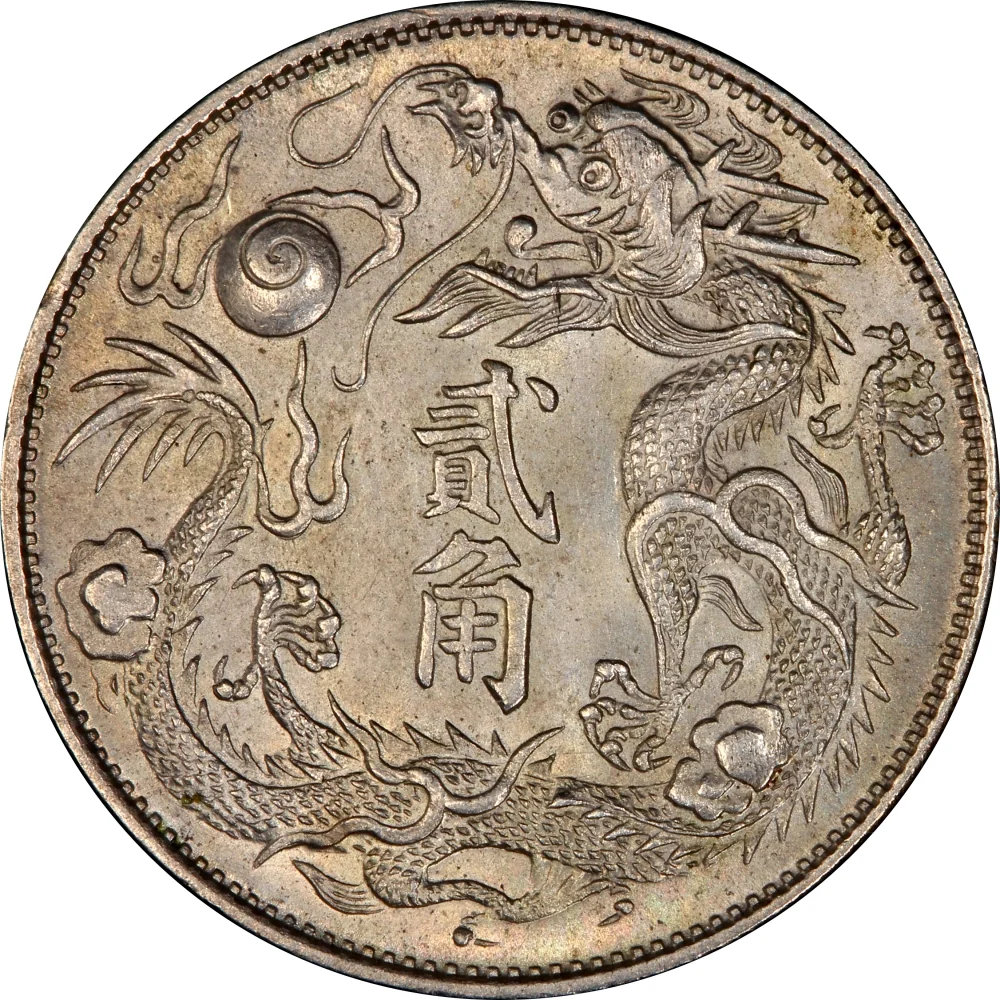
Description:
Two Chinese characters encircled by a dragon with a pearl above left.
Inscription:


Translation:
Two Jiao
Language: Chinese

Edge


Mintings

YearMint MarkMintageQualityCollection
1911

Historical background

In 1911, the currency situation of the Qing Empire was a chaotic and fragmented system, emblematic of the dynasty's crumbling authority and economic vulnerability. The core of the system was the silver tael (liang), a unit of weight rather than a coin, which led to countless local variants and exchange rates. Alongside this, silver Mexican dollars and their domestic imitations, known as "dragon dollars," circulated widely for large transactions, while a vast array of copper cash coins (with square holes) served daily retail trade. This bimetallic system, however, was unstable and regionally inconsistent, severely hampering national commerce and state finance.

The dynasty's attempts at reform were too little, too late. In 1910, the Qing government promulgated the "Currency Regulations," aiming to establish a unified, decimal-based currency system centered on a new silver yuan. The plan called for a central bank (the Da Qing Bank) to issue convertible banknotes, phasing out old coins and private notes. While some new coins were minted, the reform was undermined by a critical lack of centralized control. Provincial mints continued to produce debased coinage, foreign banks issued their own notes in treaty ports, and countless local banks and merchants circulated irredeemable private scrip, all eroding trust in any central monetary authority.

This monetary disintegration directly reflected and accelerated the political crisis. The state's inability to control its currency stifled economic modernization, complicated tax collection, and fueled public resentment. When the Wuchang Uprising erupted in October 1911, triggering the fall of the dynasty, the financial system collapsed into further disorder. The new Republic inherited not a unified currency, but a legacy of monetary chaos that would take decades to resolve, with the tael, the yuan, foreign dollars, and countless local notes all circulating in a turbulent competition for legitimacy.

Series: 1911 Empire of China circulation coins

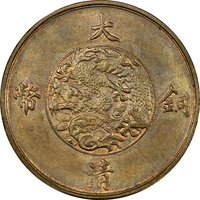
10 Cash obverse
10 Cash reverse
10 Cash
1911
10 Cash obverse
10 Cash reverse
10 Cash
1911
1 Jiao obverse
1 Jiao reverse
1 Jiao
1911
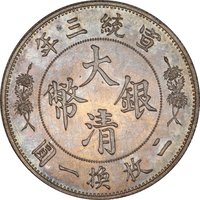
2 Jiao obverse
2 Jiao reverse
2 Jiao
1911
5 Jiao obverse
5 Jiao reverse
5 Jiao
1911
1 Yuan obverse
1 Yuan reverse
1 Yuan
1911
💎 Extremely Rare