Logo Title
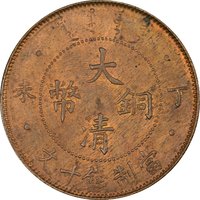
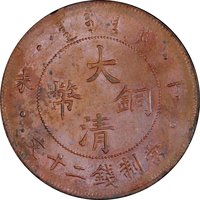
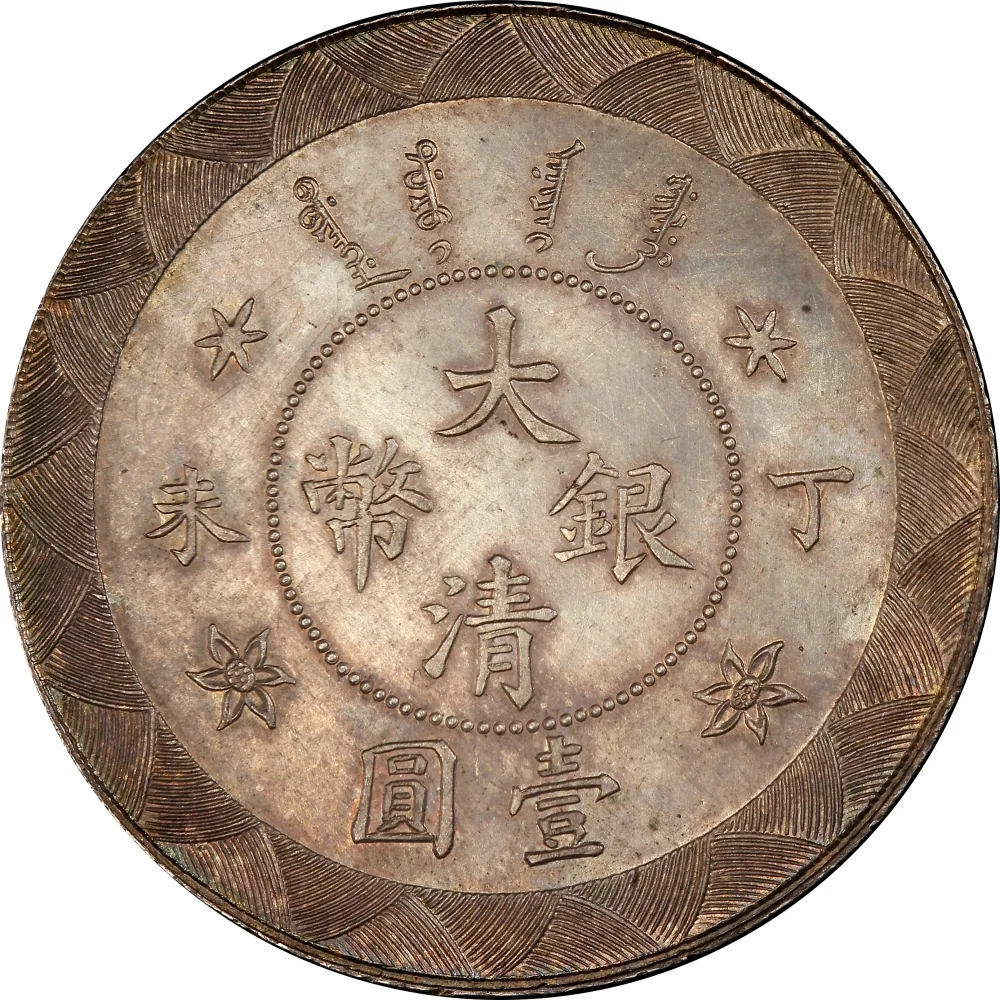
obverse
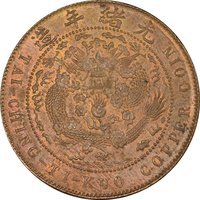
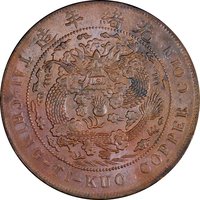
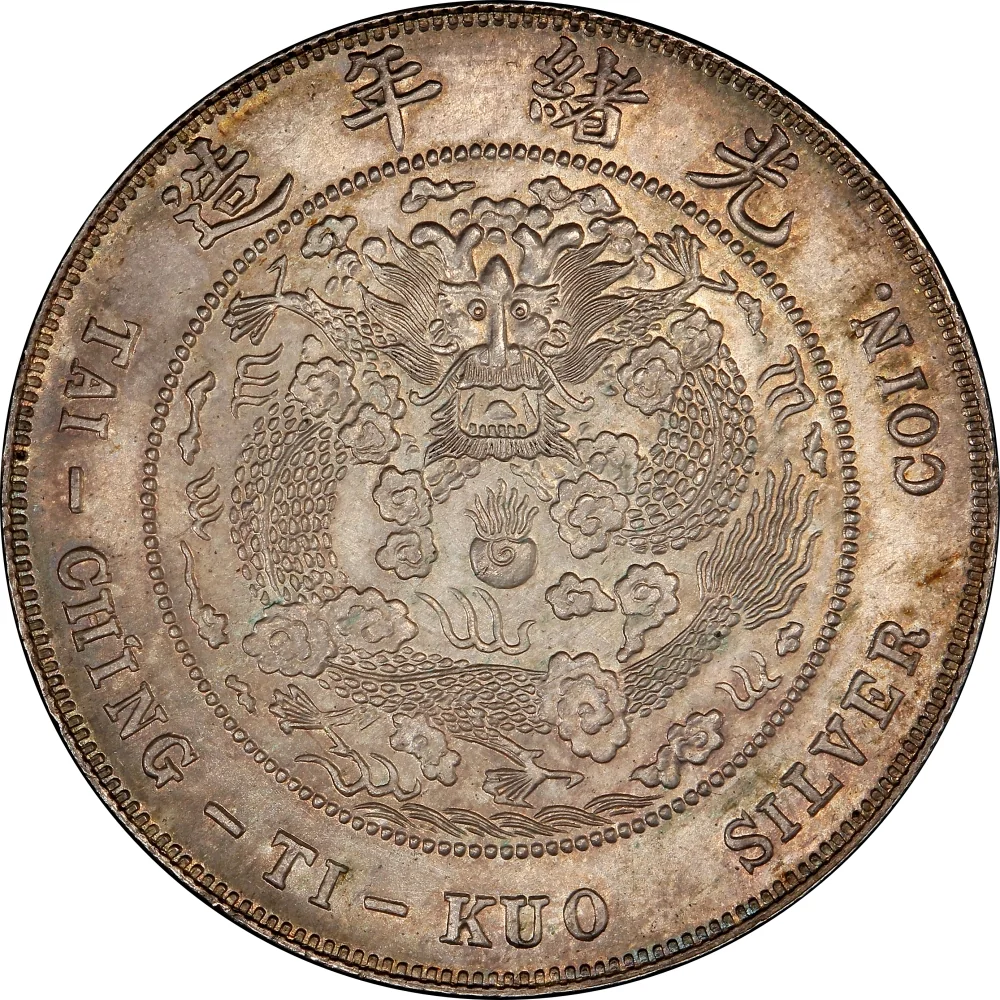
reverse
PCGS
Context
Year: 1907
Country: China Country flag
Ruler: Guangxu
Currency:
(1903—1912)
Demonetized: Yes
Material
Diameter: 39 mm
Weight: 26.9 g
Silver weight: 24.21 g
Shape: Round
Composition: 90% Silver
Magnetic: No
Technique: Milled
Alignment: Medal alignment
Obverse
OBVERSE ↑
flip
Reverse
REVERSE ↑
References
Numista: #10360
Value
Bullion value: $67.45

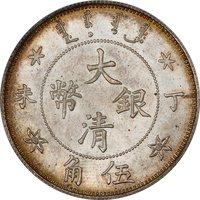
Obverse

Description:
Four Chinese ideograms read vertically, right to left, with Manchu translations above, surrounded by two flowers, two stars, and four peripheral ideograms.
Inscription:
ᠪᠠᡩᠠᠷᠠᠩᡤᠠ ᡩᠣᠷᠣ ᡳ᠋ ᠠᠨᡳᠶᠠᡳ ᠸᡝᡳᠯᡝᡥᡝ

未丁


幣銀


圓 壹
Translation:
Badarangg'a doro i aniya weilehe

Made in the 10th year of the Guangxu reign

Great

Silver Coin

Qing

One Yuan

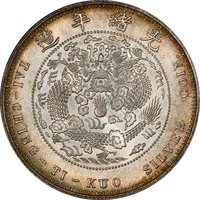
Reverse

Description:
Eastern dragon centered around a pearl, with four Chinese characters above and English text below.
Inscription:
造年緒光

TAI-CHING-TI-KUO SILVER COIN.
Translation:
Great Qing Empire Silver Coin.
Language: Chinese

Edge


Mintings

YearMint MarkMintageQualityCollection
1907

Historical background

By 1907, the currency situation in the Qing Empire was one of profound complexity and crisis, reflecting the dynasty's political and economic fragmentation. There was no unified national currency. The primary medium for large transactions and government finance remained the silver tael (liang), a unit of weight rather than a coin, which varied regionally in purity and measurement. Concurrently, a vast array of foreign-minted silver dollars (most notably the Mexican "Eagle" dollar) circulated alongside a multitude of local and provincial copper cash coins and privately issued banknotes. This chaotic system created severe inefficiencies for inter-regional trade and tax collection, as constant conversion between currencies and tael standards was required.

Recognizing this monetary disarray as a threat to sovereignty and modernization, the Qing government had embarked on ambitious financial reforms. In 1905, the Imperial Bank of China (later the Da Qing Bank) was established as a central bank with the authority to issue unified national currency. By 1907, the bank was actively issuing its own silver and copper notes, while provincial mints began producing new standard silver yuan coins (with the image of the Dragon) and copper subsidiary coins. The goal was to gradually displace foreign dollars and establish a decimal system: 1 yuan = 10 jiao = 100 fen.

However, these centralizing efforts in 1907 were still in their infancy and faced immense obstacles. Provincial authorities and powerful commercial guilds resisted losing their monetary privileges, and public trust in government paper notes was low due to a history of inflationary issues. The continued outflow of silver to pay foreign indemnities, like the Boxer Protocol, drained the metallic reserve needed to back the new currency. Thus, 1907 represents a pivotal but strained transitional moment—a last-ditch imperial attempt to create a modern monetary system, operating within a context of entrenched localism, foreign economic pressure, and the dynasty's waning authority, which would collapse just four years later.

Series: 1907 Empire of China circulation coins

1 Yuan obverse
1 Yuan reverse
1 Yuan
1907
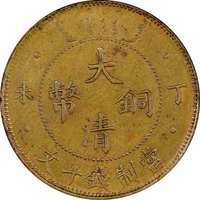
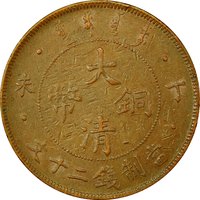
10 Cash obverse
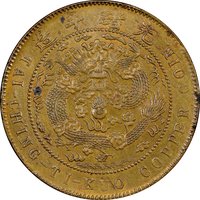
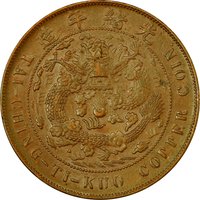
10 Cash reverse
10 Cash
1907
10 Cash obverse
10 Cash reverse
10 Cash
1907
20 Cash obverse
20 Cash reverse
20 Cash
1907
20 Cash obverse
20 Cash reverse
20 Cash
1907
5 Cash obverse
5 Cash reverse
5 Cash
1907
5 Jiao obverse
5 Jiao reverse
5 Jiao
1907
💎 Very Rare