

50 sen – Japan
Add to wishlist
Japan
Context
Year: 1871
Japanese - Meiji era Year:: 4
Issuer: Japan
Ruler: Meiji
Currency:
(since 1871)
Demonetized: Yes
Total mintage: 2,648,309
Material
References
Y: #
Numista: #15205
Value
Exchange value: 0.50 JPY
Bullion value: $25.46
Obverse
Description:
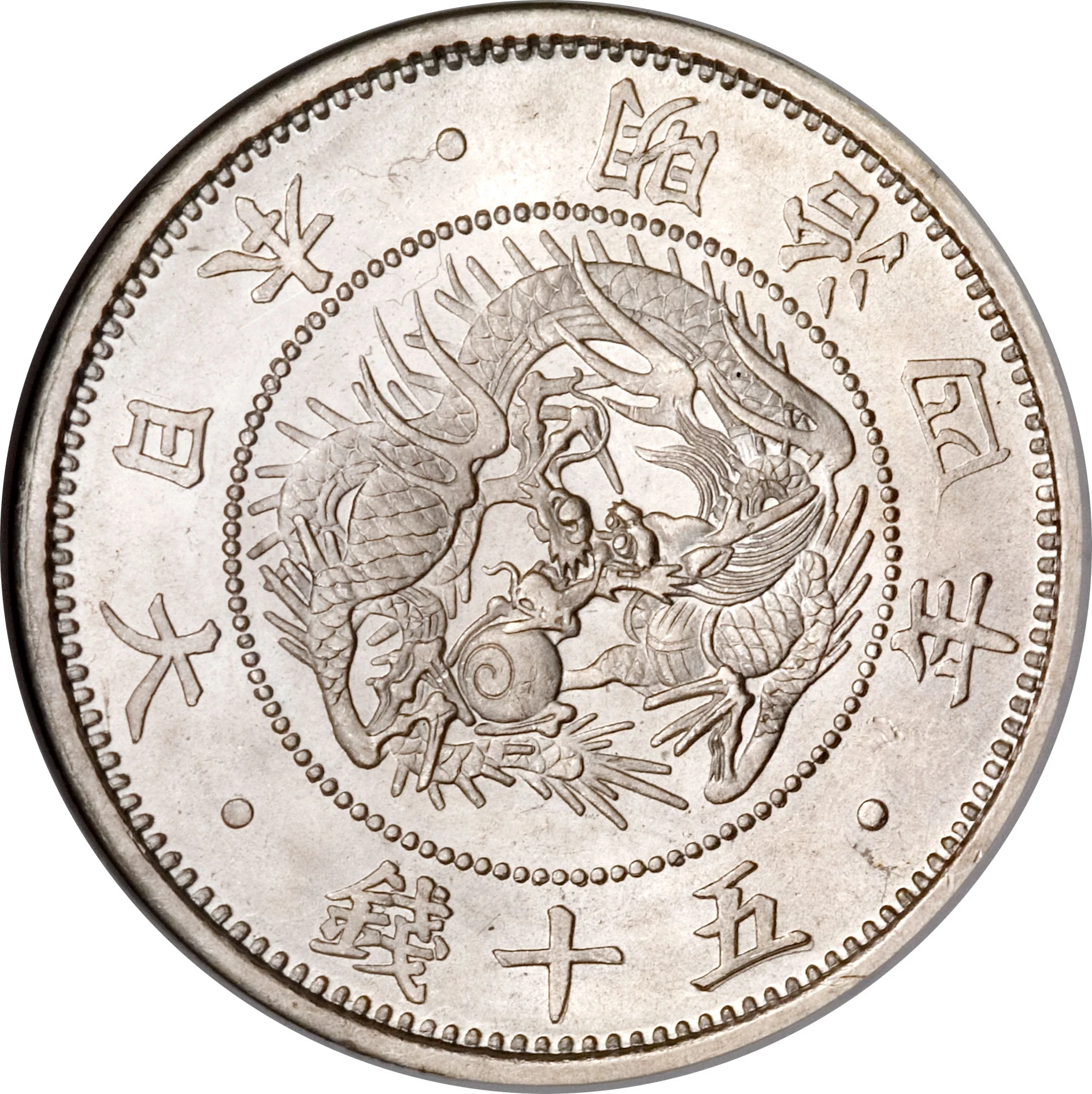
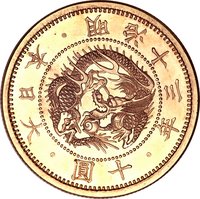
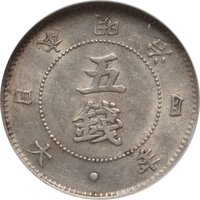
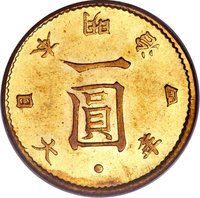
Dragon encircled by beads, legend above, value below.
Inscription:
年四治明 · 本日大
· 錢 十 五 ·
· 錢 十 五 ·
Translation:
The fourth year of the Zhi Ming era · The Great Japan
· Coin Ten Five ·
· Coin Ten Five ·
Language: Classical Chinese
Reverse
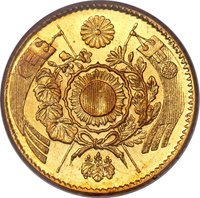
Description:
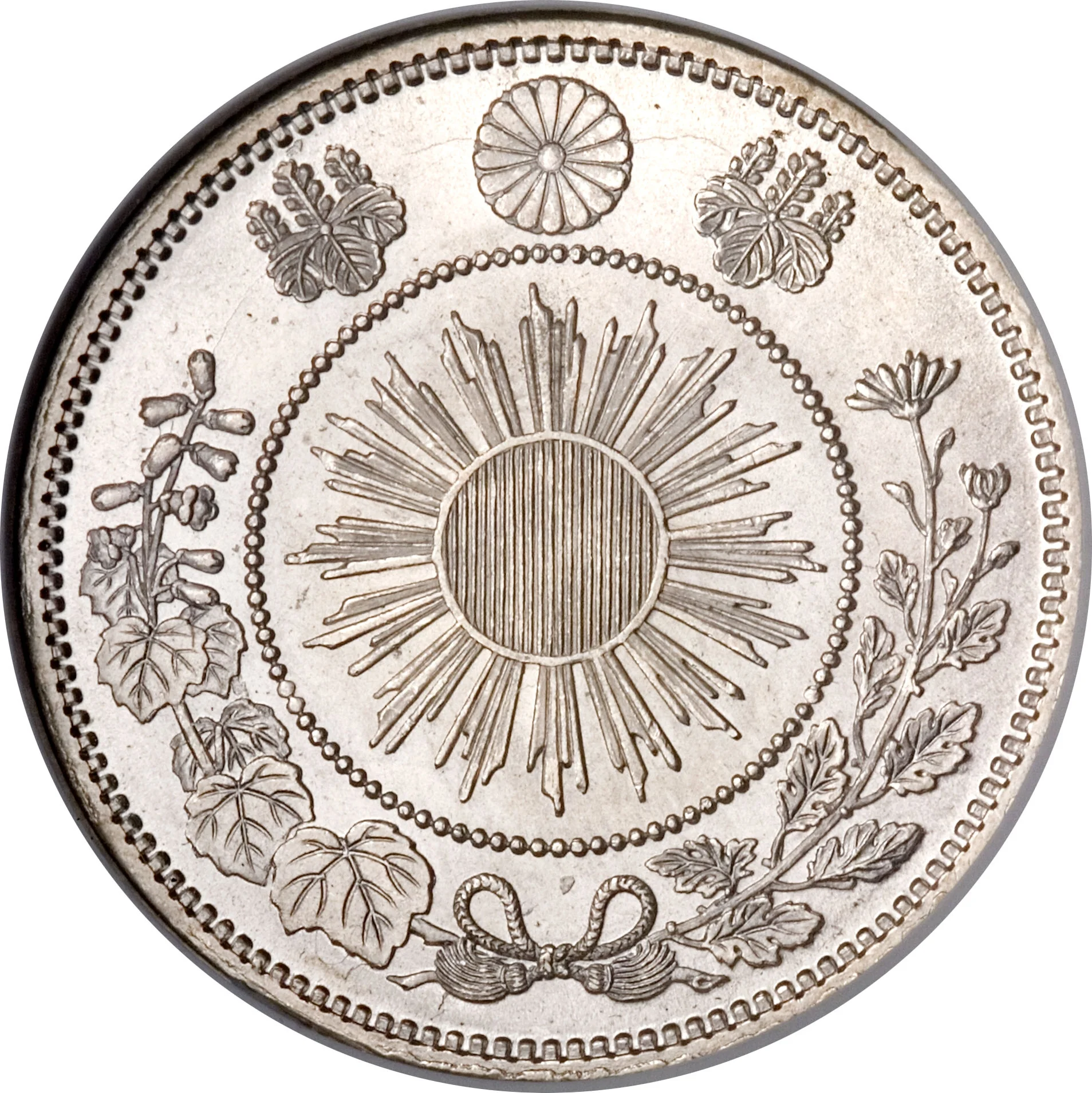
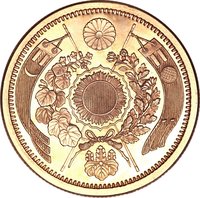
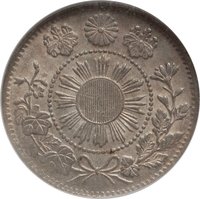
Sunburst crest in beaded circle with wreath, chrysanthemum between two paulownia above.
Edge
Reeded
Categories
| Mythology> Fantastic animal |
| Plants> Flower |
| Symbols> Coat of Arms |
| Symbol> Sun |
| Symbol> Wreath |
Mintings
| Year | Mint Mark | Mintage | Quality | Collection |
|---|---|---|---|---|
| 1871 | — | 2,648,309 |
Historical background
In 1871, Japan stood at a pivotal moment in its monetary history, having just enacted the New Currency Act (Shinka Jōrei). This legislation marked the decisive end of the complex and archaic Tokugawa-era monetary system, which was characterized by a chaotic mix of feudal clan notes, gold, silver, and copper coins that varied in value and authenticity across some 250 domains. The new Meiji government, determined to centralize power and modernize the nation on a Western model, recognized a unified, stable currency as essential for domestic economic integration and international trade. The Act established the yen (meaning "round object") as the nation's sole decimalized unit, based on a bimetallic standard pegged to global values: one yen was defined as 1.5 grams of pure gold, or 24.26 grams of pure silver.
The reform was ambitious but fraught with immediate challenges. To facilitate the transition, the government introduced new, machine-minted Western-style coins in gold, silver, and copper, featuring iconic symbols like the dragon. However, the simultaneous demonetization of old feudal currencies created significant social and economic dislocation. The government had to assume the massive debts of the former domains to redeem their notes, placing a severe strain on its finances. Furthermore, the global silver price began a prolonged decline shortly after the law's passage, destabilizing the intended bimetallic parity and causing gold to flow out of the country, as the fixed exchange rate between gold and silver yen made gold underpriced on international markets.
Thus, while 1871 represents the formal birth of Japan's modern yen and a critical step toward a centralized fiscal state, the immediate aftermath was a period of considerable turbulence. The government's commitment to the new system, despite the outflow of gold and redemption costs, underscored its determination to achieve monetary sovereignty. This foundational act set the stage for subsequent reforms, including the eventual move to a gold standard in 1897, and was instrumental in weaving Japan's disparate regional economies into a single national market capable of supporting rapid industrialization.
The reform was ambitious but fraught with immediate challenges. To facilitate the transition, the government introduced new, machine-minted Western-style coins in gold, silver, and copper, featuring iconic symbols like the dragon. However, the simultaneous demonetization of old feudal currencies created significant social and economic dislocation. The government had to assume the massive debts of the former domains to redeem their notes, placing a severe strain on its finances. Furthermore, the global silver price began a prolonged decline shortly after the law's passage, destabilizing the intended bimetallic parity and causing gold to flow out of the country, as the fixed exchange rate between gold and silver yen made gold underpriced on international markets.
Thus, while 1871 represents the formal birth of Japan's modern yen and a critical step toward a centralized fiscal state, the immediate aftermath was a period of considerable turbulence. The government's commitment to the new system, despite the outflow of gold and redemption costs, underscored its determination to achieve monetary sovereignty. This foundational act set the stage for subsequent reforms, including the eventual move to a gold standard in 1897, and was instrumental in weaving Japan's disparate regional economies into a single national market capable of supporting rapid industrialization.
⭐ Somewhat Rare