

1 yen – Japan
Add to wishlist
Japan
Context
Year: 1914
Japanese - Taishō era Year:: 3
Issuer: Japan
Ruler: Taishō
Currency:
(since 1871)
Demonetized: Yes
Total mintage: 11,500,000
Material
References
Y: #
Numista: #14259
Value
Exchange value: 1 JPY
Bullion value: $60.56
Obverse
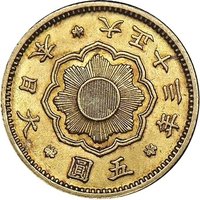
Description:
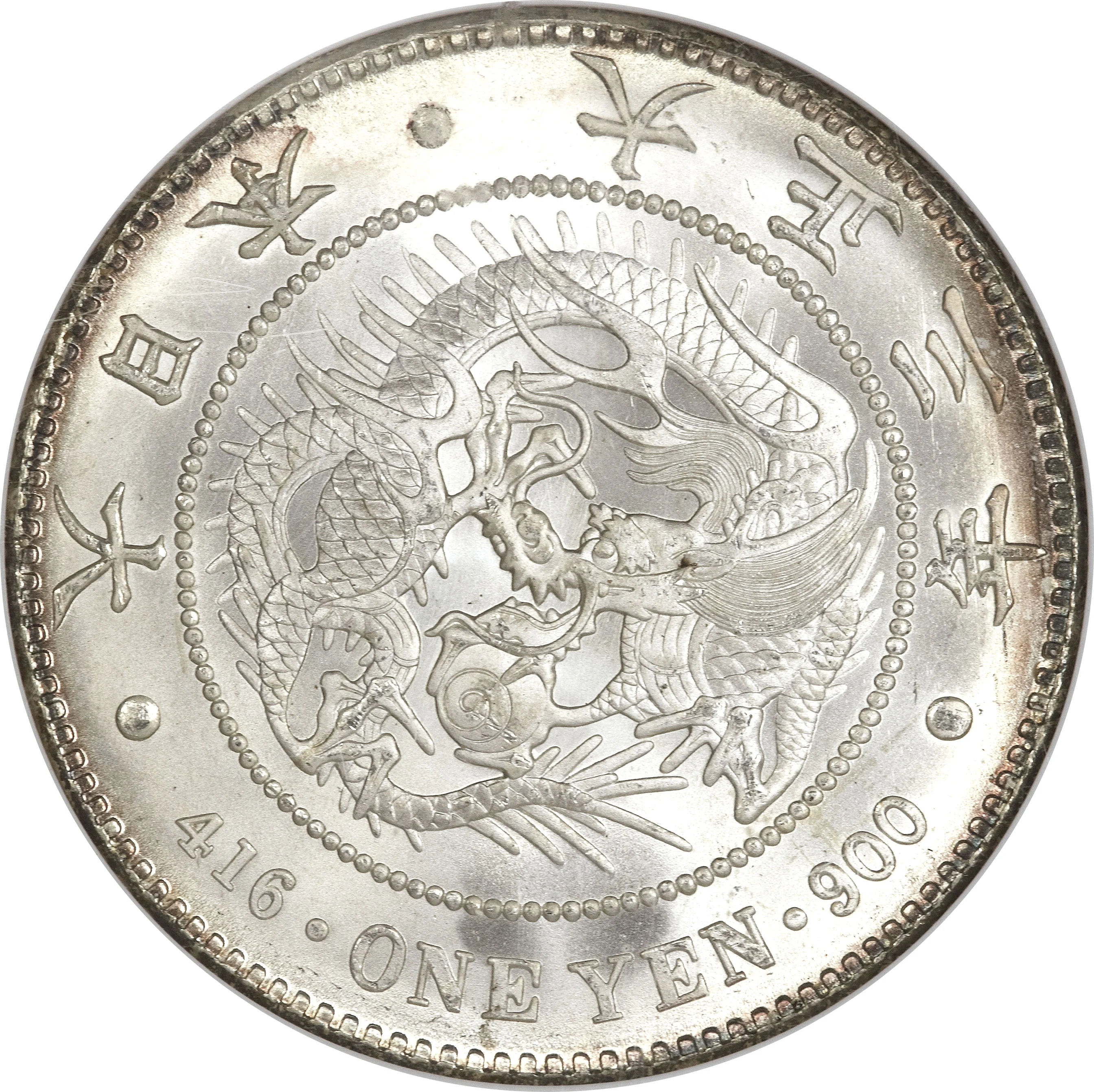
Dragon encircled by beads, legend above, value below.
Inscription:
年 三 正 大 · 本 日 大 ·
· 416 · ONE YEN · 900 ·
· 416 · ONE YEN · 900 ·
Translation:
Third Year of the Great Reign;
The Great Japan;
416;
One Yen;
900;
The Great Japan;
416;
One Yen;
900;
Language: Japanese
Designer and engraver: Kano Natsuo
Reverse
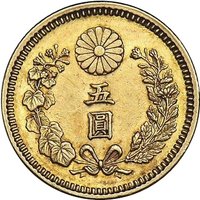
Description:
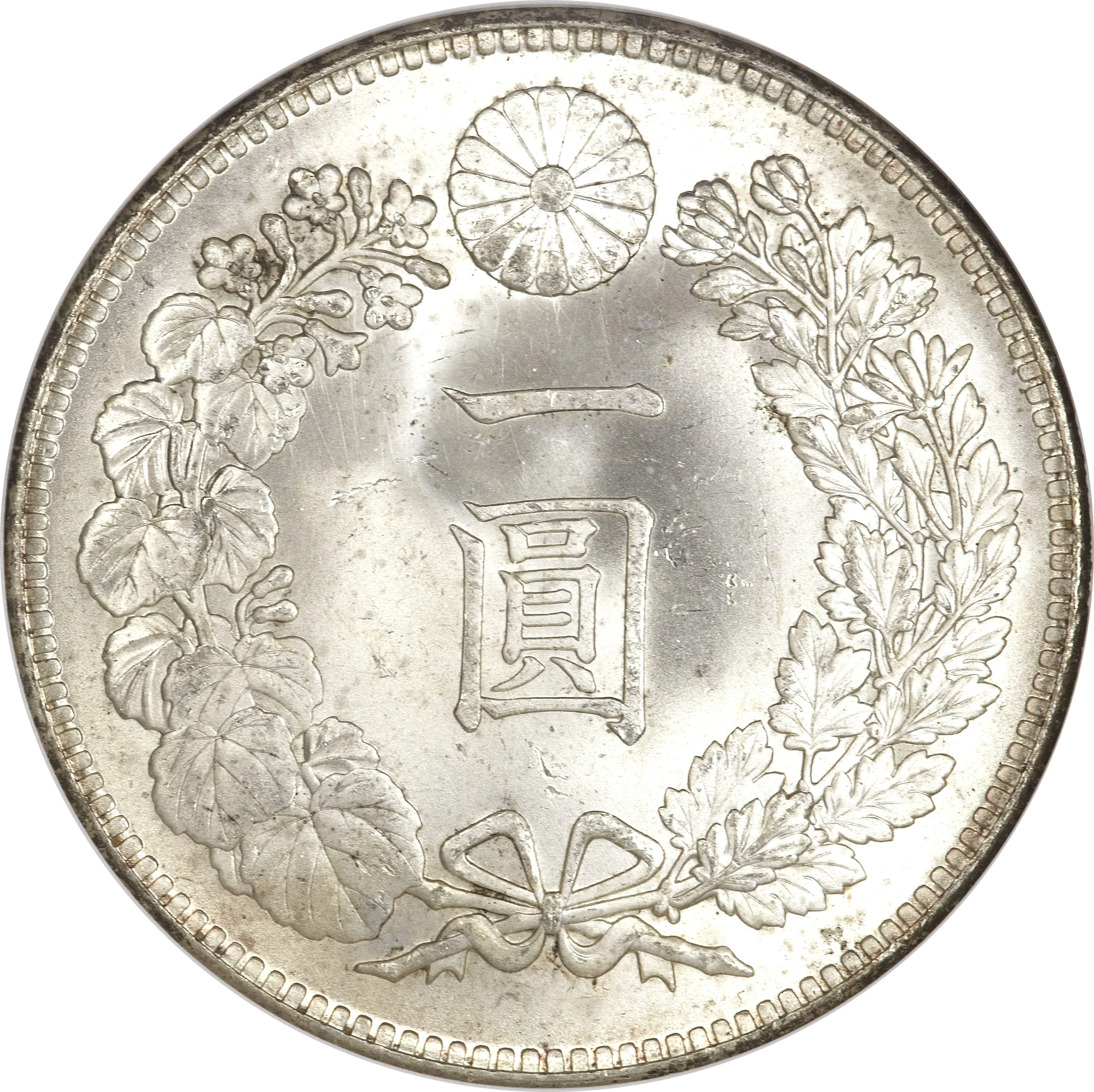
Chrysanthemum crest with paulownia and chrysanthemum branches flanking the value.
Inscription:
一
圓
圓
Translation:
One Dollar
Language: Chinese
Designer and engraver: Kano Natsuo
Edge
Reeded
Categories
| Mythology> Fantastic animal |
| Plants> Flower |
| Symbols> Coat of Arms |
| Symbol> Wreath |
Mints
| Name | Mark |
|---|---|
| Japan Mint | — |
Mintings
| Year | Mint Mark | Mintage | Quality | Collection |
|---|---|---|---|---|
| 1914 | — | 11,500,000 |
Historical background
In 1914, Japan's currency system was underpinned by the gold standard, which it had formally adopted in 1897 following its victory in the First Sino-Japanese War. The resulting gold-convertible yen, known as the yen (¥), was a symbol of Japan's modernized financial system and its integration into the global economy. This stability, managed by the Bank of Japan (founded in 1882), facilitated foreign investment and trade, which were crucial for the nation's rapid industrialization during the Meiji and Taishō eras. However, the system's strength was directly tied to the country's gold reserves, limiting monetary policy flexibility.
The outbreak of World War I in August 1914 presented an immediate and profound economic shock. Initially, there was panic and a financial crisis, as European powers liquidated overseas investments and demand for Japanese exports seemed uncertain. The Tokyo Stock Exchange closed temporarily. Yet, this disruption was swiftly followed by an unprecedented economic boom. As the European belligerents diverted their industrial capacity to war production, Japan experienced a surge in demand for its manufactured goods, ships, and raw materials from Allied nations and Asian markets. This transformed Japan from a debtor nation into a creditor nation almost overnight.
Consequently, the war years led to a dramatic accumulation of gold reserves through massive trade surpluses, strengthening the yen's theoretical gold backing. However, this very influx of wealth also sowed the seeds for future instability. The boom fueled inflation, asset speculation, and social inequality. Furthermore, in 1917, Japan—like many other nations—would suspend gold convertibility to conserve its reserves and better manage its expanding, overheated economy. Thus, while 1914 marked the beginning of a period of great financial prosperity and monetary strength on paper, it also initiated the pressures that would eventually lead Japan away from the classical gold standard.
The outbreak of World War I in August 1914 presented an immediate and profound economic shock. Initially, there was panic and a financial crisis, as European powers liquidated overseas investments and demand for Japanese exports seemed uncertain. The Tokyo Stock Exchange closed temporarily. Yet, this disruption was swiftly followed by an unprecedented economic boom. As the European belligerents diverted their industrial capacity to war production, Japan experienced a surge in demand for its manufactured goods, ships, and raw materials from Allied nations and Asian markets. This transformed Japan from a debtor nation into a creditor nation almost overnight.
Consequently, the war years led to a dramatic accumulation of gold reserves through massive trade surpluses, strengthening the yen's theoretical gold backing. However, this very influx of wealth also sowed the seeds for future instability. The boom fueled inflation, asset speculation, and social inequality. Furthermore, in 1917, Japan—like many other nations—would suspend gold convertibility to conserve its reserves and better manage its expanding, overheated economy. Thus, while 1914 marked the beginning of a period of great financial prosperity and monetary strength on paper, it also initiated the pressures that would eventually lead Japan away from the classical gold standard.
🌟 Uncommon