

Obverse
Description:
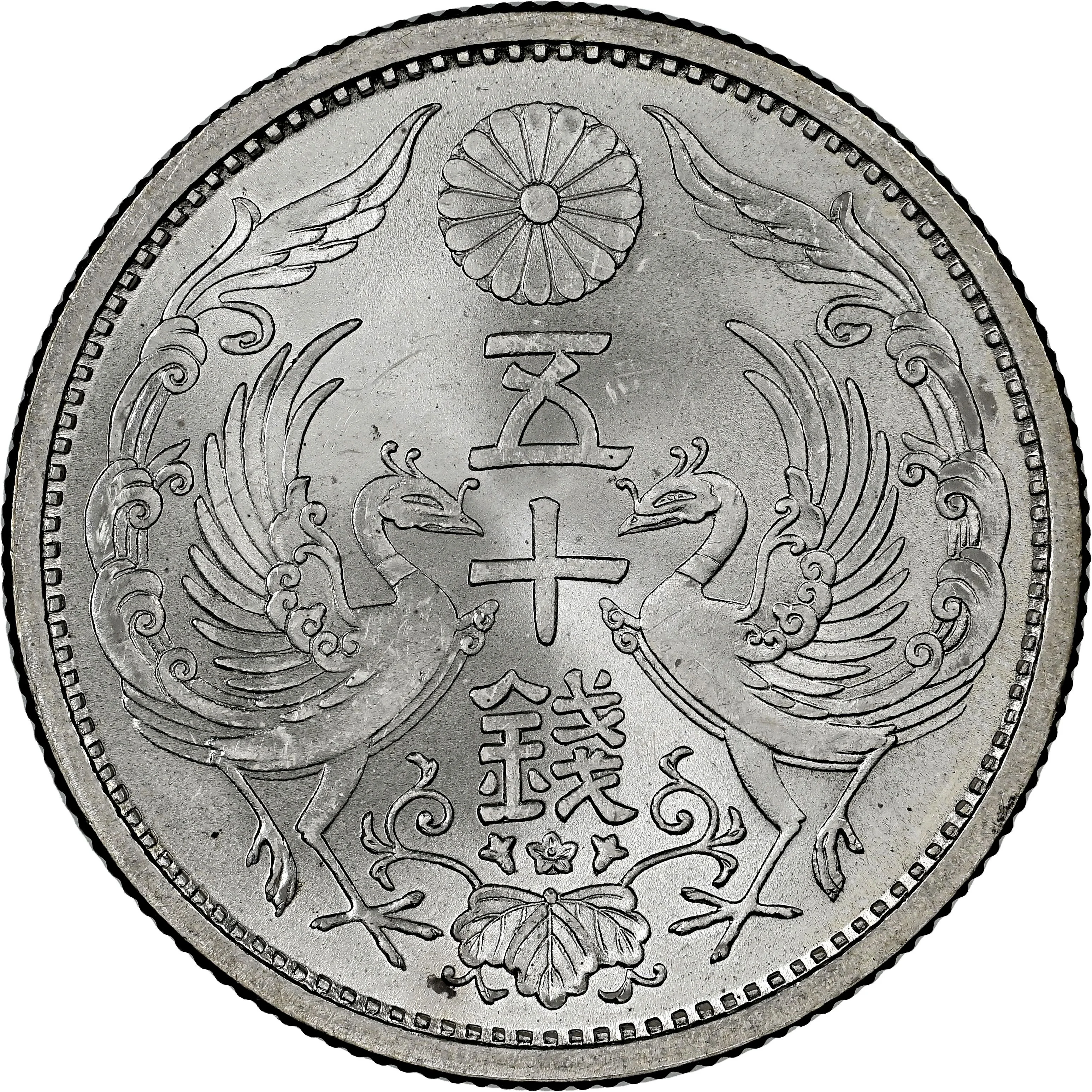
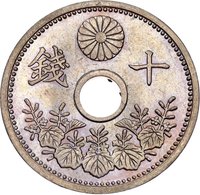
Phoenix flanking value, paulownia crest with karakusa sprigs, chrysanthemum above.
Inscription:
五
十
錢
十
錢
Translation:
Fifty
Cash
Cash
Language: Chinese
Reverse
Description:
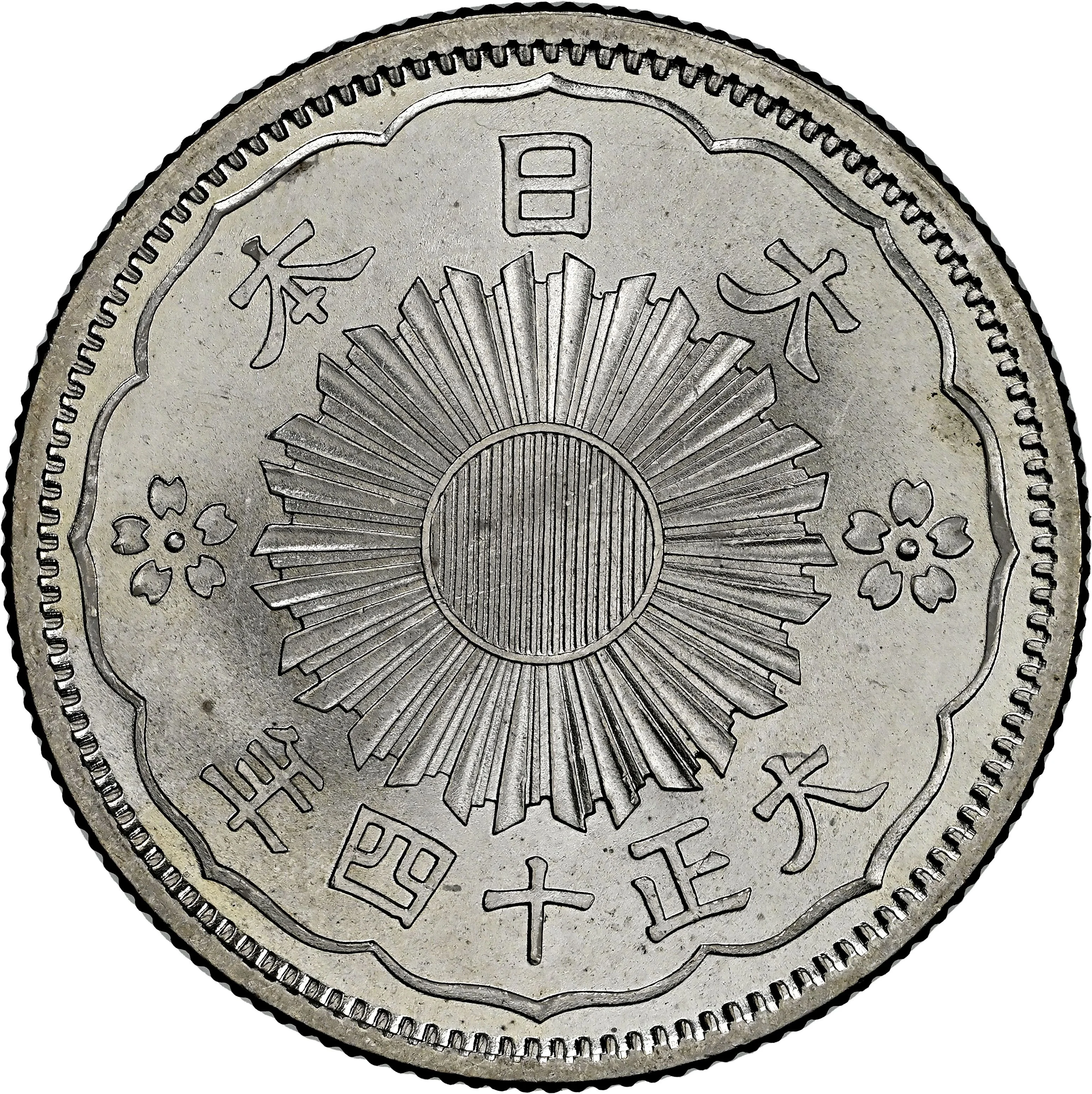
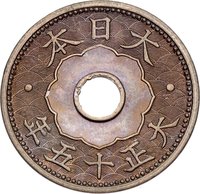
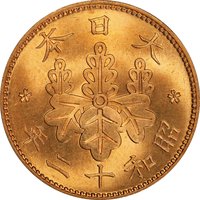
Central sunburst with cherry blossoms, authority above, date below, within a sacred mirror.
Inscription:
❀ 本 日 大 ❀
年四十正大
年四十正大
Translation:
❀ This day is great ❀
The fortieth year is truly grand.
The fortieth year is truly grand.
Language: Chinese
Edge
Reeded
Categories
| Animal> Bird |
| Mythology> Fantastic animal |
| Symbol> Sun |
| Plants> Flower |
| Symbols> Coat of Arms |
Mintings
| Year | Mint Mark | Mintage | Quality | Collection |
|---|---|---|---|---|
| 1922 | — | 76,320,000 | ||
| 1923 | — | 185,180,000 | ||
| 1924 | — | 78,520,000 | ||
| 1925 | — | 47,808,000 | ||
| 1926 | — | 32,572,000 |
Historical background
By 1922, Japan’s currency situation was defined by the aftermath of the First World War and the early signs of the economic instability that would plague the following decade. The war had initially brought a boom, with Japan exporting heavily to Allied nations and accumulating substantial gold reserves. This allowed the government, under the leadership of Finance Minister Korekiyo Takahashi, to lift the gold embargo in 1917 and return to the gold standard in 1919. The yen was pegged at a pre-war parity, a move intended to signal financial maturity and stability, aligning Japan with Western powers like Britain and the United States.
However, this return to gold proved disastrously timed. The post-war economic bubble burst in 1920, leading to a sharp recession. The yen's fixed, high parity made Japanese exports expensive just as global demand collapsed, worsening the trade balance and causing gold to flow out of the country. Furthermore, the Great Kantō Earthquake of 1923 would soon deliver a catastrophic blow, forcing massive emergency lending and currency issuance, which further undermined the yen's stability.
Consequently, by the end of 1922, Japan was caught in a difficult monetary bind. The formal framework of the gold standard was still in place, but it was under severe strain from economic stagnation, a growing balance of payments deficit, and speculative pressures. The government faced the dilemma of either defending the gold peg at great cost to the domestic economy or abandoning it again, which would be seen as a national humiliation. This precarious situation set the stage for the financial crises and eventual definitive abandonment of the gold standard in the early 1930s.
However, this return to gold proved disastrously timed. The post-war economic bubble burst in 1920, leading to a sharp recession. The yen's fixed, high parity made Japanese exports expensive just as global demand collapsed, worsening the trade balance and causing gold to flow out of the country. Furthermore, the Great Kantō Earthquake of 1923 would soon deliver a catastrophic blow, forcing massive emergency lending and currency issuance, which further undermined the yen's stability.
Consequently, by the end of 1922, Japan was caught in a difficult monetary bind. The formal framework of the gold standard was still in place, but it was under severe strain from economic stagnation, a growing balance of payments deficit, and speculative pressures. The government faced the dilemma of either defending the gold peg at great cost to the domestic economy or abandoning it again, which would be seen as a national humiliation. This precarious situation set the stage for the financial crises and eventual definitive abandonment of the gold standard in the early 1930s.
🌱 Common