

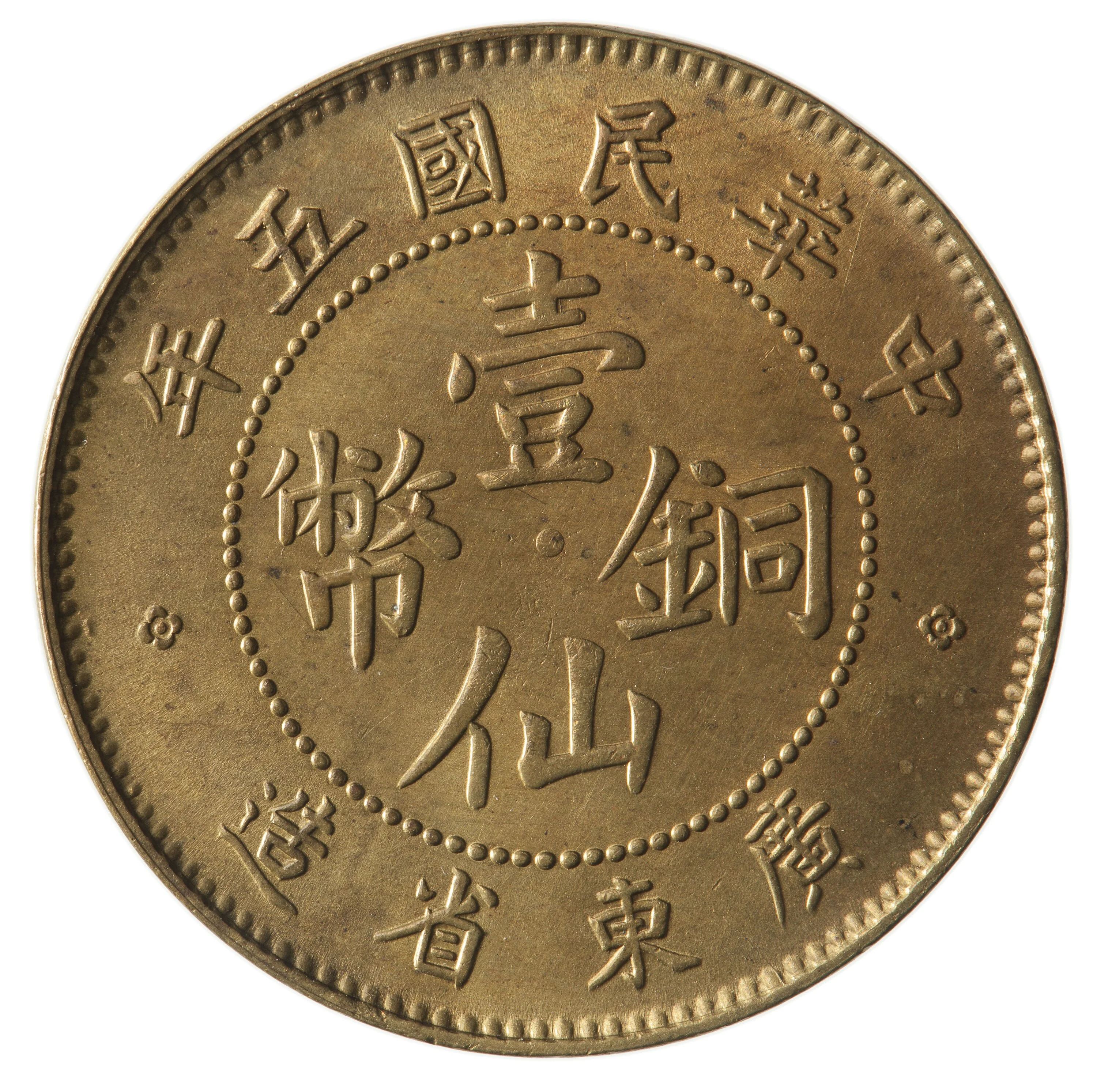
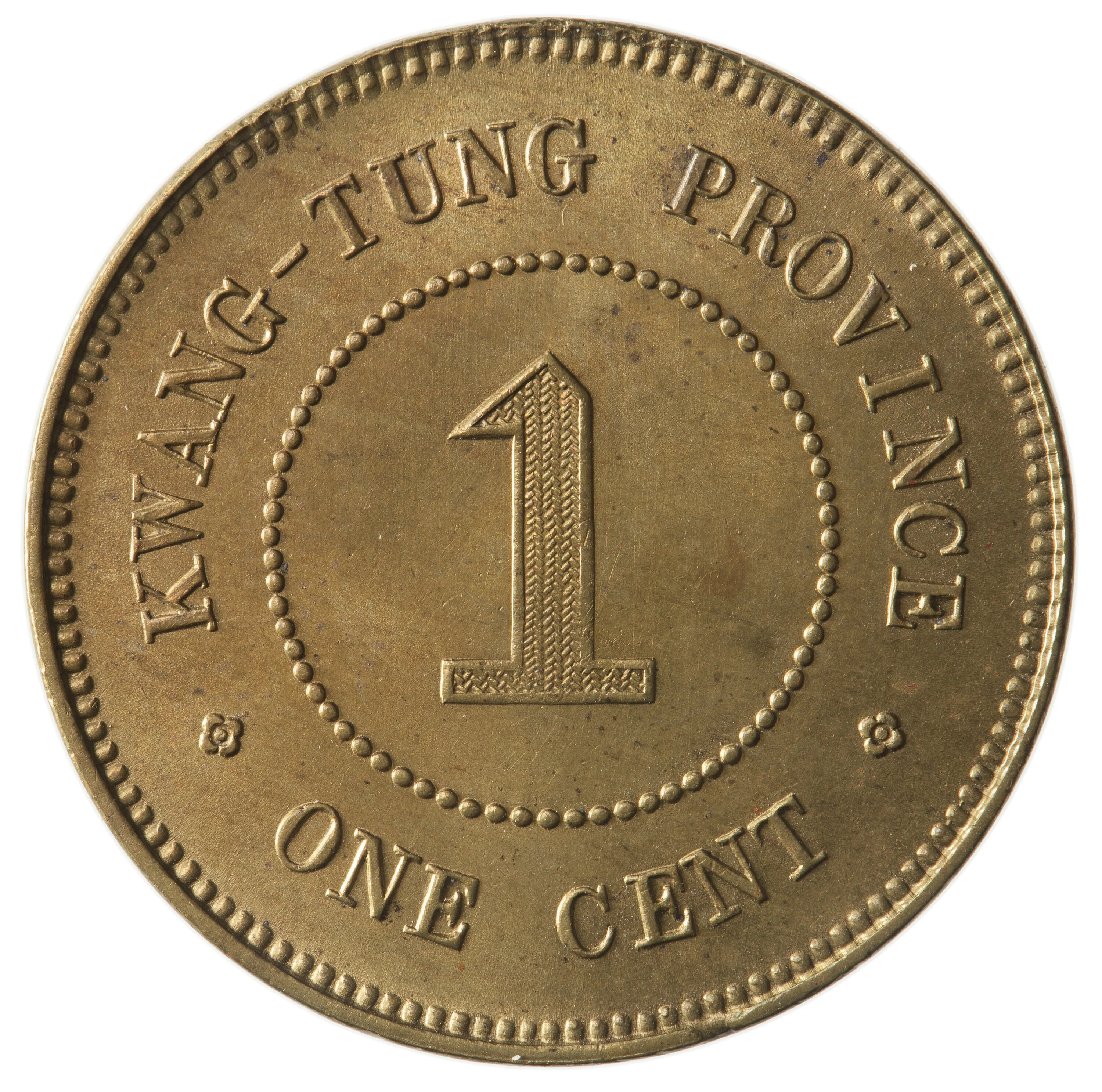
1 Fen – Kwangtung Province
China
Context
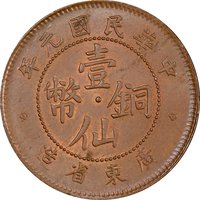
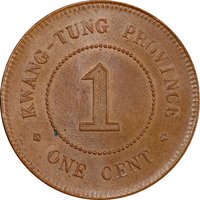
Years: 1912–1918
Country: China 
Issuer: Kwangtung Province
Period:
(1912—1949)
Currency:
(1900—1949)
Subdivision: 1 Fen = 1 Cent
Demonetized: Yes
Total mintage: 58,324,000
Material
References
Y: #Click to copy to clipboard417a
Numista: #14089
Obverse
Reverse
Edge
Plain
Mintings
| Year | Mint Mark | Mintage | Quality | Collection |
|---|---|---|---|---|
| 1912 | — | 18,836,000 | ||
| 1914 | — | 14,750,000 | ||
| 1915 | — | 6,350,000 | ||
| 1916 | — | 18,388,000 | ||
| 1918 | — | — |
Historical background
In 1912, Kwangtung (Guangdong) Province found itself in a state of monetary chaos following the collapse of the Qing Dynasty. The province, a major commercial and remittance hub with strong overseas connections, was flooded with a bewildering variety of currencies. These included imperial-era copper cash and silver sycee, Mexican and Spanish silver dollars, banknotes from now-defunct Qing banks, and a plethora of privately issued scrip from local merchants and native banks. This complex system, unstable even under the Qing, became dangerously fragmented with the loss of central imperial authority, hindering trade and creating widespread confusion.
The new Republican government, led in Kwangtung by Governor-General Hu Hanmin, attempted to impose order by proclaiming the exclusive use of the new national currency, the "Yuan Shih-k'ai" silver dollar. However, the central government in Peking had limited reach, and Kwangtung's provincial authorities lacked both the minting capacity and the financial reserves to enforce this edict. Crucially, public trust in any new paper currency was extremely low due to memories of failed Qing banknotes, leading to a strong preference for tangible silver, particularly the familiar "Guangdong silver dollar" (Kwangtung yen) and other foreign silver coins that held their value.
Consequently, the monetary landscape remained a decentralized and competitive marketplace of metal. The situation was further complicated by the influential role of qianzhuang (native banks) and remittance shops, which issued their own private notes and set daily exchange rates between different coinages. This period solidified Kwangtung's reliance on silver for major transactions and highlighted the profound difficulty the nascent Republic faced in establishing financial sovereignty, a challenge that would persist for decades.
The new Republican government, led in Kwangtung by Governor-General Hu Hanmin, attempted to impose order by proclaiming the exclusive use of the new national currency, the "Yuan Shih-k'ai" silver dollar. However, the central government in Peking had limited reach, and Kwangtung's provincial authorities lacked both the minting capacity and the financial reserves to enforce this edict. Crucially, public trust in any new paper currency was extremely low due to memories of failed Qing banknotes, leading to a strong preference for tangible silver, particularly the familiar "Guangdong silver dollar" (Kwangtung yen) and other foreign silver coins that held their value.
Consequently, the monetary landscape remained a decentralized and competitive marketplace of metal. The situation was further complicated by the influential role of qianzhuang (native banks) and remittance shops, which issued their own private notes and set daily exchange rates between different coinages. This period solidified Kwangtung's reliance on silver for major transactions and highlighted the profound difficulty the nascent Republic faced in establishing financial sovereignty, a challenge that would persist for decades.
🌟 Uncommon