Logo Title
Context
Year: 1808
Islamic (Hijri) Year: 1223
Country: Libya Country flag
Ruler: Mahmud II
Currency:
(1688—1844)
Demonetized: Yes
Material
Diameter: 25 mm
Shape: Round
Composition: Billon
References
KM: #Click to copy to clipboard129
Numista: #115748

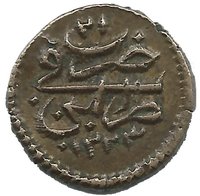
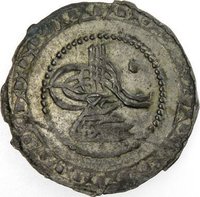
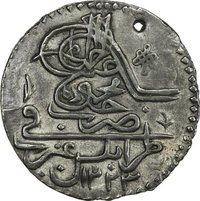
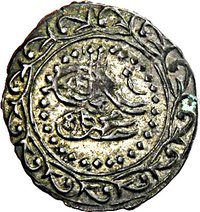
Obverse

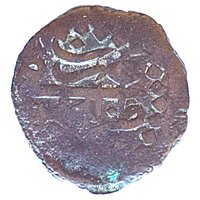
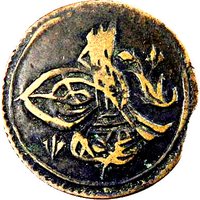
Description:
Sultan's name encircled in beads.
Inscription:
سلطان

محمود
Translation:
Sultan
Mahmoud
Language: Arabic

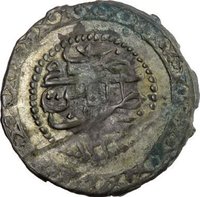
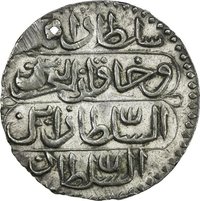
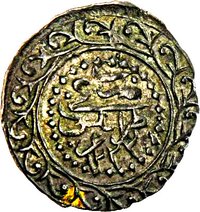
Reverse

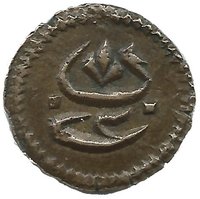
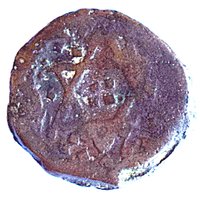
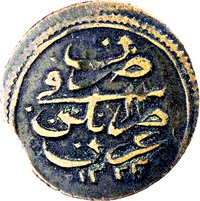
Description:
Mint and date within beaded border.
Inscription:
ضرب

في

١٢٢٣

طرابلس

غرب
Translation:
Struck

in

1223

Tripoli

West
Language: Arabic

Edge

Mintings

YearMint MarkMintageQualityCollection
1808

Historical background

In 1808, the Regency of Tripoli, a semi-autonomous Ottoman province under the rule of Pasha Yusuf Karamanli, faced a complex and deteriorating currency situation. The state's finances were heavily strained by payments of tribute to the Ottoman Sultan, the costs of maintaining a corsair fleet, and the recent conclusion of the costly war with the United States (1801-1805). To meet these obligations, the Regency heavily debased its primary silver coin, the mahbub (or "Spanish dollar," often a piece of eight), by clipping, sweating, or counterfeiting it. This resulted in a severe loss of confidence in the coinage, creating a chaotic monetary environment where the intrinsic value of coins often mattered more than their face value.

The currency landscape was a fragmented mix of foreign and local coins. While Spanish dollars, Austrian thalers, and other European silver coins circulated for larger transactions, they traded at a premium over the debased local versions. Smaller transactions relied on a confusing array of copper mangır and para, which were also subject to debasement. This multiplicity of coins, each with fluctuating and unreliable values, complicated daily commerce and tax collection. Merchants, both local and foreign, had to be expert money-changers, and trade was hindered by constant disputes over the quality of payment.

Ultimately, this monetary instability was a symptom of the Regency's deeper political and economic decline. The government's reliance on seaborne predation (privateering) was becoming less profitable due to international pressure, while its ability to generate stable revenue from land-based taxes or trade was limited. The currency crisis of 1808 thus reflected a weakening state attempting to extract value from the economy through inflationary means, eroding trust and further hampering the possibility of sustainable economic growth in the face of increasing European dominance in the Mediterranean.

Series: 1808 Regency of Tripoli circulation coins

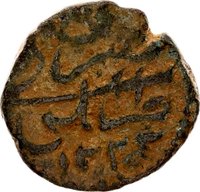
1 Para obverse
1 Para reverse
1 Para
1808
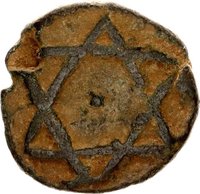
1 Para obverse
1 Para reverse
1 Para
1808-1835
1 Para obverse
1 Para reverse
1 Para
1808
30 Para obverse
30 Para reverse
30 Para
1808
20 Para obverse
20 Para reverse
20 Para
1808
40 Para obverse
40 Para reverse
40 Para
1808
10 Para obverse
10 Para reverse
10 Para
1808
Legendary