

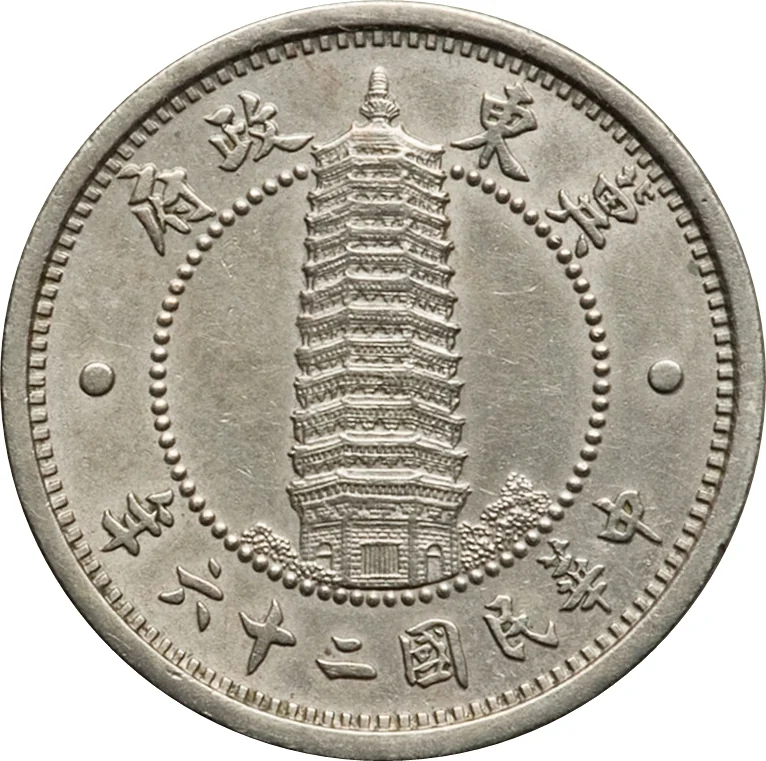
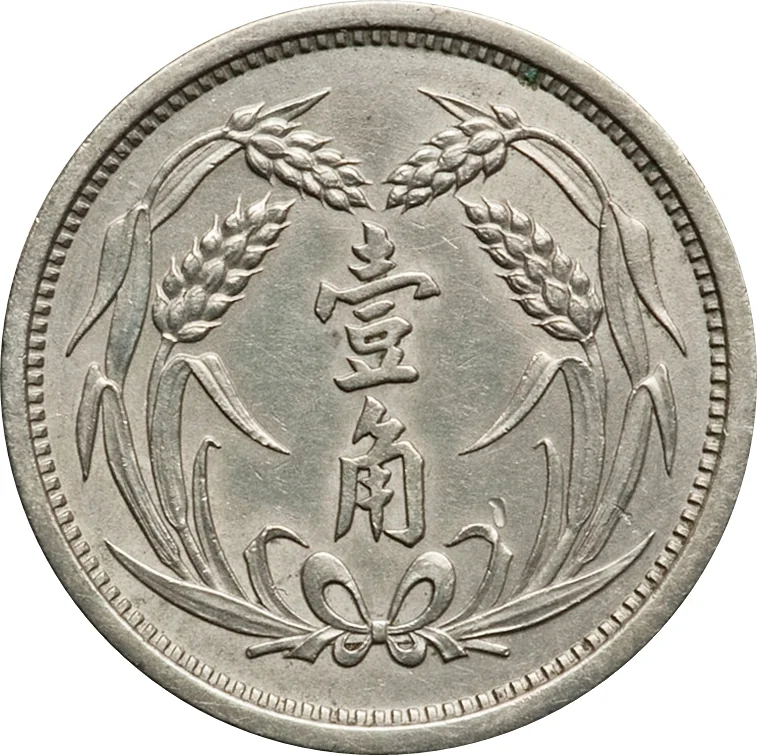
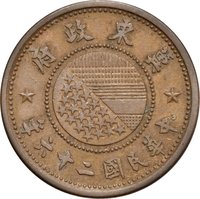
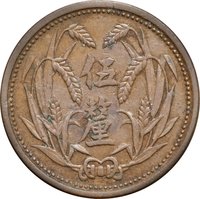
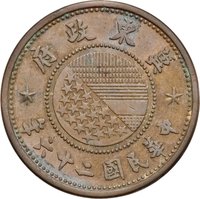
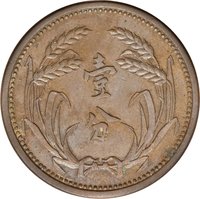
1 Chiao – East Hebei
China
Context
Year: 1937
Chinese republican Year: 26
Country: China 
Issuer: East Hebei
Period:
(1935—1938)
Currency:
(1936—1939)
Demonetized: Yes
Material
Diameter: 21.94 mm
Weight: 4.8 g
Thickness: 1.51 mm
Shape: Round
Composition: Copper-nickel
Technique: Milled
Alignment: Medal alignment
flip
References
Y: #Click to copy to clipboard519
Numista: #13848
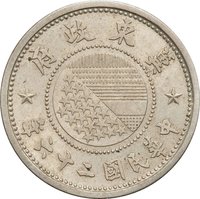
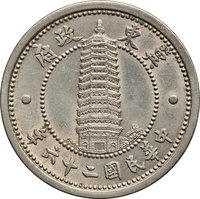
Obverse
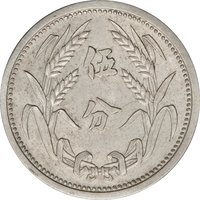
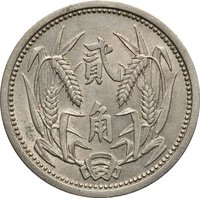
Reverse
Edge
Plain
Categories
| Agriculture |
| Building> Religious building |
| Building> Tower |
Mintings
| Year | Mint Mark | Mintage | Quality | Collection |
|---|---|---|---|---|
| 1937 | — | — |
Historical background
In 1937, the currency situation in the East Hebei Autonomous Council was a direct and chaotic consequence of Japanese imperial aggression. Following the Tanggu Truce of 1933, the region had fallen under de facto Japanese control, and in late 1935, Japanese military authorities established the puppet East Hebei Autonomous Council. A primary economic weapon in solidifying this control was the deliberate destruction of China's national currency, the fabi (legal tender). Japanese agents and collaborator authorities compelled residents to exchange their fabi for notes from a puppet bank, the Bank of Chahar, often at a severe, arbitrary discount, leading to widespread confiscation of wealth and economic destabilization.
The monetary landscape became a fragmented and exploitative zone of competing currencies. Alongside the imposed Bank of Chahar notes, Japanese military scrip (gunpyō) and notes from the Japanese-controlled Federal Reserve Bank of China (established later in 1938) also circulated. This created a multi-layered system of coercion, where taxes and official transactions were mandated in the puppet currencies, forcing the populace to use them. The value of these notes was not based on reserves or economic confidence but solely on Japanese military fiat, making them highly unstable and inflationary.
This engineered currency crisis served key strategic purposes for Japan. It severed the region's financial ties to the Nanjing government, integrating East Hebei into the yen bloc and making it economically dependent on Japan. For the local population, however, it was a source of immense hardship, resulting in rampant price inflation, shattered savings, and a brutal form of financial occupation that paralleled the military one. The currency chaos of 1937 thus stands as a stark early example of Japan's use of monetary warfare to facilitate and entrench its conquest of North China.
The monetary landscape became a fragmented and exploitative zone of competing currencies. Alongside the imposed Bank of Chahar notes, Japanese military scrip (gunpyō) and notes from the Japanese-controlled Federal Reserve Bank of China (established later in 1938) also circulated. This created a multi-layered system of coercion, where taxes and official transactions were mandated in the puppet currencies, forcing the populace to use them. The value of these notes was not based on reserves or economic confidence but solely on Japanese military fiat, making them highly unstable and inflationary.
This engineered currency crisis served key strategic purposes for Japan. It severed the region's financial ties to the Nanjing government, integrating East Hebei into the yen bloc and making it economically dependent on Japan. For the local population, however, it was a source of immense hardship, resulting in rampant price inflation, shattered savings, and a brutal form of financial occupation that paralleled the military one. The currency chaos of 1937 thus stands as a stark early example of Japan's use of monetary warfare to facilitate and entrench its conquest of North China.
🌟 Limited