

10 Sen – Japan
Japan
Context
Year: 1944
Japanese - Shōwa era Year: 19
Issuer: Japan 
Ruler: Shōwa
Currency:
(since 1871)
Demonetized: Yes
Total mintage: 450,000,000
Material
Diameter: 19 mm
Weight: 2.4 g
Thickness: 1.66 mm
Shape: Round with a round hole
Composition: Tin-zinc
Technique: Milled
Alignment: Medal alignment
flip
References
Y: #Click to copy to clipboard64
Numista: #9581
Value
Exchange value: 0.10 JPY = $0.00
Obverse
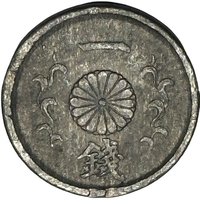
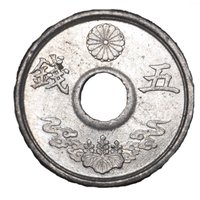
Description:
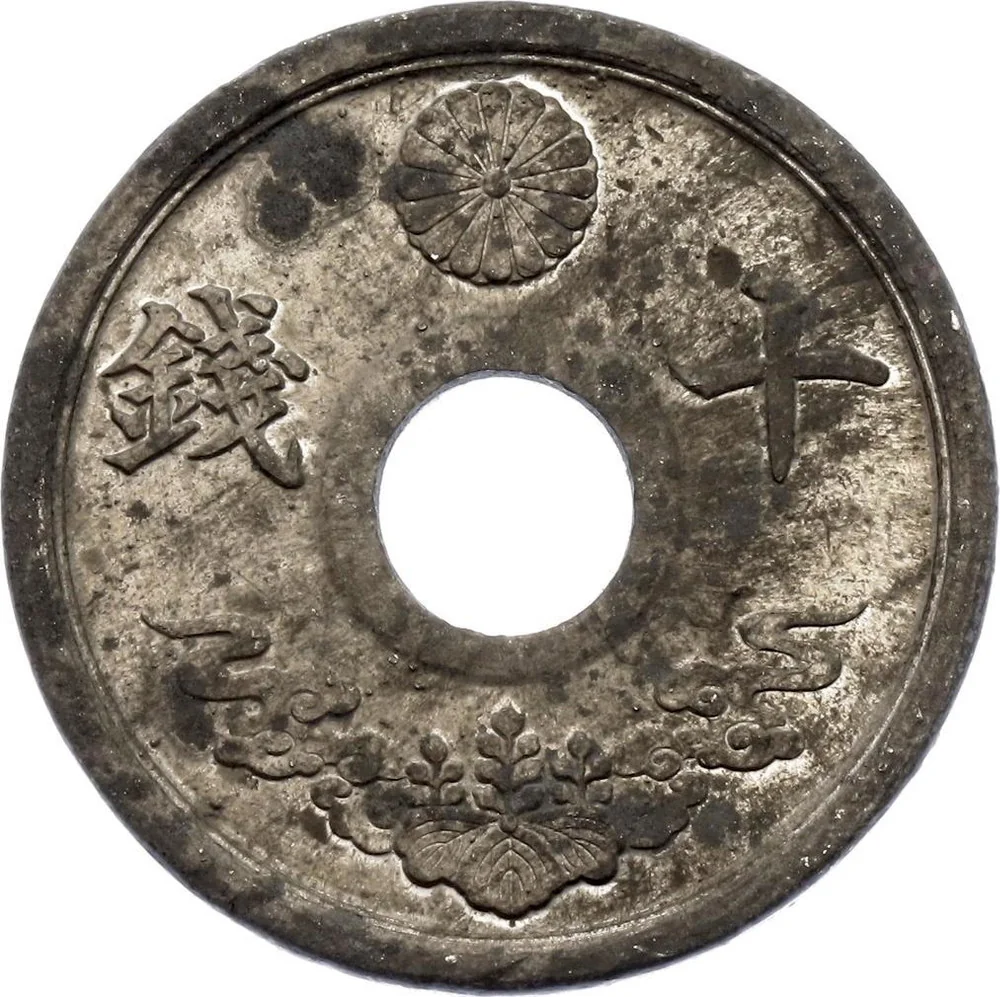
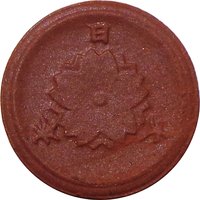
Chrysanthemum crest above, value flanking hole, Paulownia seal in clouds below.
Inscription:
錢 十
Translation:
Ten Cash
Language: Classical Chinese
Reverse
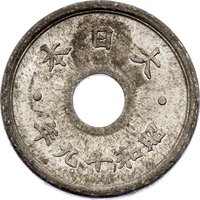
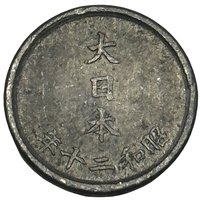
Description:
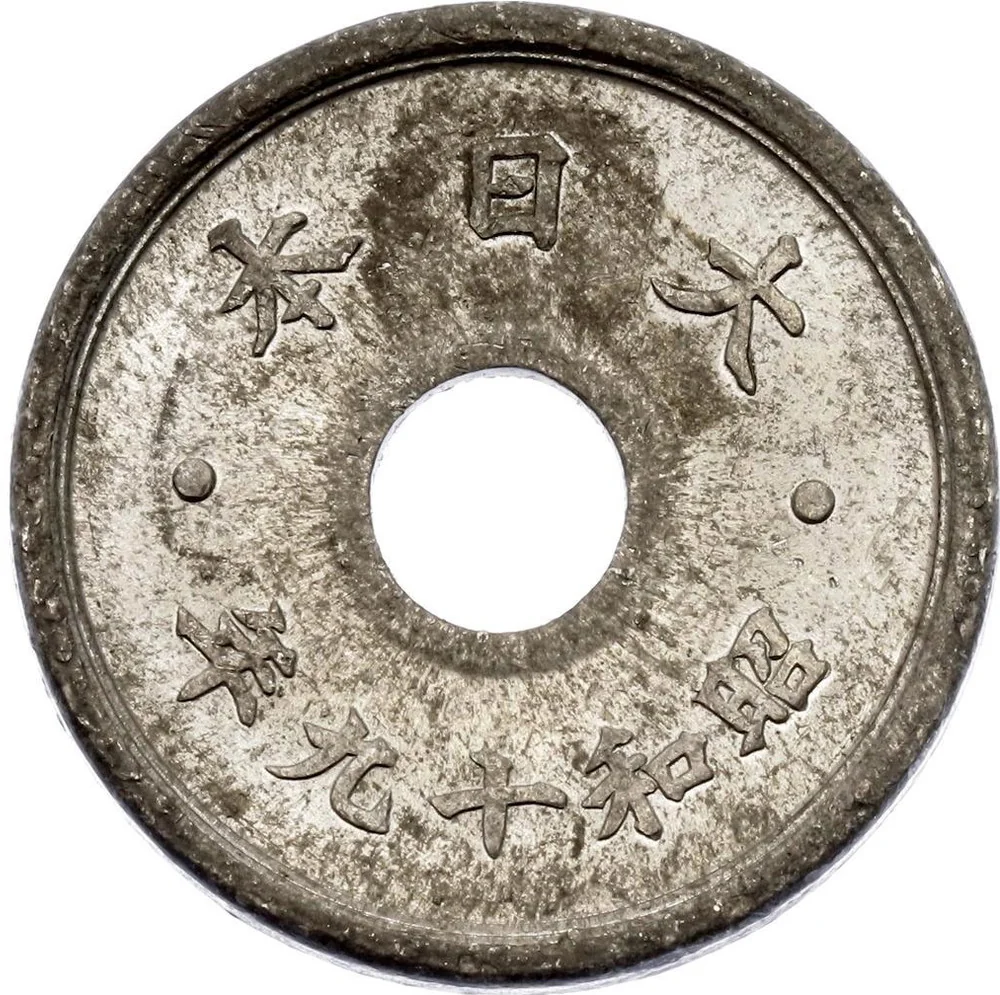
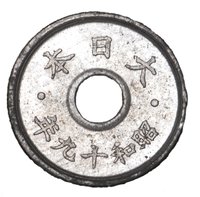
Central hole, dots on sides, authority above, date below.
Inscription:
· 本 日 大 ·
年 九 十 和 昭
年 九 十 和 昭
Translation:
Showa 19th year.
Language: Japanese
Edge
Plain
Categories
| Plants> Flower |
| Symbols> Coat of Arms |
Mintings
| Year | Mint Mark | Mintage | Quality | Collection |
|---|---|---|---|---|
| 1944 | — | 450,000,000 |
Historical background
By 1944, Japan's wartime currency situation was one of severe and accelerating inflation, driven by the overwhelming financial demands of a war it was losing. The government, having long abandoned a gold standard and operating under a controlled economy, financed its massive military expenditures primarily through borrowing from the Bank of Japan. This direct monetization of debt—essentially printing money—flooded the economy with currency while the production of civilian goods plummeted due to resource shortages, labor mobilization, and Allied bombing disrupting industry and supply chains. The result was a classic case of too much money chasing too few goods, with prices beginning to spiral upward despite strict official price controls and rationing.
The official economic controls, managed by the Cabinet Planning Board, became increasingly disconnected from reality. A complex system of ration coupons for essentials like rice, clothing, and fuel was supposed to ensure equitable distribution at fixed prices, but a thriving black market (yami-ichi) emerged as the primary means for most citizens to obtain necessities. Prices on this illegal market were often ten to thirty times higher than official rates, rendering official currency valuations meaningless for daily survival. The government's response was largely ineffectual, focusing on patriotic appeals for savings and the purchase of war bonds rather than addressing the fundamental imbalance between money supply and production.
This inflationary crisis eroded both living standards and confidence in the yen. Wages failed to keep pace with black market prices, leading to widespread deprivation. The currency's value was sustained not by economic fundamentals but by coercive measures and nationalistic fervor, as exchanging yen for other assets or foreign currency was severely restricted. The stage was set for the catastrophic hyperinflation that would follow in the immediate post-surrender period of 1945-46, when the money supply exploded further amid a completely shattered economy, rendering the pre-war yen virtually worthless.
The official economic controls, managed by the Cabinet Planning Board, became increasingly disconnected from reality. A complex system of ration coupons for essentials like rice, clothing, and fuel was supposed to ensure equitable distribution at fixed prices, but a thriving black market (yami-ichi) emerged as the primary means for most citizens to obtain necessities. Prices on this illegal market were often ten to thirty times higher than official rates, rendering official currency valuations meaningless for daily survival. The government's response was largely ineffectual, focusing on patriotic appeals for savings and the purchase of war bonds rather than addressing the fundamental imbalance between money supply and production.
This inflationary crisis eroded both living standards and confidence in the yen. Wages failed to keep pace with black market prices, leading to widespread deprivation. The currency's value was sustained not by economic fundamentals but by coercive measures and nationalistic fervor, as exchanging yen for other assets or foreign currency was severely restricted. The stage was set for the catastrophic hyperinflation that would follow in the immediate post-surrender period of 1945-46, when the money supply exploded further amid a completely shattered economy, rendering the pre-war yen virtually worthless.
🌱 Very Common