

1⁄20 noble – Isle of Man
Add to wishlist
Context
Years: 1989–1997
Country: British Crown dependencies
Issuer: Isle of Man
Ruler: Elizabeth II
Currency:
(since 1983)
Total mintage: 10,000
Material
Diameter: 15 mm
Weight: 1.55 g
Platinum Weight:: 1.55 g
Shape: Round
Composition: 99.95% Platinum
Standard: Gold twentieth ounce
Technique: Milled
Alignment: Medal alignment
flip
References
KM: #
Numista: #115736
Value
Bullion value: $103.45
Obverse
Description:
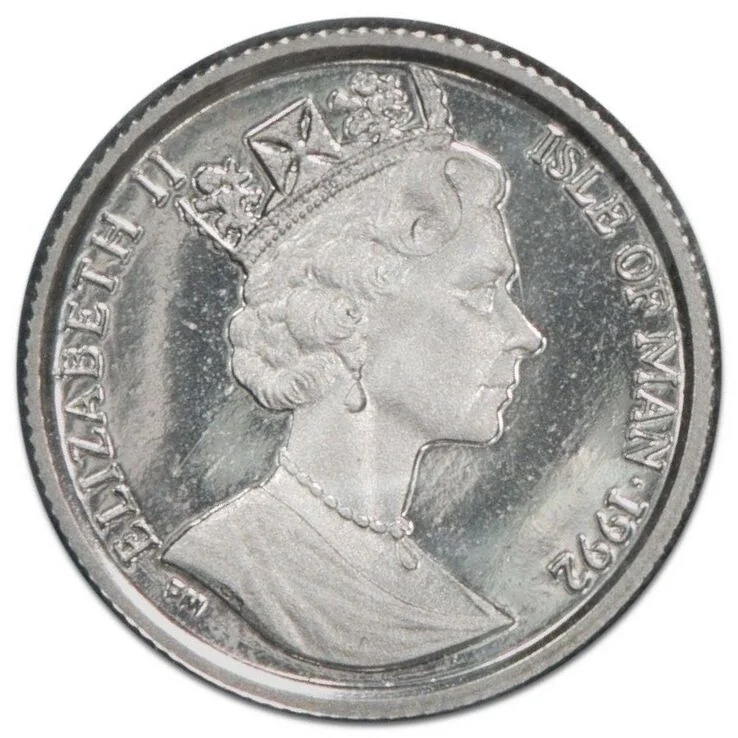
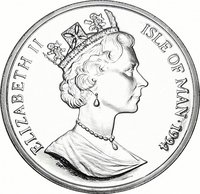
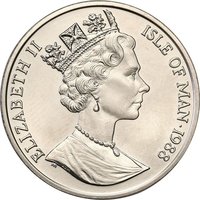
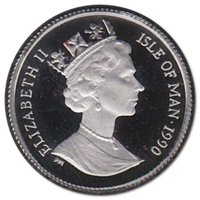
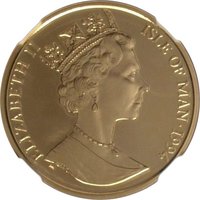
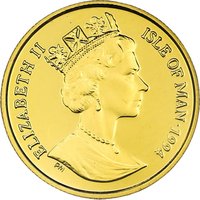
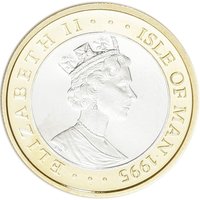
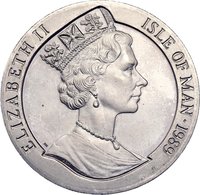
Queen Elizabeth II facing right, wearing the George IV State Diadem, surrounded by legend and date.
Inscription:
ELIZABETH II ISLE OF MAN 1992
RDM
PM
RDM
PM
Translation:
ELIZABETH II ISLE OF MAN 1992
By the grace of God, Queen, Defender of the Faith
By the grace of God, Queen, Defender of the Faith
Script: Latin
Designer: Raphael David Maklouf
Reverse
Description:
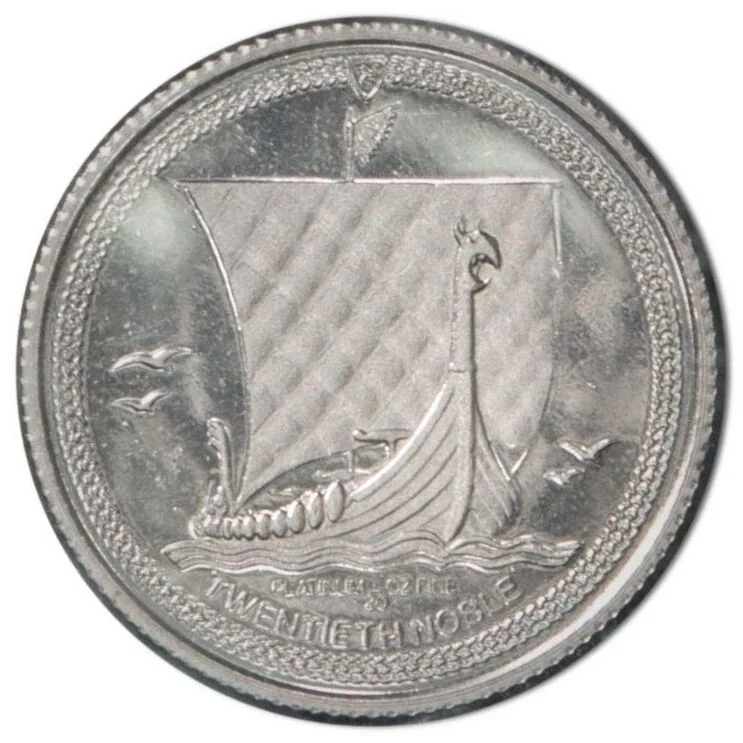
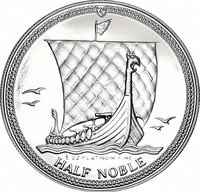
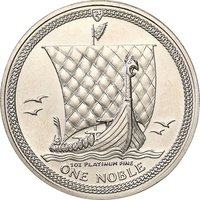
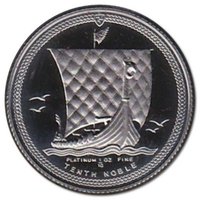
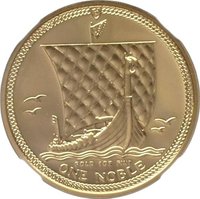
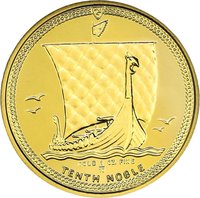
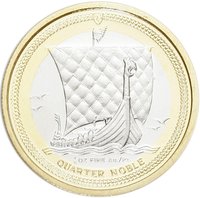
Viking longship 'Thusly' under full sail, surrounded by seagulls.
Inscription:
PLATINUM 1/20 OZ FINE
TWENTIETH NOBLE
TWENTIETH NOBLE
Script: Latin
Edge
Reeded
Categories
| Animal> Bird |
| Transportation> Watercraft |
Mints
| Name | Mark |
|---|---|
| Pobjoy Mint | (PM) |
Mintings
| Year | Mint Mark | Mintage | Quality | Collection |
|---|---|---|---|---|
| 1989 | PM | 10,000 | Proof | |
| 1992 | PM | — | ||
| 1993 | PM | — | ||
| 1997 | PM | — |
Historical background
In 1989, the Isle of Man's currency situation was defined by its unique political status as a British Crown Dependency. While not part of the United Kingdom, the Island's long-standing monetary link meant that UK banknotes and coins were legal tender and circulated alongside locally issued Manx currency. The Isle of Man Government, through its Treasury, issued its own distinctive pound sterling notes and coins, which were pegged at par with the UK pound. This system provided symbolic national identity and a degree of fiscal autonomy, while ensuring monetary stability through its fixed link to the sterling zone.
The year saw the continued operation of this dual-issue system without major crisis, but within a context of ongoing economic transition. The Island was actively cultivating its offshore finance sector as a pillar of its economy, a strategy that increased the importance of a stable and credible currency regime. The fixed 1:1 parity with sterling was crucial for business confidence and investment, as the Island sought to position itself as a reliable international financial centre distinct from, yet securely tied to, the UK market.
Consequently, the 1989 currency background was one of deliberate stability. There were no debates about decimalisation (completed in 1971) or dramatic shifts in monetary policy, which remained effectively delegated to the Bank of England. The focus for the Isle of Man authorities was less on altering the currency framework and more on leveraging its stability to support economic diversification, ensuring that the local issue remained a trusted equivalent of the UK pound both domestically and in its growing international banking dealings.
The year saw the continued operation of this dual-issue system without major crisis, but within a context of ongoing economic transition. The Island was actively cultivating its offshore finance sector as a pillar of its economy, a strategy that increased the importance of a stable and credible currency regime. The fixed 1:1 parity with sterling was crucial for business confidence and investment, as the Island sought to position itself as a reliable international financial centre distinct from, yet securely tied to, the UK market.
Consequently, the 1989 currency background was one of deliberate stability. There were no debates about decimalisation (completed in 1971) or dramatic shifts in monetary policy, which remained effectively delegated to the Bank of England. The focus for the Isle of Man authorities was less on altering the currency framework and more on leveraging its stability to support economic diversification, ensuring that the local issue remained a trusted equivalent of the UK pound both domestically and in its growing international banking dealings.
Series: Noble - RDM uncouped bust

✨ Legendary