

1 peseta – Spain
Add to wishlist
Spain
Context
Years: 1980–1982
Year:: 1980
Issuer: Spain
Ruler: Juan Carlos I
Currency:
(1868—2001)
Demonetization: 1 January 1997
Total mintage: 1,308,000,000
Material
References
KM: #
Numista: #788
Value
Exchange value: 1 ESP
Inflation-adjusted value: 7.22 ESP
Obverse
Description:
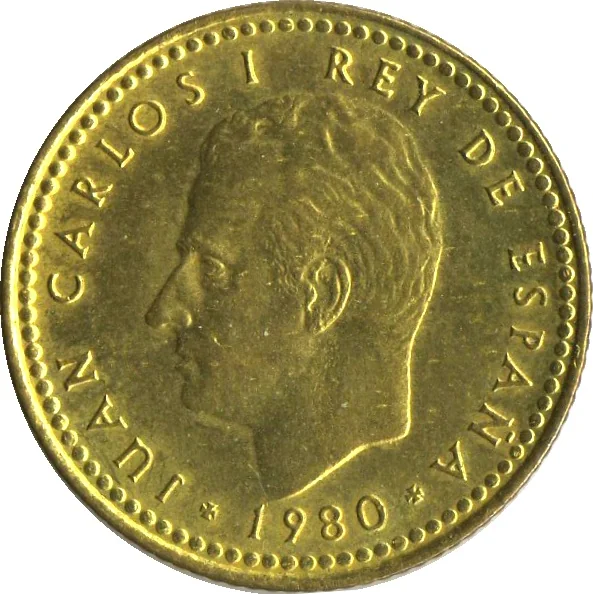
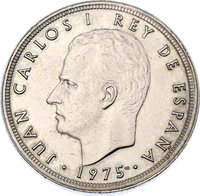
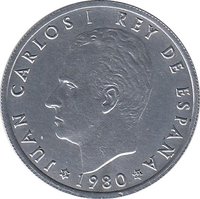
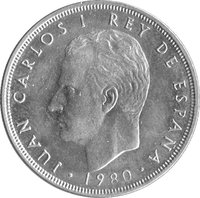
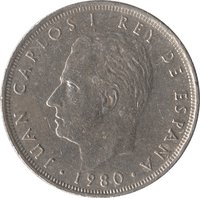
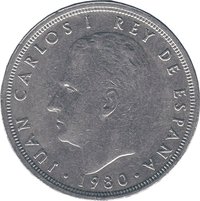
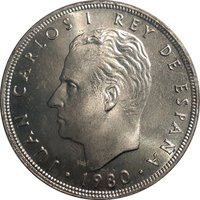
King Juan Carlos I facing left.
Inscription:
JUAN CARLOS I REY DE ESPAÑA
· 1980 ·
· 1980 ·
Translation:
Juan Carlos I King of Spain
· 1980 ·
· 1980 ·
Script: Latin
Language: Spanish
Engraver: Manuel Marín Jimeno
Reverse
Description:
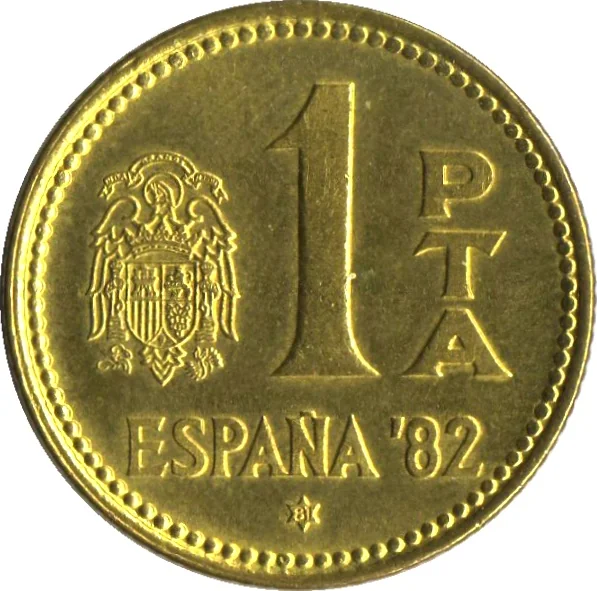
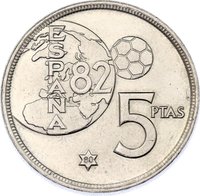
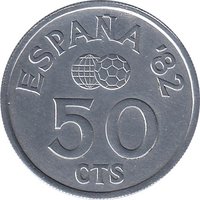
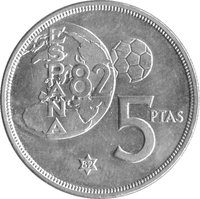
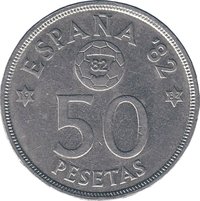
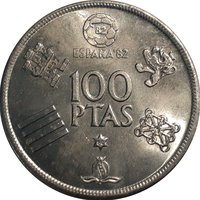
Spanish coat of arms beside value.
Inscription:
1 PTA
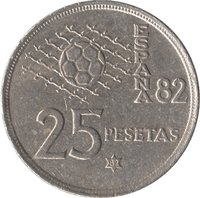
ESPAÑA '82
81
ESPAÑA '82
81
Translation:
First Spain '82
81
81
Script: Latin
Engraver: Francisco Martínez Tornero
Edge
Reeded
Categories
| Sport> Football> FIFA World Cup |
Mints
| Name | Mark |
|---|---|
| Royal Mint of Madrid | — |
Mintings
| Year | Mint Mark | Mintage | Quality | Collection |
|---|---|---|---|---|
| 1980 | — | — | Proof | |
| 1980 | — | 590,000,000 | ||
| 1981 | — | 385,000,000 | ||
| 1982 | — | 333,000,000 |
Historical background
In 1980, Spain's currency situation was defined by its ongoing transition from the autarkic policies of the Franco era to integration with the wider European economy. The official currency was the peseta, which was managed under a controlled exchange rate regime with periodic devaluations. However, the economy was still grappling with the legacy of the 1970s oil crises, which had triggered high inflation (approximately 15% in 1980), stagnant growth, and a significant balance of payments deficit. This "stagflation" created intense pressure on the peseta, as confidence wavered and capital flight became a concern for policymakers.
The government, led by Prime Minister Adolfo Suárez, and the Bank of Spain faced a difficult trilemma: controlling inflation, maintaining a stable exchange rate, and allowing for the free movement of capital needed for modernization. In response, a dual exchange market was established in 1979, creating an official fixed rate for essential transactions and a floating "free" rate for financial operations. This measure aimed to stem speculative attacks and conserve foreign reserves, but it was a clear sign of a currency under stress and reflected the challenges of managing monetary policy during a fragile democratic consolidation.
Ultimately, the situation in 1980 was a pivotal moment that highlighted the unsustainability of Spain's isolated economic model. The pressures of that year accelerated the push for broader economic reforms and clearer alignment with Europe. This path would lead to Spain's entry into the European Economic Community in 1986 and the eventual adoption of a single market, setting the stage for the peseta's later inclusion in the European Exchange Rate Mechanism (ERM) in 1989 as a precursor to the euro.
The government, led by Prime Minister Adolfo Suárez, and the Bank of Spain faced a difficult trilemma: controlling inflation, maintaining a stable exchange rate, and allowing for the free movement of capital needed for modernization. In response, a dual exchange market was established in 1979, creating an official fixed rate for essential transactions and a floating "free" rate for financial operations. This measure aimed to stem speculative attacks and conserve foreign reserves, but it was a clear sign of a currency under stress and reflected the challenges of managing monetary policy during a fragile democratic consolidation.
Ultimately, the situation in 1980 was a pivotal moment that highlighted the unsustainability of Spain's isolated economic model. The pressures of that year accelerated the push for broader economic reforms and clearer alignment with Europe. This path would lead to Spain's entry into the European Economic Community in 1986 and the eventual adoption of a single market, setting the stage for the peseta's later inclusion in the European Exchange Rate Mechanism (ERM) in 1989 as a precursor to the euro.
Series: 1982 FIFA World Cup
🌱 Very Common