

½ onza / 4 escudos – Costa Rica
Add to wishlist
Costa Rica
Context
Years: 1850–1858
Year:: 1850
Issuer: Costa Rica
Period:
(1848—1948)
Currency:
(1850—1864)
Demonetized: Yes
Total mintage: 17,838
Material
References
KM: #
Numista: #78579
Value
Bullion value: $1697.16
Obverse
Description:
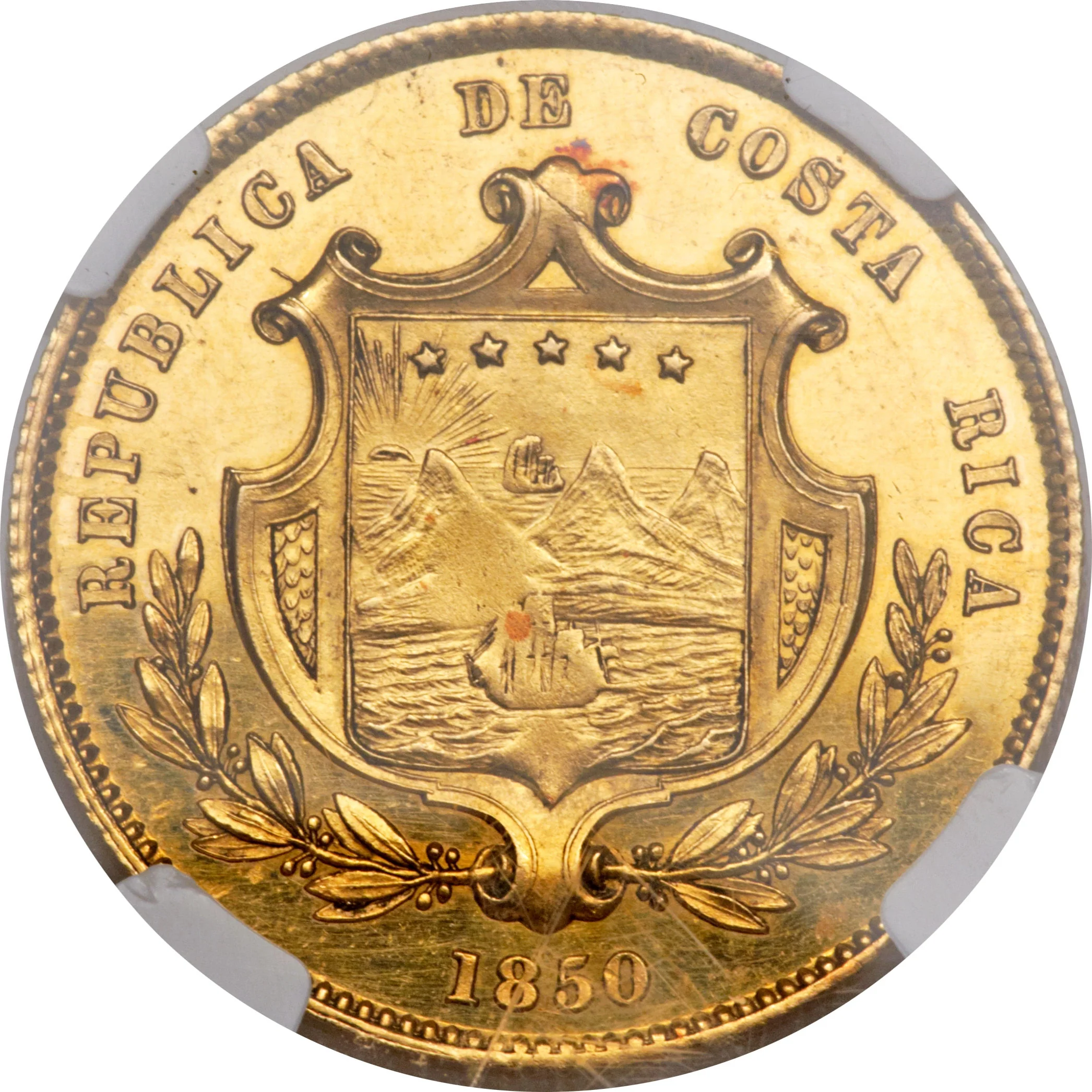
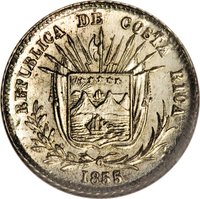
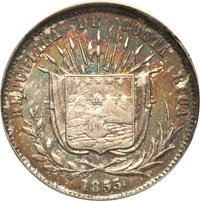
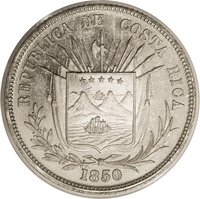
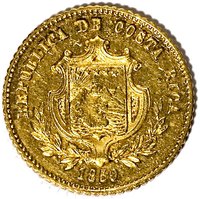
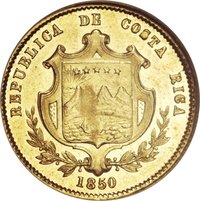
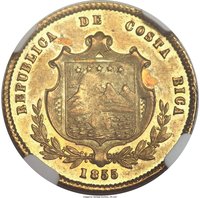
Coat of arms with top legend and bottom date.
Inscription:
REPUBLICA DE COSTA RICA
1850
1850
Translation:
REPUBLIC OF COSTA RICA
1850
1850
Script: Latin
Language: Spanish
Engraver: Juan Barth
Reverse
Description:
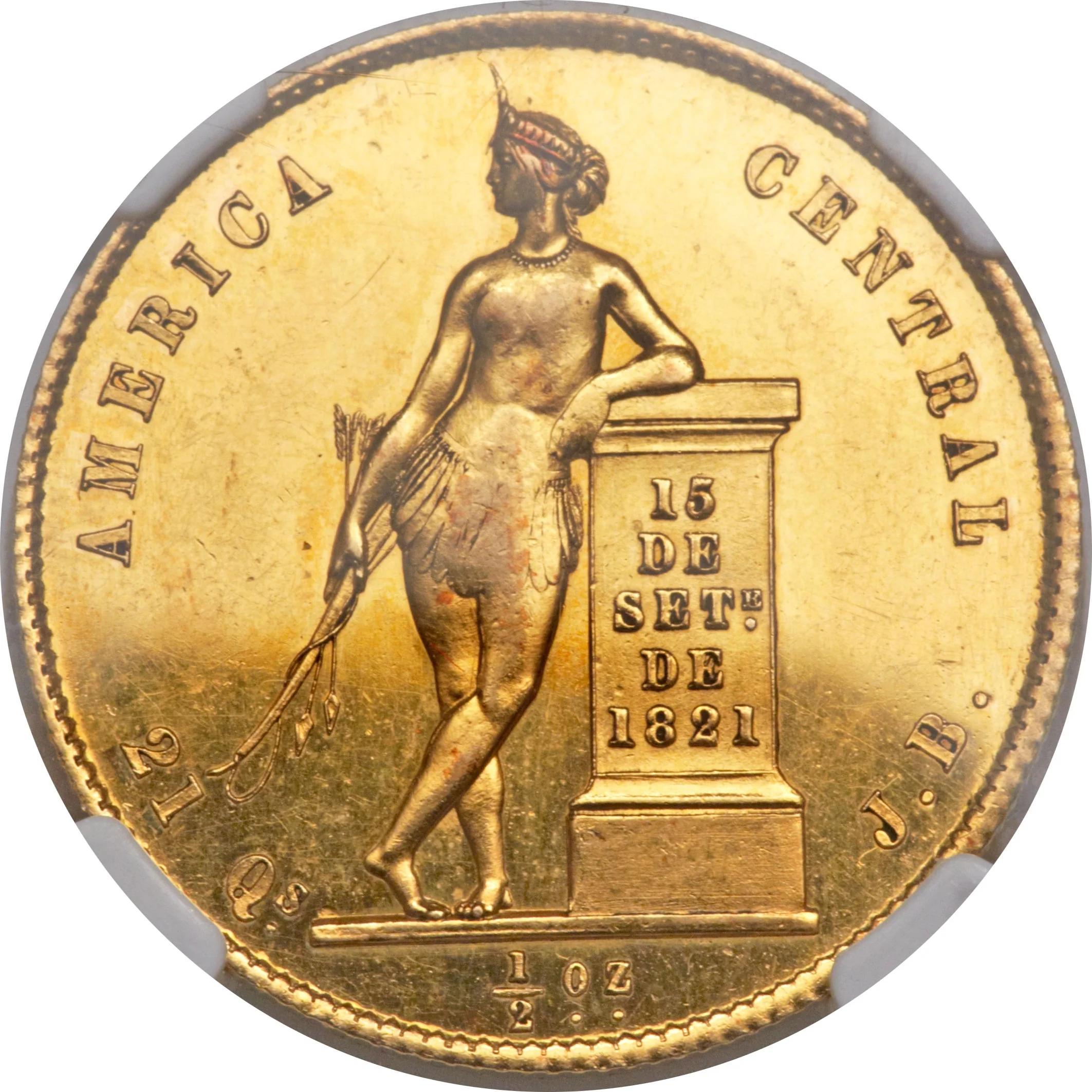
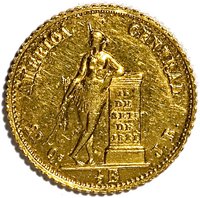
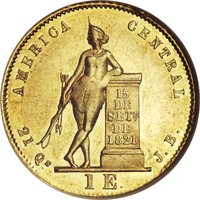
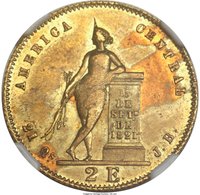
Female archer reclining on a column with Independence date. Legend above. Fineness, value, and assayer's initials below.
Inscription:
AMERICA CENTRAL
15
DE
SETE.
DE
1821
21 Qs. 1/2 oz.. J. B.
15
DE
SETE.
DE
1821
21 Qs. 1/2 oz.. J. B.
Translation:
CENTRAL AMERICA
15
OF
SEPTEMBER
OF
1821
21 Qs. 1/2 oz.. J. B.
15
OF
SEPTEMBER
OF
1821
21 Qs. 1/2 oz.. J. B.
Script: Latin
Language: Spanish
Engraver: Juan Barth
Edge
Categories
| Symbols> Coat of Arms |
| Object> Cold weapons |
Mints
| Name | Mark |
|---|---|
| Casa Nacional de Moneda de Costa Rica | — |
Mintings
| Year | Mint Mark | Mintage | Quality | Collection |
|---|---|---|---|---|
| 1850 | — | — | Proof | |
| 1850 | 1850-1858 | 17,838 |
Historical background
In 1850, Costa Rica's currency situation was characterized by chronic scarcity and chaotic diversity, a legacy of its colonial past and early independence. As a small, rural province within the Federal Republic of Central America (which dissolved in 1838), the nation lacked its own mint and had no standardized national coinage. The economy operated on a patchwork of foreign silver coins, primarily Spanish colonial reales and pesos, along with coins from other Latin American nations like Peru, Mexico, and Colombia. This scarcity of physical money severely hampered commercial transactions and economic development, forcing much trade to rely on barter or credit, especially in rural areas.
The primary unit of account was the silver peso, divided into 8 reales. However, the value and purity of coins in circulation varied widely, leading to confusion and inefficiency. To complicate matters, the British pound sterling also circulated, particularly in connection with the growing coffee export trade, which was becoming the backbone of the Costa Rican economy. This dependence on foreign coinage meant the country had no control over its money supply, leaving it vulnerable to the ebb and flow of imported currency and the whims of international trade.
Recognizing this instability as a major obstacle to progress, the government of President Juan Rafael Mora Porras was actively seeking solutions. The decade following 1850 would see significant reform, culminating in the 1851 contract with the Paris Mint to produce Costa Rica's first official national coins, featuring the iconic "star" design. Thus, 1850 represents a pivotal moment just before a major monetary transformation, as the country stood on the brink of establishing its first sovereign currency to support its emerging coffee-export economy and national identity.
The primary unit of account was the silver peso, divided into 8 reales. However, the value and purity of coins in circulation varied widely, leading to confusion and inefficiency. To complicate matters, the British pound sterling also circulated, particularly in connection with the growing coffee export trade, which was becoming the backbone of the Costa Rican economy. This dependence on foreign coinage meant the country had no control over its money supply, leaving it vulnerable to the ebb and flow of imported currency and the whims of international trade.
Recognizing this instability as a major obstacle to progress, the government of President Juan Rafael Mora Porras was actively seeking solutions. The decade following 1850 would see significant reform, culminating in the 1851 contract with the Paris Mint to produce Costa Rica's first official national coins, featuring the iconic "star" design. Thus, 1850 represents a pivotal moment just before a major monetary transformation, as the country stood on the brink of establishing its first sovereign currency to support its emerging coffee-export economy and national identity.
✨ Legendary