

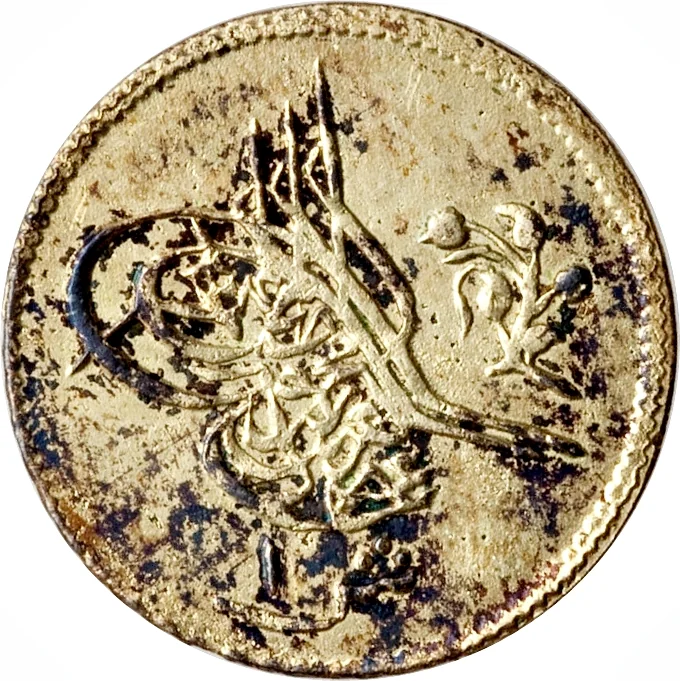
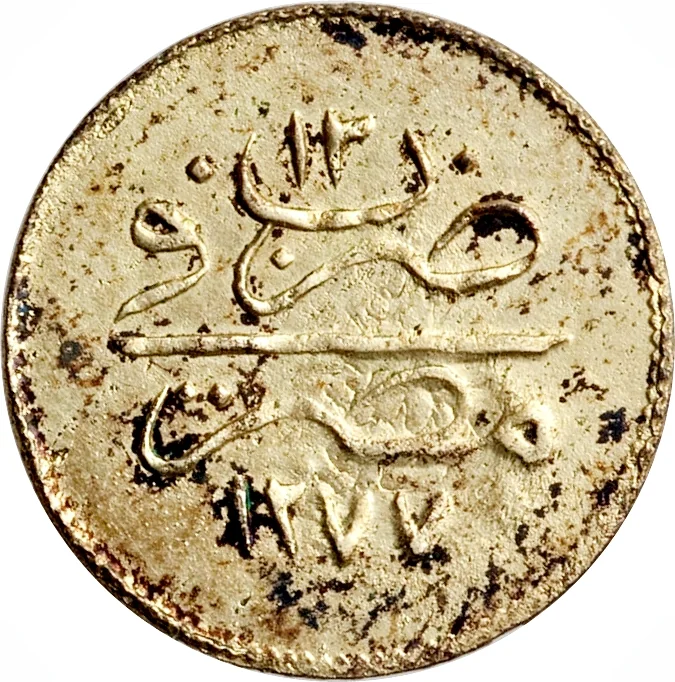
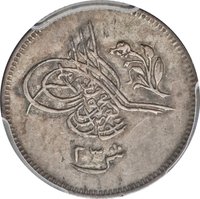
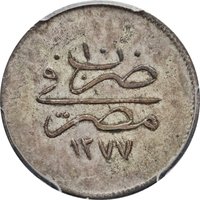
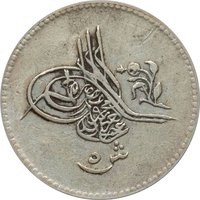
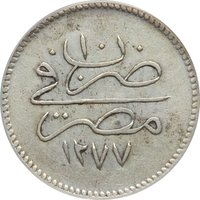
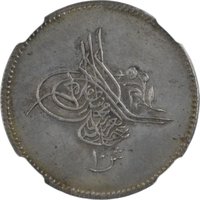
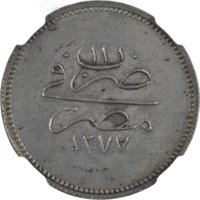
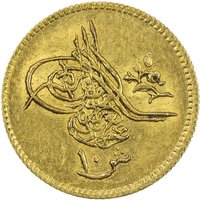
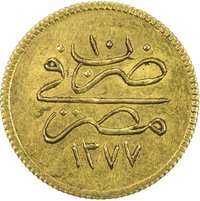
1 qirsh – Egypt
Add to wishlist
Egypt
Context
Years: 1869–1875
Islamic (Hijri) Year:: 1277
Issuer: Egypt
Ruler: Abdülaziz
Currency:
(1834—1916)
Demonetized: Yes
Material
References
KM: #
Numista: #62800
Value
Bullion value: $2.82
Mintings
| Year | Mint Mark | Mintage | Quality | Collection |
|---|---|---|---|---|
| 1869 | — | — | ||
| 1870 | — | — | ||
| 1871 | — | — | ||
| 1872 | — | — | ||
| 1873 | — | — | ||
| 1874 | — | — | ||
| 1875 | — | — |
Historical background
In 1869, Egypt’s currency system was a complex and strained duality, caught between its traditional Ottoman monetary framework and the mounting pressures of European finance. The official currency was the Egyptian pound (geneih), which was pegged to and equivalent to the British gold sovereign, but the everyday reality for most Egyptians involved a bimetallic system of gold and silver coins, alongside a heavily depreciated silver piastre. The critical problem was a severe shortage of small-denomination copper and silver coins for daily transactions, leading to widespread use of debased and foreign coins, which created confusion and facilitated fraud in the markets.
This monetary instability was directly fueled by the extravagant spending of Khedive Ismail, whose ambitious modernization projects—most notably the nearing completion of the Suez Canal—had plunged the country deeply into debt. To finance his ventures, Ismail had borrowed heavily from European banks at high interest, leading to a massive outflow of gold to service these debts. This drain of specie (hard currency) from the economy exacerbated the coin shortage and placed the currency under tremendous pressure, undermining both domestic trade and the state’s financial credibility on the international stage.
Thus, on the eve of the Suez Canal's grand inauguration in November 1869, Egypt’s currency situation was a microcosm of its broader fiscal crisis. The government was struggling to maintain the value of its money while satisfying foreign creditors, a precarious balancing act that would soon become unsustainable. Within just a few years, this financial distress would lead to state bankruptcy, European takeover of Egypt’s finances, and ultimately, British occupation in 1882.
This monetary instability was directly fueled by the extravagant spending of Khedive Ismail, whose ambitious modernization projects—most notably the nearing completion of the Suez Canal—had plunged the country deeply into debt. To finance his ventures, Ismail had borrowed heavily from European banks at high interest, leading to a massive outflow of gold to service these debts. This drain of specie (hard currency) from the economy exacerbated the coin shortage and placed the currency under tremendous pressure, undermining both domestic trade and the state’s financial credibility on the international stage.
Thus, on the eve of the Suez Canal's grand inauguration in November 1869, Egypt’s currency situation was a microcosm of its broader fiscal crisis. The government was struggling to maintain the value of its money while satisfying foreign creditors, a precarious balancing act that would soon become unsustainable. Within just a few years, this financial distress would lead to state bankruptcy, European takeover of Egypt’s finances, and ultimately, British occupation in 1882.
Series: 1869 Egypt circulation coins
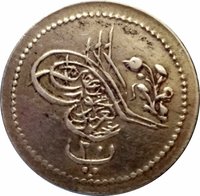
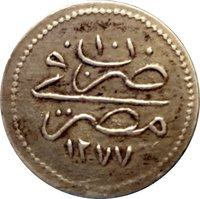
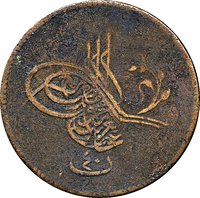
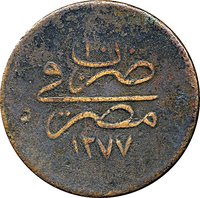
⭐ Rare