

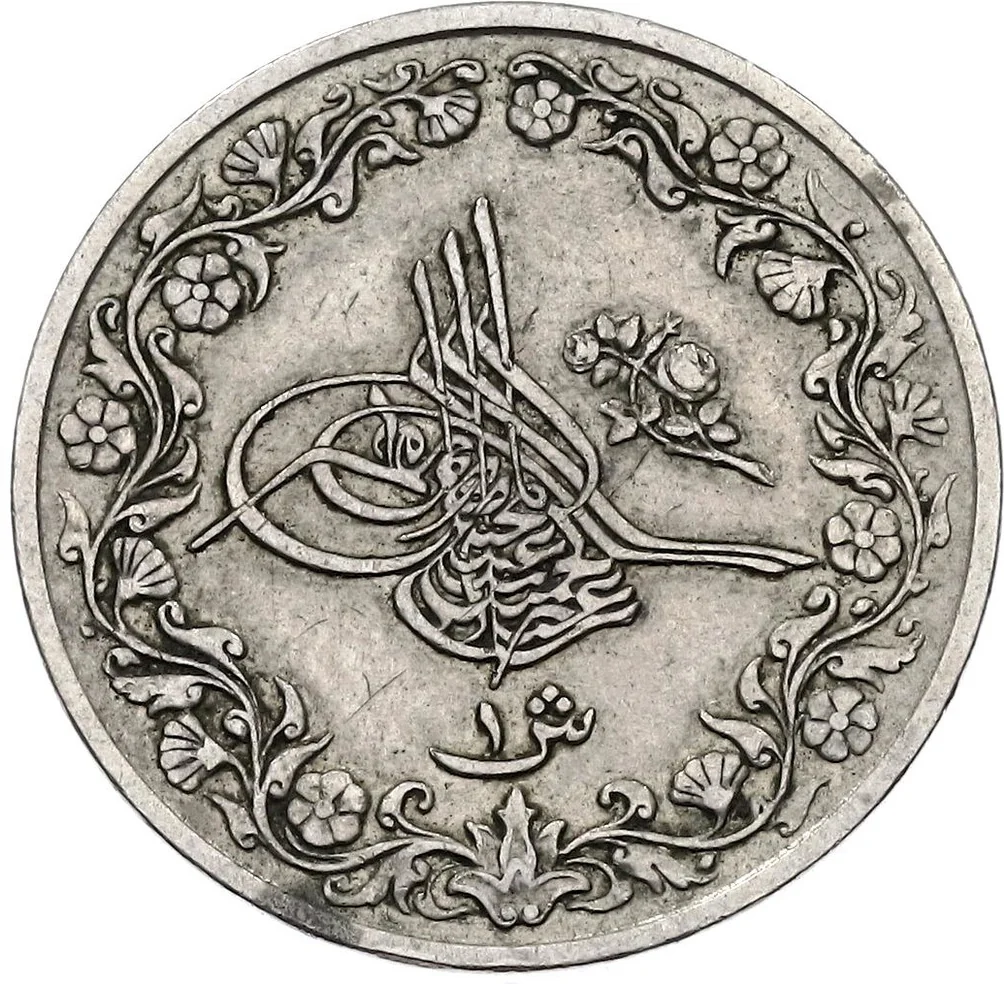
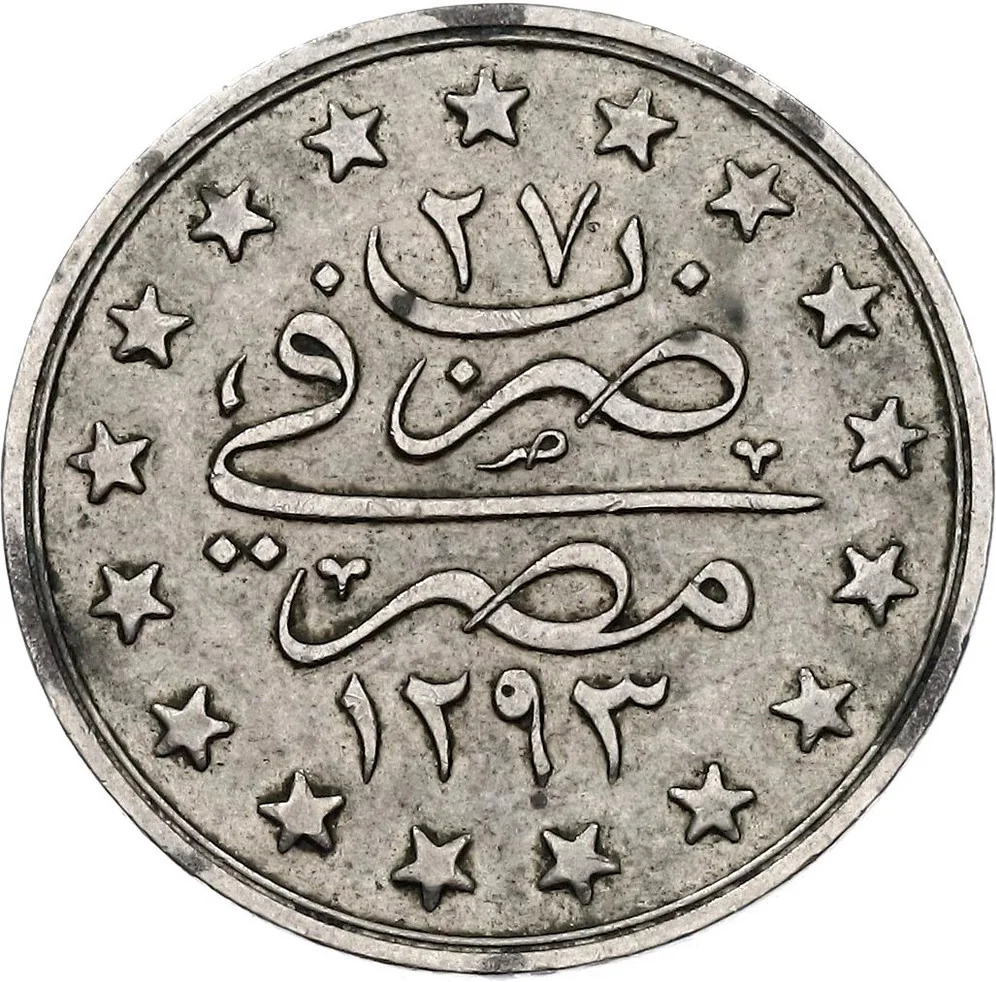
1 qirsh – Egypt
Add to wishlist
Egypt
Context
Years: 1896–1907
Islamic (Hijri) Year:: 1293
Issuer: Egypt
Ruler: Abdul Hamid II
Currency:
(1834—1916)
Demonetized: Yes
Total mintage: 8,450,000
Material
References
KM: #
Numista: #5871
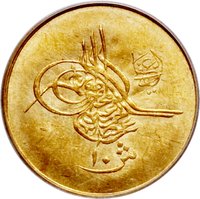
Obverse
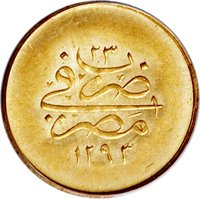
Reverse
Edge
Plain
Mints
| Name | Mark |
|---|---|
| Heaton and Sons / The Mint Birmingham | — |
| Royal Mint of Belgium | — |
Mintings
| Year | Mint Mark | Mintage | Quality | Collection |
|---|---|---|---|---|
| 1896 | — | 200,000 | ||
| 1897 | — | 1,500,000 | ||
| 1899 | — | 751,000 | ||
| 1901 | — | 999,000 | ||
| 1903 | — | 3,500,000 | ||
| 1904 | — | 500,000 | ||
| 1907 | — | 1,000,000 |
Historical background
In 1896, Egypt's currency situation was defined by its complex position within the Ottoman Empire and the growing influence of European powers, particularly Britain. Officially, Egypt remained an Ottoman province, and the primary unit of account was the Egyptian pound (geneih), which was pegged to and equivalent to the British gold sovereign. However, the monetary system was a dual one, with both gold and silver circulating. The silver Egyptian piastre, subdivided into 40 para, was used for everyday transactions, creating a bimetallic system vulnerable to shifts in the global value of silver.
This period followed the dramatic fall in the international price of silver in the late 19th century, which caused significant economic disruption. As the value of the silver piastre fell against the gold-based pound, it led to inflation for the local population and complicated government finances, which were heavily indebted to European creditors. The situation was further strained by the fact that Egypt was under British occupation since 1882, with its finances administered by the Caisse de la Dette Publique, an international body representing European bondholders, which prioritized debt repayment over monetary stability.
Consequently, by 1896, the Egyptian government, under British advisement, was moving decisively toward a gold monometallic standard to stabilize the economy and facilitate foreign trade and investment. This culminated in the Currency Reform Law of 1885, which had already established the gold standard de jure, but by 1896 its implementation was solidifying. The reform effectively tied the Egyptian pound firmly to gold, demonetized the silver piastre as legal tender for large transactions, and aimed to eliminate exchange rate fluctuations, thereby securing the financial environment for British and other foreign interests while further integrating Egypt into the global gold-standard economy.
This period followed the dramatic fall in the international price of silver in the late 19th century, which caused significant economic disruption. As the value of the silver piastre fell against the gold-based pound, it led to inflation for the local population and complicated government finances, which were heavily indebted to European creditors. The situation was further strained by the fact that Egypt was under British occupation since 1882, with its finances administered by the Caisse de la Dette Publique, an international body representing European bondholders, which prioritized debt repayment over monetary stability.
Consequently, by 1896, the Egyptian government, under British advisement, was moving decisively toward a gold monometallic standard to stabilize the economy and facilitate foreign trade and investment. This culminated in the Currency Reform Law of 1885, which had already established the gold standard de jure, but by 1896 its implementation was solidifying. The reform effectively tied the Egyptian pound firmly to gold, demonetized the silver piastre as legal tender for large transactions, and aimed to eliminate exchange rate fluctuations, thereby securing the financial environment for British and other foreign interests while further integrating Egypt into the global gold-standard economy.
🌱 Common