

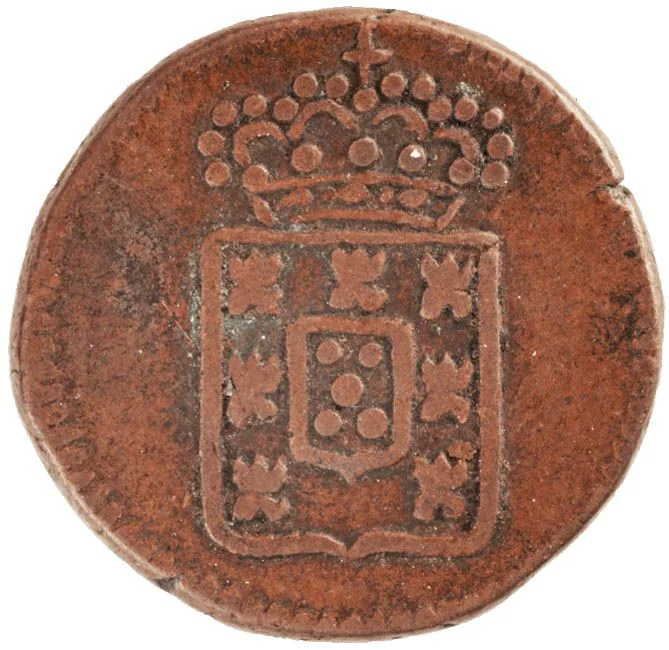
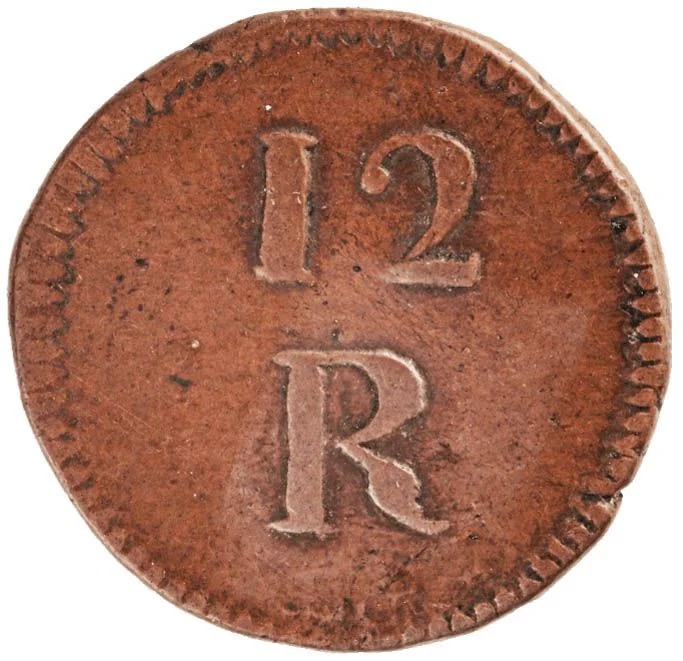
15 bazarucos – Portuguese India
Add to wishlist
India
Context
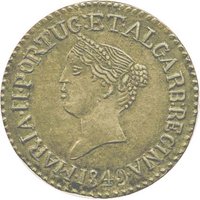
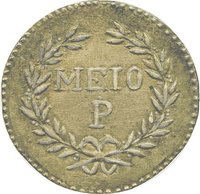
Years: 1843–1849
Year:: 1848
Country: India
Issuer: Portuguese India
Ruler: Mary II
Currency:
(1706—1880)
Demonetized: Yes
Material
Diameter: 21 mm
Weight: 7.8 g
Shape: Irregular round
Composition: Copper
Standard: Silver quarter ounce
Magnetic: No
Technique: Hammered
References
KM: #
Numista: #48734
Mints
| Name | Mark |
|---|---|
| Goa | — |
Mintings
| Year | Mint Mark | Mintage | Quality | Collection |
|---|---|---|---|---|
| — | — | — | ||
| 1848 | — | — |
Historical background
In 1843, the currency situation in Portuguese India, centered on the territories of Goa, Daman, and Diu, was characterized by a complex and chaotic multiplicity of circulating coins. The official Portuguese currency system, based on the réis, existed alongside a plethora of foreign coins that dominated everyday commerce. The most important of these was the British Indian silver rupee, which served as the de facto standard for larger transactions due to its consistent silver content and the region's deep economic ties to British India. Alongside rupees, older Portuguese colonial coins like the xerafim (pegged to the rupee), gold mohurs, and even remnants like the tangas and reis coins from earlier centuries circulated, creating a confusing environment for trade and taxation.
This monetary pluralism created significant administrative and economic challenges for the Portuguese authorities in Nova Goa. The lack of a uniform, state-controlled currency hampered revenue collection, as the value of tax payments fluctuated with the ever-changing market rates between coin types. Furthermore, the persistent outflow of silver rupees to British India to settle trade deficits often led to local shortages of the very currency most in demand, exacerbating the instability. The Portuguese state attempted to legislate fixed exchange rates (taxas) between the various coins, but these were largely ignored in the market, which operated on its own practical valuations.
The year 1843 falls within a prolonged period of failed monetary reforms. Attempts to introduce distinct Portuguese-Indian coinage had not yet succeeded in displacing the entrenched foreign currencies. The situation reflected Portugal's weakened economic influence in the region and the practical reality that Portuguese India was a small enclave deeply integrated into the vast economic sphere of British India. True simplification and control of the currency would only begin decades later with more decisive reforms, making the mid-19th century a period defined by monetary confusion and competing circulations.
This monetary pluralism created significant administrative and economic challenges for the Portuguese authorities in Nova Goa. The lack of a uniform, state-controlled currency hampered revenue collection, as the value of tax payments fluctuated with the ever-changing market rates between coin types. Furthermore, the persistent outflow of silver rupees to British India to settle trade deficits often led to local shortages of the very currency most in demand, exacerbating the instability. The Portuguese state attempted to legislate fixed exchange rates (taxas) between the various coins, but these were largely ignored in the market, which operated on its own practical valuations.
The year 1843 falls within a prolonged period of failed monetary reforms. Attempts to introduce distinct Portuguese-Indian coinage had not yet succeeded in displacing the entrenched foreign currencies. The situation reflected Portugal's weakened economic influence in the region and the practical reality that Portuguese India was a small enclave deeply integrated into the vast economic sphere of British India. True simplification and control of the currency would only begin decades later with more decisive reforms, making the mid-19th century a period defined by monetary confusion and competing circulations.
✨ Legendary