

2 Kuruş – Ottoman Empire
Turkey
Context
Years: 1845–1859
Islamic (Hijri) Year: 1255
Country: Turkey 
Issuer: Ottoman Empire
Ruler: Abdulmejid I
Currency:
(1844—1923)
Demonetized: Yes
Total mintage: 7,683,000
Material
References
KM: #Click to copy to clipboard672
Numista: #46640
Value
Bullion value: $5.69
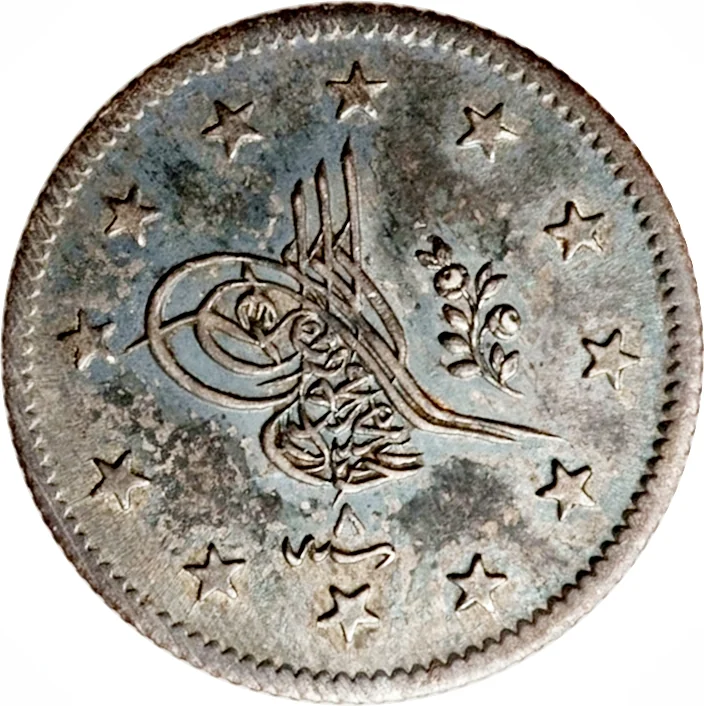
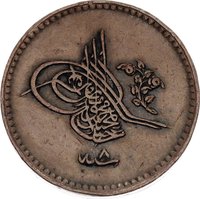
Obverse
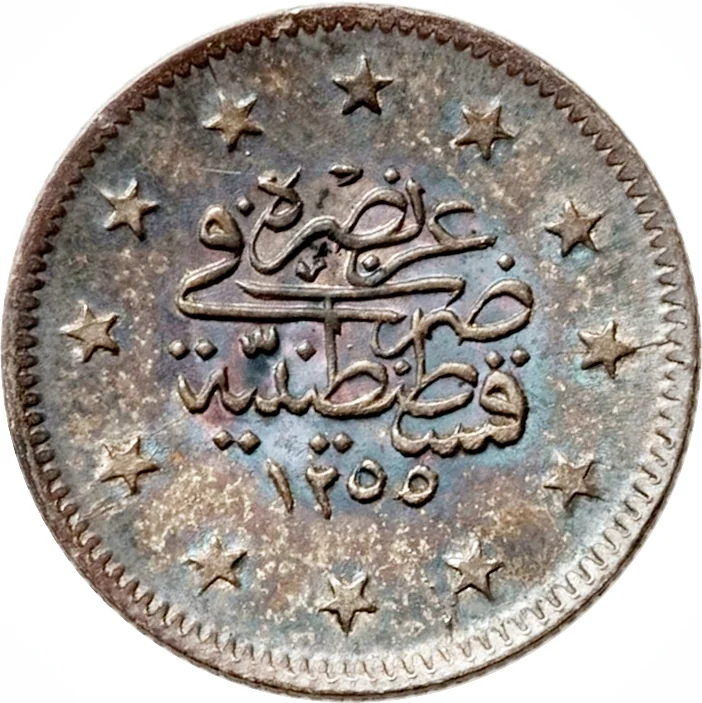
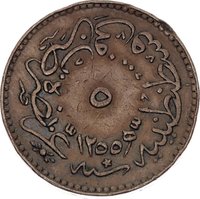
Reverse
Edge
Reeded
Mints
| Name | Mark |
|---|---|
| Constantinople | — |
Mintings
| Year | Mint Mark | Mintage | Quality | Collection |
|---|---|---|---|---|
| 1845 | — | 1,035,000 | ||
| 1846 | — | 1,150,000 | ||
| 1847 | — | 530,000 | ||
| 1848 | — | 543,000 | ||
| 1849 | — | 695,000 | ||
| 1850 | — | 685,000 | ||
| 1851 | — | 540,000 | ||
| 1852 | — | 280,000 | ||
| 1853 | — | 300,000 | ||
| 1854 | — | 510,000 | ||
| 1855 | — | 1,035,000 | ||
| 1857 | — | 275,000 | ||
| 1858 | — | 105,000 | ||
| 1859 | — | — |
Historical background
In 1845, the Ottoman Empire was grappling with a severe and prolonged monetary crisis, characterized by a chaotic and deeply depreciated currency system. The primary unit, the kuruş (piastre), had been drastically debased over decades, with its silver content reduced by nearly 90% since the 1820s to finance state deficits and wars. This led to a proliferation of different coinages in circulation—including old full-weight coins, new lightweight coins, and a vast array of foreign currencies—all trading at fluctuating, unofficial rates. The result was a crippling lack of confidence, rampant inflation, and extreme complexity in everyday trade, which stifled the economy and complicated state finances.
The crisis was fundamentally a fiscal one; the Ottoman state, dubbed "the Sick Man of Europe," faced soaring military and administrative costs without a modern tax base. Repeated attempts to introduce paper money (kaime) beginning in 1840 had worsened the situation. Initially intended as interest-bearing treasury bonds, these notes quickly became compulsory legal tender and were over-issued, leading to rapid depreciation and a widespread preference for specie. By 1845, the disarray was so profound that it paralyzed commercial life, creating a dual economy where foreign merchants and bankers operated using gold coins like the British sovereign or the French franc, while the local populace suffered with the unstable kuruş and kaime.
Recognizing the need for radical reform, the Ottoman government under Sultan Abdülmecid I was on the cusp of major change. The year 1845 itself was a pivotal point of study and planning, setting the stage for the landmark Tanzimat monetary reforms that would follow. Just a few years later, in 1852, this would culminate in a comprehensive recoinage program that introduced a new, standardized silver kuruş and a stable gold lira, aiming to restore confidence and unify the monetary system. Thus, 1845 represents the troubled final chapter of an old, failing order, immediately preceding a serious but challenging effort to achieve monetary modernity.
The crisis was fundamentally a fiscal one; the Ottoman state, dubbed "the Sick Man of Europe," faced soaring military and administrative costs without a modern tax base. Repeated attempts to introduce paper money (kaime) beginning in 1840 had worsened the situation. Initially intended as interest-bearing treasury bonds, these notes quickly became compulsory legal tender and were over-issued, leading to rapid depreciation and a widespread preference for specie. By 1845, the disarray was so profound that it paralyzed commercial life, creating a dual economy where foreign merchants and bankers operated using gold coins like the British sovereign or the French franc, while the local populace suffered with the unstable kuruş and kaime.
Recognizing the need for radical reform, the Ottoman government under Sultan Abdülmecid I was on the cusp of major change. The year 1845 itself was a pivotal point of study and planning, setting the stage for the landmark Tanzimat monetary reforms that would follow. Just a few years later, in 1852, this would culminate in a comprehensive recoinage program that introduced a new, standardized silver kuruş and a stable gold lira, aiming to restore confidence and unify the monetary system. Thus, 1845 represents the troubled final chapter of an old, failing order, immediately preceding a serious but challenging effort to achieve monetary modernity.
⭐ Somewhat Rare