

50 lwei – Angola
Add to wishlist
Angola
Context
Years: 1977–1979
Year:: 1979
Issuer: Angola
Period:
(1975—1992)
Currency:
(1977—1990)
Demonetization: 21 September 1990
Material
Diameter: 16 mm
Weight: 2 g
Thickness: 1.5 mm
Shape: Round
Composition: Copper-nickel
Technique: Milled
Alignment: Medal alignment
flip
References
KM: #
Numista: #4561
Value
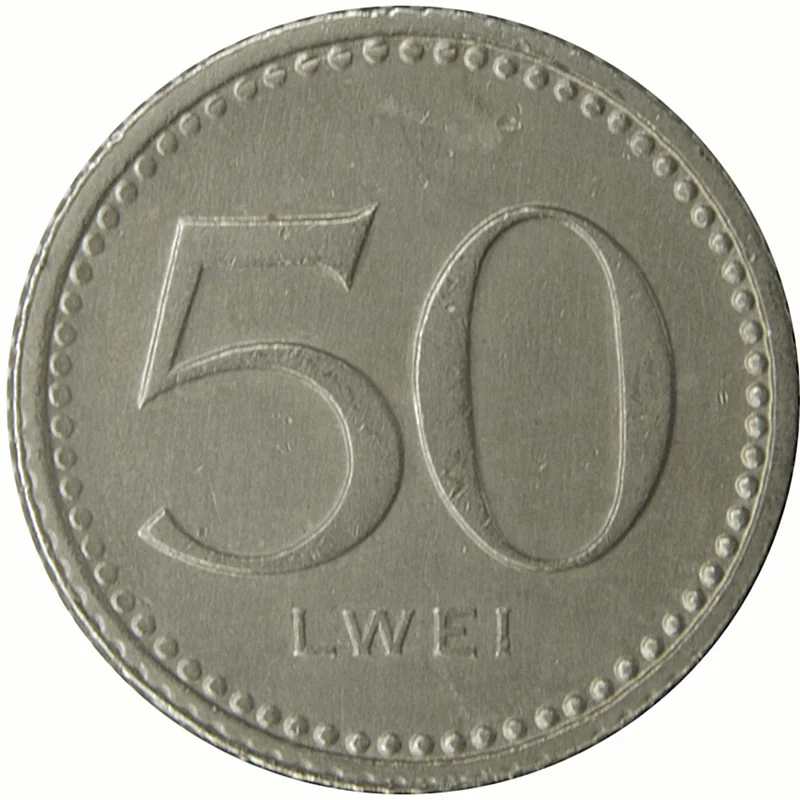
Exchange value: 0.50 AOK
Obverse
Description:
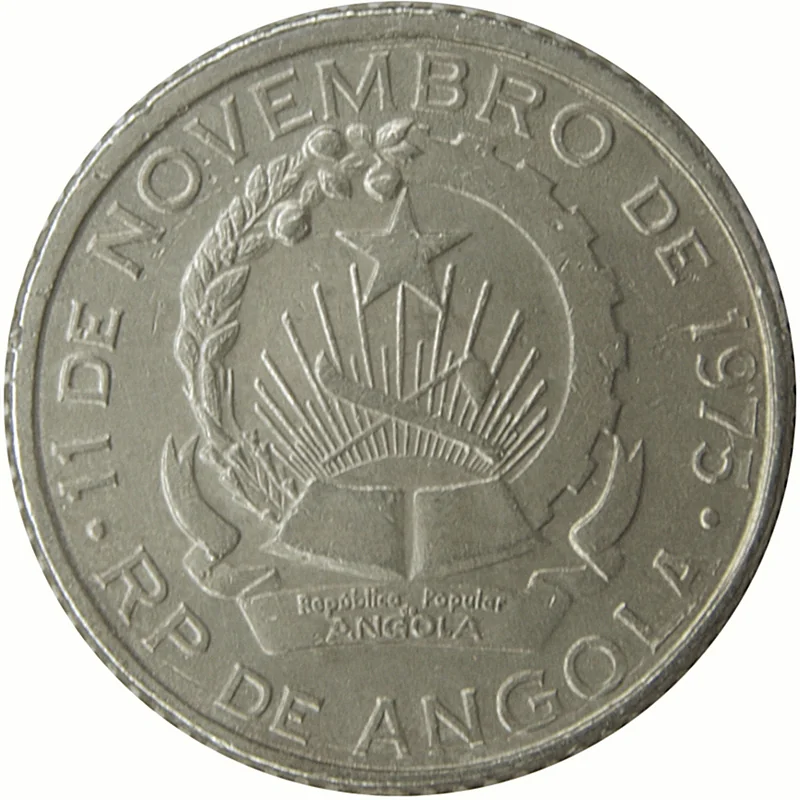
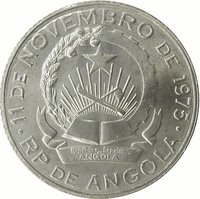
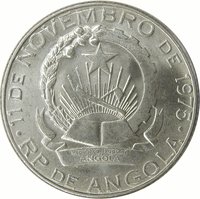
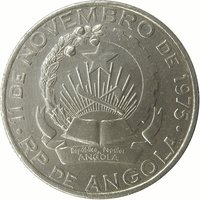
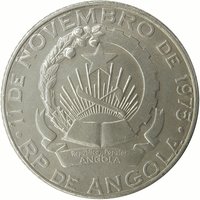
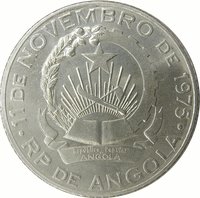
Angolan national emblem with independence date.
Inscription:
11 DE NOVEMBRO DE 1975
Republica Popular De ANGOLA
RP DE ANGOLA
Republica Popular De ANGOLA
RP DE ANGOLA
Translation:
11th of November 1975
People's Republic of Angola
People's Republic of Angola
People's Republic of Angola
People's Republic of Angola
Script: Latin
Language: Portuguese
Reverse
Edge
Reeded
Categories
| Symbols> Coat of Arms |
| Symbol> Sun |
| Object> Cold weapons |
Mints
| Name | Mark |
|---|---|
| Belgrade | — |
Mintings
| Year | Mint Mark | Mintage | Quality | Collection |
|---|---|---|---|---|
| 1977 | — | — | ||
| 1979 | — | — |
Historical background
Following Angola's independence from Portugal in 1975, the currency situation in 1977 was defined by transition and instability. The new Marxist-Leninist MPLA government, engaged in a brutal civil war against UNITA and FNLA factions, inherited the Portuguese colonial currency, the angolar. However, to assert economic sovereignty, the government introduced the kwanza (AOK) in 1977 as the first national currency, replacing the angolar at par. This symbolic move was part of a broader effort to break from the colonial past and control the monetary system.
Economically, the situation was dire. The war devastated infrastructure and agricultural production, while the government's push for a centrally planned economy disrupted markets. A severe shortage of goods, combined with increased government spending to fund the war effort, created powerful inflationary pressures. The new kwanza, though officially established, struggled with credibility and value as the state lacked the foreign exchange reserves and productive economic base to support it, leading to the emergence of a parallel black market where currency traded at a significant discount.
Internationally, Angola's currency was non-convertible, isolating it from the global financial system. The country's economic ties shifted heavily toward the Soviet bloc, which provided crucial financial aid but did not integrate the kwanza into international trade. Consequently, in 1977, the Angolan kwanza existed within a fragile, war-torn economy, facing immediate internal depreciation pressures and operating without the external stability that comes with convertibility or strong reserves, setting the stage for future devaluations and monetary reforms.
Economically, the situation was dire. The war devastated infrastructure and agricultural production, while the government's push for a centrally planned economy disrupted markets. A severe shortage of goods, combined with increased government spending to fund the war effort, created powerful inflationary pressures. The new kwanza, though officially established, struggled with credibility and value as the state lacked the foreign exchange reserves and productive economic base to support it, leading to the emergence of a parallel black market where currency traded at a significant discount.
Internationally, Angola's currency was non-convertible, isolating it from the global financial system. The country's economic ties shifted heavily toward the Soviet bloc, which provided crucial financial aid but did not integrate the kwanza into international trade. Consequently, in 1977, the Angolan kwanza existed within a fragile, war-torn economy, facing immediate internal depreciation pressures and operating without the external stability that comes with convertibility or strong reserves, setting the stage for future devaluations and monetary reforms.
Series: 1977 Angola circulation coins
🌱 Common